
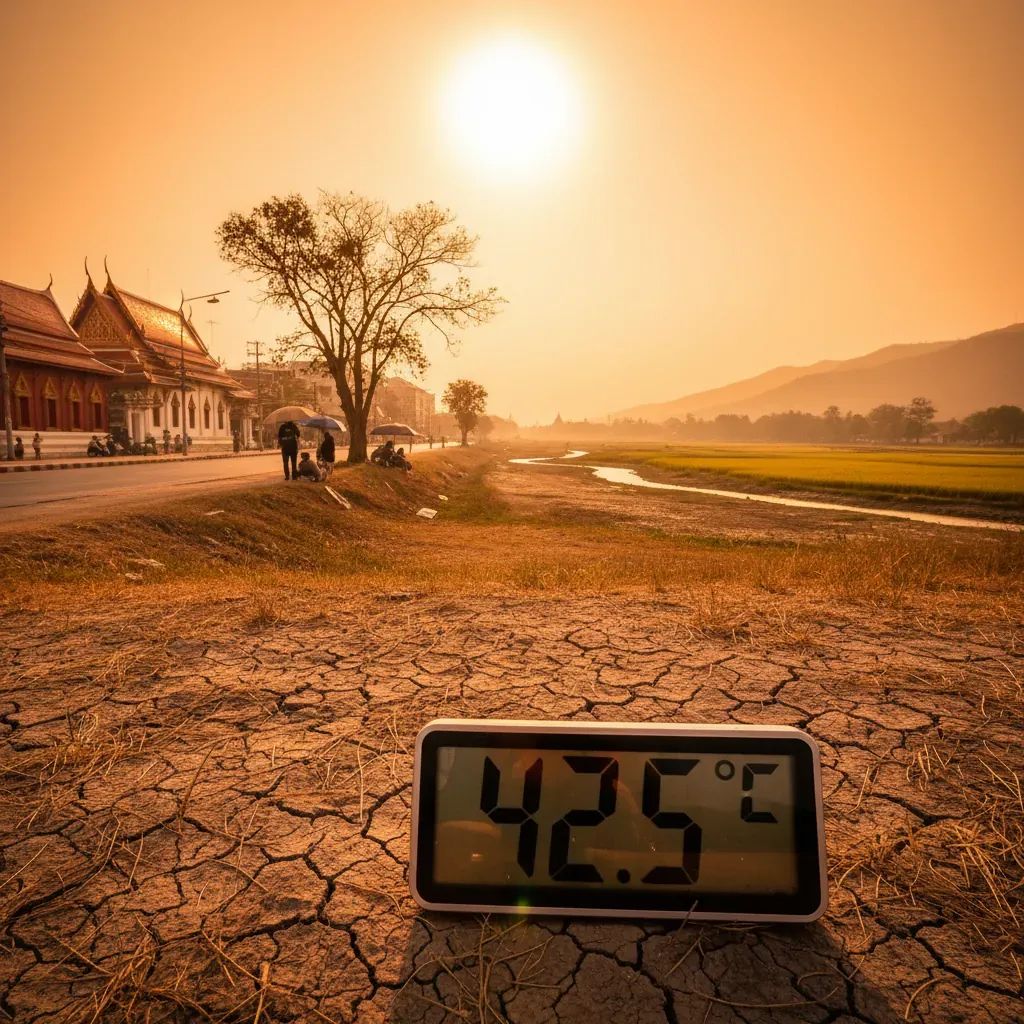
Humidity Turning Pattaya into an Endurance Test as May Heat Peaks
The Thailand Meteorological Department is bracing residents and business owners for what may be the most punishing stretch of May yet — a colliding weather system that brings genuinely dangerous heat indices above 41°C, infrastructure stress from flash flooding, and a narrowing window for outdoor activity. The coastal city faces a calculated challenge over the next week as warm, moisture-laden air masses stall above the Eastern Seaboard, creating conditions that reward advance planning and demand vigilance, particularly for the young, elderly, and tourists unaccustomed to tropical intensity.
Why This Matters
• Real-feel temperatures exceed 41°C despite thermometer readings of 32–33°C, a gap driven by humidity levels pushing toward 70% — the gap between thermometer and body sensation is what makes this dangerous.
• Thunderstorm risk jumps sharply after May 27, with 40–60% coverage likely between May 28–30; localized flooding is probable in low-lying areas like Central Pattaya and Na Jomtien.
• Tourism infrastructure faces a profitability squeeze: air-conditioning costs spike while guest comfort declines, shortening stays and deterring repeat visitors.
• Drainage systems in Pattaya show structural vulnerability — encroached canals, silted channels, and undersized pipes mean even moderate downpours can paralyze streets for 1–2 hours.
The Weather Pattern: Physics of Discomfort
What distinguishes this week from ordinary tropical heat is the stalling low-pressure system and the interaction between competing airflows. The Intertropical Convergence Zone (ITCZ) — that equatorial trough where trade winds collide — is beginning its seasonal shift northward, pulling additional moisture from the Gulf of Thailand and the Andaman Sea. Meanwhile, the southwest monsoon is gaining strength, ferrying even more humidity inland.
The result is paradoxical and maddening: high clouds overhead create shade, yet they trap radiant heat rising from asphalt, concrete, and sand. Local air temperatures register around 32°C, but the "wet bulb globe temperature" — what the human body actually experiences — climbs to 41°C or beyond. At this threshold, perspiration becomes less effective as a cooling mechanism because humidity prevents evaporation. The body's internal temperature can climb even when someone believes they're adequately hydrated.
Meteorological data from the Thailand Meteorological Department indicates this pattern will persist through May 27, then intensify. Scattered thunderstorms affecting 30–40% of the region should give way to more organized convection by week's end, with 40–60% coverage expected from May 28–30. Some areas may record heavy downpours exceeding 100 millimeters in 2–3 hours — enough to overwhelm Pattaya's aging drainage infrastructure.
Wave heights in the Gulf of Thailand are forecast to reach 1–2 meters, occasionally exceeding 2 meters in areas directly beneath thunderstorm cells. Marine operators and beachgoers should monitor conditions closely, especially during late-afternoon hours when convective systems typically organize.
Pattaya's Infrastructure: Exposed Gaps
The city's geographic layout compounds flooding risk. Pattaya sits atop a patchwork of hills and basin-like depressions — terrain that naturally concentrates runoff. When tidal surge coincides with heavy rain, seawater pressure can back up into drainage channels, preventing outflow and pooling water on streets.
Decades of rapid tourism development exacerbated the problem. Encroachment on natural waterways, sediment accumulation in drainage canals, and undersized stormwater pipes designed for a smaller, less urbanized population now struggle with contemporary rainfall intensity. The Bangkok Post and local media have documented these failures repeatedly; recovery from 1–2-hour flood events is routine during monsoon season, but the frequency and depth of pooling water has increased measurably over the past decade.
The Pattaya City Municipality has launched drainage expansion projects and canal-clearing initiatives in recent years, yet the pace of infrastructure upgrade lags behind the rate of new construction and climate volatility. For now, residents and businesses should prepare for temporary inundation along coastal roads, in Soi Buakhao commercial zones, and in low-lying residential blocks after heavy rain.
Tourism's Complicated Position: Opportunity and Friction
Extreme heat creates countervailing pressures on Pattaya's tourism economy. Retailers selling swimwear, cold beverages, and ice cream report brisk sales. Indoor attractions — shopping malls, ice skating rinks, aquariums, and cinema complexes — experience upticks in foot traffic as tourists flee peak afternoon sun. Hotels and nightlife venues are introducing summer-themed promotions, capitalizing on evening activity when temperatures drop modestly and air-conditioned venues fill.
Frost Magical Ice of Siam and Monster Aquarium Pattaya have seen measurable increases in visits during this heat season. Beachfront bars and cafés benefit from steady demand for cold beverages and iced desserts. The revenue stream is real and material — for some businesses, May and June are among the year's stronger months.
Yet the long-term calculus is deteriorating. Research from hospitality analysts indicates that sustained temperatures exceeding 35°C and real-feel readings above 40°C may shorten average guest stays by 1–2 days, particularly among European and North American visitors. Rising air-conditioning costs — typically 20–30% of operating expenses for hotels and large restaurants — squeeze profit margins. Some operators are absorbing costs rather than raising room rates, fearing occupancy declines.
Coral reef degradation in Pattaya Bay, linked to warming seawater, threatens the underwater attractions that differentiate the city from competing beach destinations. If marine ecosystems deteriorate visibly, the fundamental draw — the sea itself — weakens.
Immediate Protective Measures: Practical Guidance
Hydration is non-negotiable. Sip water continuously throughout the day, even without thirst signals. Dehydration develops silently in high humidity; by the time someone feels thirsty, fluid loss may already be significant. Avoid alcohol, coffee, and sugar-heavy drinks, which accelerate net fluid loss. Water-rich fruits — watermelon, papaya, oranges, pineapple — contribute both hydration and electrolytes.
Clothing strategy matters. Light-colored, loose-fitting, breathable cotton or linen garments permit sweat evaporation and allow heat to escape the body surface. Tight synthetics trap moisture and heat. Wide-brimmed hats, UV-blocking umbrellas, and sunscreen with SPF 50+ reapplied every 2 hours provide essential protection. Many tourists underestimate UV intensity when clouds obscure direct sun; cloud cover filters perhaps 20–30% of UV radiation, leaving 70–80% penetrating overhead.
Timing outdoor activities strategically cuts risk. Exercise, sightseeing, and beach time before 10:00 AM or after 4:00 PM minimizes exposure to peak UV intensity and direct solar heat. Those who must be outside during midday hours should retreat to shade or air-conditioned spaces at regular intervals — 15–30 minutes outdoors, then 20–30 minutes inside is a practical rhythm.
Recognize heat exhaustion early. Symptoms include heavy sweating, fatigue, dizziness, nausea, and vomiting. If core body temperature exceeds 40°C, sweating paradoxically stops, skin becomes dry and red, heart rate accelerates, and confusion or seizures may follow — these are heatstroke, a medical emergency. First aid: move the person to shade or air-conditioning, offer sips of cool (not freezing) water, spray the body with water while using a fan, or apply cool, damp cloths. If the person loses consciousness or vomits, position the head to one side to prevent airway obstruction and contact emergency services immediately.
Vulnerable populations — young children, the elderly, pregnant women, and those with cardiovascular disease — face elevated heatstroke risk and warrant special vigilance from caregivers and family members.
Looking Beyond This Week: The Longer Climate Picture
May temperatures consistently exceeding 35°C are becoming normalized in Pattaya, part of a measurable warming trend. Historical records show the hottest months typically fall between mid-February and May, with peaks around 34–35°C. This year's real-feel readings above 41°C push into territory that strains both human comfort and infrastructure designed for a cooler past.
Climate projections suggest extreme heat events will intensify in frequency and magnitude over the next decade. The Thailand Ministry of Natural Resources and Environment and international climate models converge on a sobering conclusion: coastal cities like Pattaya will experience more frequent episodes of dangerous heat indices, more volatile rainfall patterns, and accelerating sea-level rise.
For Pattaya's tourism economy — which depends on year-round coastal appeal — adaptation is urgent. Investments in heat-resilient public spaces, expanded cooling centers, upgraded stormwater systems, and climate-conscious coastal management are no longer optional. Cities that move first gain competitive advantage; those that delay cede tourism market share to rivals offering greater climate safety.
For residents and visitors navigating this immediate heat wave, the path forward is unglamorous but proven: stay hydrated, seek shade during peak hours, monitor weather alerts closely, and trust that the monsoon rains — likely arriving in full force within 2–3 weeks — will bring relief. Until then, endurance and attentiveness are the practical currencies of survival in a city running at thermal limits.


