
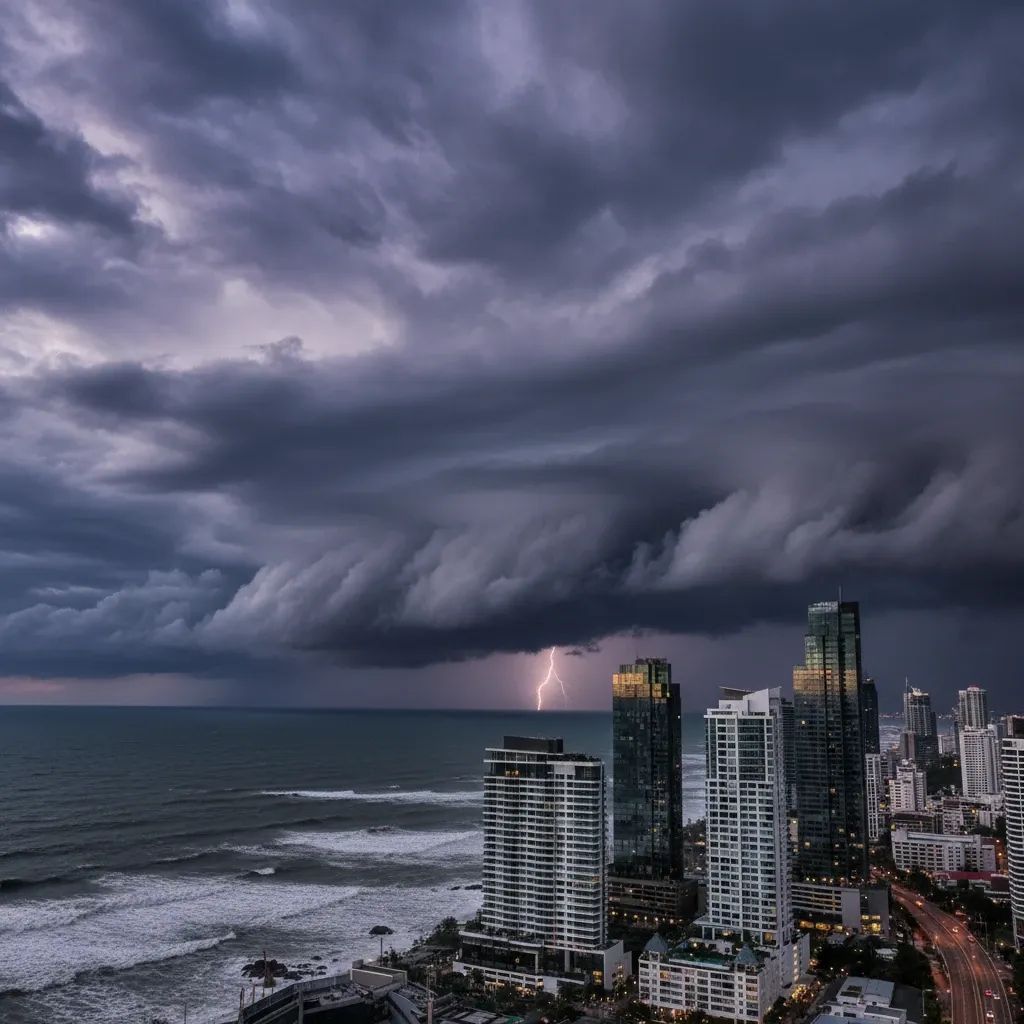
The Thailand Meteorological Department is forecasting unstable atmospheric conditions across Pattaya throughout May 2026, with daytime temperatures hovering in the low-to-mid 30s Celsius while sudden thunderstorms threaten to disrupt outdoor activities and flood low-lying neighborhoods. Residents and tourists should prepare for sharp weather shifts that could snarl traffic and temporarily close businesses in the coastal city.
Why This Matters
• Heat Index Warning: Actual temperature reads 32°C during peak hours, but humidity pushes the "feels-like" temperature to 41°C (105°F), creating health risks for anyone working or exercising outdoors.
• Flooding Hotspots: Pattaya's basin geography means even brief downpours can flood Sukhumvit Road, Pattaya Sai 3, and Jomtien Beach within minutes, stranding vehicles and shutting down businesses.
• Storm Probability: Thunderstorms are forecast for 80% of days throughout May, with peak intensity expected in early-to-mid May, requiring vigilance from drivers and beachgoers alike.
The Heat-Humidity Trap Gripping Pattaya
The Thailand Gulf Coast is enduring what meteorologists call a transitional weather pattern—the shift from hot season to monsoon season that typically arrives in May. Daytime highs are settling between 31°C and 34°C, but relative humidity levels near 67% are amplifying the discomfort. For anyone outdoors during midday hours, especially in popular zones like Pattaya Beach and Jomtien Beach, the combination can feel oppressive and trigger heat exhaustion if hydration and shade breaks are neglected.
Sea temperatures remain inviting at 31°C (88°F), sustaining beach tourism despite the swelter. Yet the oppressive conditions stem from a persistent low-pressure heat trough parked over northern and central Thailand, drawing moisture-laden winds from the south and southeast. This convergence of heat and humidity is textbook monsoon onset—warm air at ground level collides with cooler masses aloft, breeding violent updrafts that spawn afternoon and evening thunderstorms.
Basin Geography Fuels Flash Flooding
Pattaya sits in a shallow depression, often likened to a wok or frying pan, which channels runoff from surrounding hills directly into the city center. When intense rain cells drop 160–175 mm over the course of May—roughly what the month typically delivers—the drainage network struggles to cope. Critical choke points include Sukhumvit Road near South Pattaya, Soi Buakhao, Pattaya Sai 3, and the railway-parallel road from Khao Talo to Wat Thammasamakkhi.
Local authorities acknowledge that ageing pipes, trash blockages, and inadequate capacity combine to turn moderate downpours into knee-deep floods within 20 minutes. During early-to-mid May 2026, the meteorological office is predicting heavy thunderstorm cells to sweep the area, with rain rates potentially exceeding 50 mm per hour in isolated pockets. Such events routinely trap motorbikes, stall cars, and force shopfronts along Walking Street and Central Pattaya Road to close temporarily while water recedes.
What This Means for Residents and Visitors
Short-Term Disruptions: Expect traffic congestion to spike whenever storms roll through during evening rush hours. The Thailand Royal Police Pattaya Division has stationed rapid-response teams at flood-prone intersections to redirect traffic and assist stranded motorists, but delays of 30–60 minutes are common when water overtops curbs. Ride-hailing services may suspend operations in affected zones, leaving travelers stranded.
Emergency Resources for Residents: Pattaya residents can contact the Banglamung District Office (Tel: 038-429-018) to report flood-related damage or request assistance. The Pattaya City Municipality Emergency Hotline (Tel: 1669) operates 24/7 and accepts reports in Thai and English. Evacuation centers are typically established at municipal schools and community halls during severe flooding; residents should check the Pattaya City Municipality Facebook page for real-time updates during weather emergencies.
Beach and Marine Activities: The Pattaya Harbor Master warns that sudden squalls can whip up waves and reduce visibility offshore, prompting cancellations of ferry services to Koh Larn and halting jet-ski rentals. Dive operators typically monitor real-time radar and will scrub morning bookings if lightning is forecast within a 20 km radius. Tour companies are advising clients to book flexible tickets and carry rain gear even on seemingly clear mornings.
Health Precautions: The combination of extreme heat and intermittent downpours creates a breeding ground for mosquitoes, raising dengue-fever risk. The Thailand Ministry of Public Health recommends using repellent and eliminating standing water around properties. For heat stress, authorities urge outdoor workers to rest during the 11 a.m.–3 p.m. window, consume electrolyte drinks, and watch for dizziness or nausea.
Atmospheric Mechanics Behind the Volatility
Meteorologists point to several concurrent drivers. A southwest monsoon is beginning to establish itself over the Andaman Sea, pushing moisture across the southern provinces and gradually creeping northward. Meanwhile, residual hot-season air masses linger over the Thai interior, creating sharp thermal gradients. When these collide—often in late afternoon as land heats up—updrafts form rapidly, spawning cumulonimbus towers that unleash lightning, gusty winds, and torrential rain in minutes.
The convergence of these systems is typical of the May monsoon transition period, characterized by heightened day-to-day volatility. The Thailand Meteorological Department issues daily warnings highlighting zones at risk for "summer storms"—a term that encompasses thunderstorms, microbursts, and occasional hail. Residents are advised to secure loose outdoor items, avoid large trees and billboards during squalls, and delay travel if cell towers broadcast flash-flood alerts.
Infrastructure Struggles and Long-Term Solutions
Pattaya officials have acknowledged for years that the city's drainage backbone requires wholesale upgrade. A multi-phase project to install underground detention tunnels and widen major canals is underway in 2026, with completion expected by 2027. In the interim, workers clear debris from grates daily and operate mobile pumping units that can be deployed to hotspots within 15 minutes of a deluge.
Complicating matters, Pattaya's administrative boundaries overlap with neighboring townships, and runoff originating in those jurisdictions flows into the city. Effective flood mitigation demands coordinated investment across Banglamung District and adjacent subdistricts—a governance challenge that slows progress. Public-works engineers have identified trash accumulation as a primary cause of blockages; educating residents and enforcing anti-littering ordinances remain priority action items.
Navigating the May Transition Period
Throughout May 2026, the forecast paints a pattern of partly cloudy mornings giving way to scattered thunderstorms each afternoon and evening. Rain probabilities range from 20% to 80% depending on conditions, with the highest likelihood during early-to-mid May. High temperatures will oscillate between 28°C and 33°C, while overnight lows dip only to 27–28°C, offering little nocturnal relief from the humidity.
Practical Tips:
• Carry Waterproof Gear: A compact poncho or umbrella can make the difference between a minor inconvenience and a soaked evening.
• Monitor Live Radar: Apps like the Thailand Meteorological Department's official portal provide neighborhood-level precipitation tracking.
• Avoid Low-Lying Routes: If possible, reroute around known flood zones—Sukhumvit near Tesco Lotus South Pattaya and Thepprasit Road near Jomtien Second Road are perennial trouble spots.
• Book Flexible Tours: Marine excursions, parasailing, and island day-trips may be postponed on short notice; operators typically offer rebooking without penalty if weather turns severe.
• Stay Hydrated: Even brief exposure to the midday heat index of 40°C+ can trigger dehydration; carry bottled water and seek air-conditioned breaks every couple of hours.
Silver Linings in the Storm Clouds
While flash floods and sticky heat dominate headlines, May's transitional weather does offer advantages. Hotel occupancy dips during the shoulder season, pushing nightly rates down by 20–40% compared to peak months. Luxury resorts that command premium prices in December and January become accessible to budget-conscious travelers, and popular attractions see thinner crowds.
Indoor entertainment—Art in Paradise 3D museum, Ripley's Believe It or Not, spa complexes, and shopping malls like Terminal 21 Pattaya—remains unaffected by rain, providing refuge when storms roll through. Couples and families seeking a quieter, more intimate Pattaya experience often find the monsoon shoulder season ideal, provided they pack appropriately and remain flexible with outdoor plans.
The Thailand Tourism Authority Pattaya Office emphasizes that the city's resilience infrastructure—rapid-response teams, multilingual emergency hotlines, and real-time traffic updates—ensures visitor safety even during sudden downpours. As long as travelers heed official warnings and avoid unnecessary risks during peak storm hours, Pattaya remains fully operational and welcoming throughout the wet transition.
Keeping Eyes on the Forecast
The Thailand Meteorological Department updates its regional outlook twice daily, with special bulletins issued when severe convection is imminent. Local news outlets and municipal social-media channels relay these warnings in Thai and English, ensuring both residents and international visitors stay informed. Given May's elevated storm risk, checking the forecast each morning—and again around lunchtime—is prudent for anyone planning beach outings, motorbike rides, or evening strolls along the waterfront.
Pattaya's signature blend of sun, sea, and nightlife persists despite the atmospheric drama overhead. Understanding the rhythm of May's weather—blazing mornings, turbulent afternoons, and muggy evenings—allows both long-term residents and short-stay tourists to adapt schedules, pack smart, and extract maximum enjoyment from one of Thailand's most dynamic coastal destinations.


