
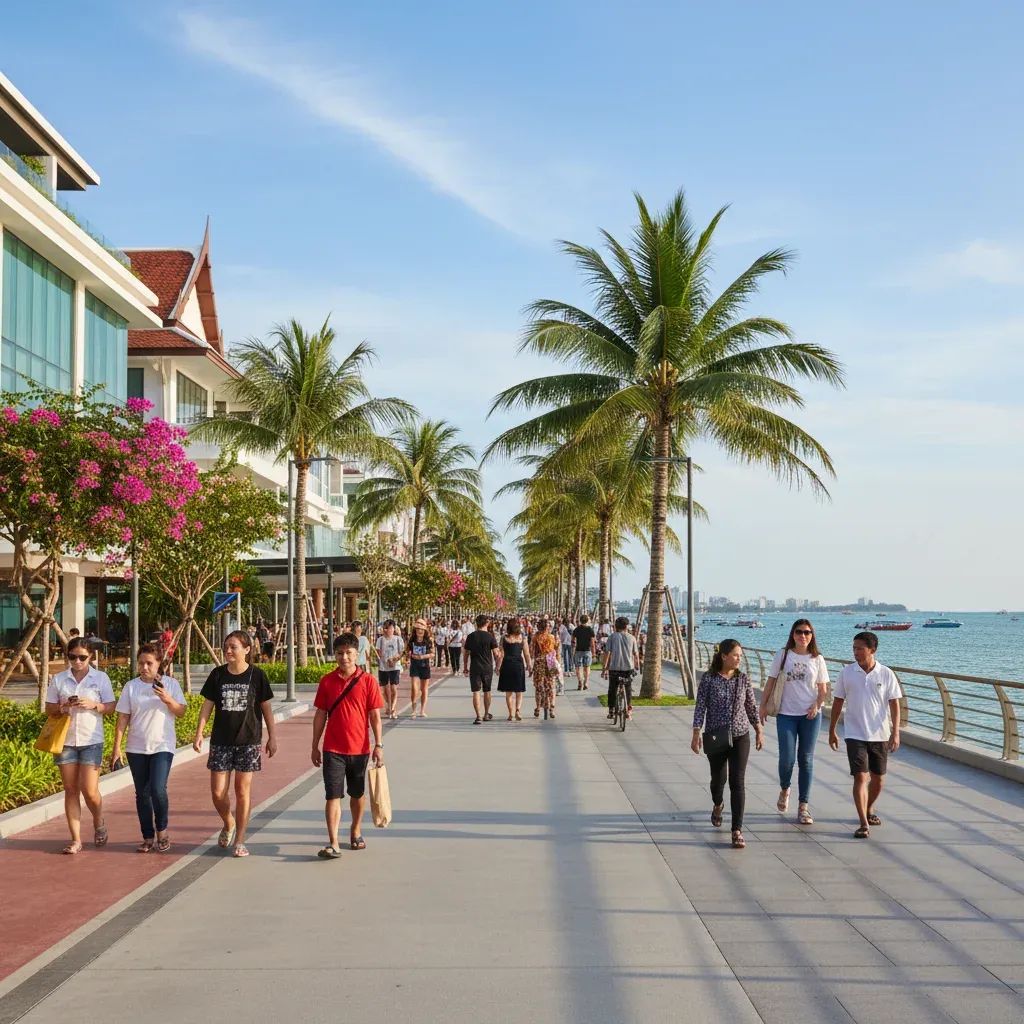
The Pattaya municipality has completed a high-profile cleanup operation along Thappraya Road Soi 7 in the Jomtien beach district, removing belongings left by homeless individuals and sanitizing the area—a move that has reignited the debate over whether sweeping streets addresses the underlying causes of homelessness or merely displaces the problem.
Why This Matters
• Street areas reopened: Public sidewalks and spaces along Thappraya Road Soi 7 have been cleared and are now accessible, improving the streetscape for residents and tourists ahead of high season.
• Homelessness debate reignited: The operation has drawn mixed reactions, with some praising restored order and others calling for housing and employment programs instead of displacement.
• Long-term support gaps remain: Despite outreach programs and a dedicated Chonburi Protection Center for the Homeless, legal limitations and budget constraints hinder comprehensive solutions.
The Operation: What Pattaya Did
Municipal crews, coordinating with health and environmental services, descended on Thappraya Road Soi 7 to remove accumulated items—mattresses, tarpaulins, clothing, and personal belongings—that had occupied sidewalks and public spaces. According to city officials, the goal was threefold: restore cleanliness, ensure pedestrian access, and maintain the city's appeal as a leading tourist destination for both Thai and international visitors.
The area was subsequently disinfected and reorganized, with authorities emphasizing the importance of preserving shared public spaces in a city that welcomed millions of tourists. Pattaya Deputy Mayor Damrongkiat Phinijkan has described the city's approach as prioritizing "urban order and tourism attractiveness" while balancing humanitarian considerations.
Resident Reactions: Praise and Pushback
Many Jomtien residents welcomed the cleanup, describing it as a necessary step to improve the neighborhood's appearance and safety. "The sidewalks were unusable," one local business owner told Thai media. "Tourists were walking in the street because there was no space."
However, the operation has also exposed a rift in public opinion over how Thailand's coastal cities should manage homelessness. Some residents argue that cleanup campaigns treat only the visible symptoms—scattered belongings and public encampments—without addressing root causes such as lack of affordable housing, unemployment, and mental health services.
Others pointed out that many items cluttering public spaces originated with residents themselves, who donate or abandon unwanted goods without coordinating with charities or waste management services. A segment of the community has called for stricter enforcement to prevent repeat encampments, while another group advocates for long-term social programs over displacement tactics.
Residents have also flagged other problem areas in Pattaya and Jomtien where similar conditions persist, urging city-wide inspections and consistent enforcement rather than reactive cleanups.
What This Means for Residents
For those living in or visiting Jomtien, the immediate effect is improved walkability and a cleaner streetscape, particularly important as Thailand enters the high tourist season following Songkran. Sidewalks are clear, drainage channels have been restored, and public spaces are accessible.
However, the underlying issue—growing homelessness in tourist cities—remains unresolved. Thailand's Ministry of Social Development and Human Security estimates that homelessness is rising in major tourist hubs including Bangkok, Pattaya, Chiang Mai, and Khon Kaen, driven in part by high cost of living and lack of affordable housing in areas with booming tourism economies.
For expats and long-term residents, the debate highlights the tension between maintaining a polished urban image and developing sustainable social safety nets. If you encounter homeless individuals in distress, you can report them to the 1300 hotline (24 hours) or the Pattaya Contact Center at 1337, which connects callers to welfare services.
Pattaya's Broader Homelessness Strategy
The Jomtien cleanup is one piece of a larger puzzle. Pattaya city officials have been ramping up efforts to address homelessness through both enforcement and outreach, though critics say the balance tilts heavily toward the former.
In recent operations, city officials conducted coordinated outreach that identified individuals experiencing homelessness. Of those identified, some were relocated to other areas, others were referred to the Chonburi Protection Center for the Homeless for shelter and support services, while some were screened for additional needs and referred to appropriate agencies. Authorities also documented repeat cases for ongoing monitoring.
Intensified street inspections have involved identity checks and coordination with social welfare agencies to provide temporary shelter, food support, and vocational training, with the stated goal of helping individuals reintegrate into society.
Pattaya's action plan includes a "reduce steps, speed up assistance" strategy designed to streamline frontline responses. This involves immediate field deployment when cases are reported, on-site screening, and emergency assistance without extensive paperwork. The city has pledged to build a sustainable system focused on long-term rehabilitation rather than short-term displacement.
Support Services Available in Pattaya
Despite the emphasis on cleanup operations, Thailand does offer support infrastructure for homeless individuals in the Pattaya area, though capacity and effectiveness remain limited.
The Chonburi Protection Center for the Homeless serves as the primary intake facility for those who voluntarily accept assistance. The center provides shelter, meals, basic healthcare, and vocational training, with the goal of eventual reintegration or return to home provinces.
Health and Opportunity Network (HON) Pattaya plays a critical role in connecting marginalized individuals—including the homeless—to healthcare and basic rights. HON field teams conduct outreach to build trust, assess living conditions, and coordinate with government agencies to secure identification documents such as national ID cards, which are essential for accessing state healthcare and welfare benefits.
In Bangkok, new models have emerged that may influence future efforts in Pattaya. "Baan Im Jai" (Home of Full Hearts) offers temporary housing combined with skills development and job placement support. The facility operates on a transition model, aiming to restore residents' capacity for independent living. While this program is not yet replicated in Pattaya, it reflects a policy shift toward housing-first approaches rather than purely punitive measures.
The Legal and Structural Barriers
Thailand's legal framework poses challenges for authorities attempting to address homelessness comprehensively. Current laws limit the city's ability to compel individuals into shelters or services, and there are no robust mechanisms for preventing homelessness before it occurs—such as emergency rental assistance or eviction prevention programs.
City officials have acknowledged these limitations and called on the national government to revise legislation to enable more effective management. Without changes at the policy level, local governments like Pattaya are left with stopgap measures that oscillate between cleanup operations and voluntary outreach.
Housing affordability is another structural issue. The influx of foreign investment and tourism development in Pattaya and Jomtien has driven up rents and property values, making it increasingly difficult for low-income Thai workers—many employed in the tourism and service sectors—to secure stable housing. This dynamic is not unique to Pattaya; it mirrors trends in other Thai cities experiencing rapid tourism growth.
What Comes Next
The streets of Thappraya Road Soi 7 are cleaner today, but the fundamental question remains unanswered: Is Thailand addressing homelessness, or simply relocating it? The public debate in Pattaya reflects a broader challenge faced by tourist cities worldwide—balancing the economic imperative of maintaining an attractive urban environment with the moral and practical necessity of providing pathways out of poverty.
For now, Pattaya city officials have signaled their intention to continue enforcement operations while expanding outreach and welfare coordination. Whether this dual approach will reduce homelessness or merely shuffle it between neighborhoods is a question residents, tourists, and policymakers will be watching closely in the months ahead.
Residents who wish to support homeless individuals constructively are encouraged to contact registered charities or the Chonburi Protection Center rather than donating items directly on the street, which can contribute to clutter and complicate municipal efforts to maintain public spaces.


