
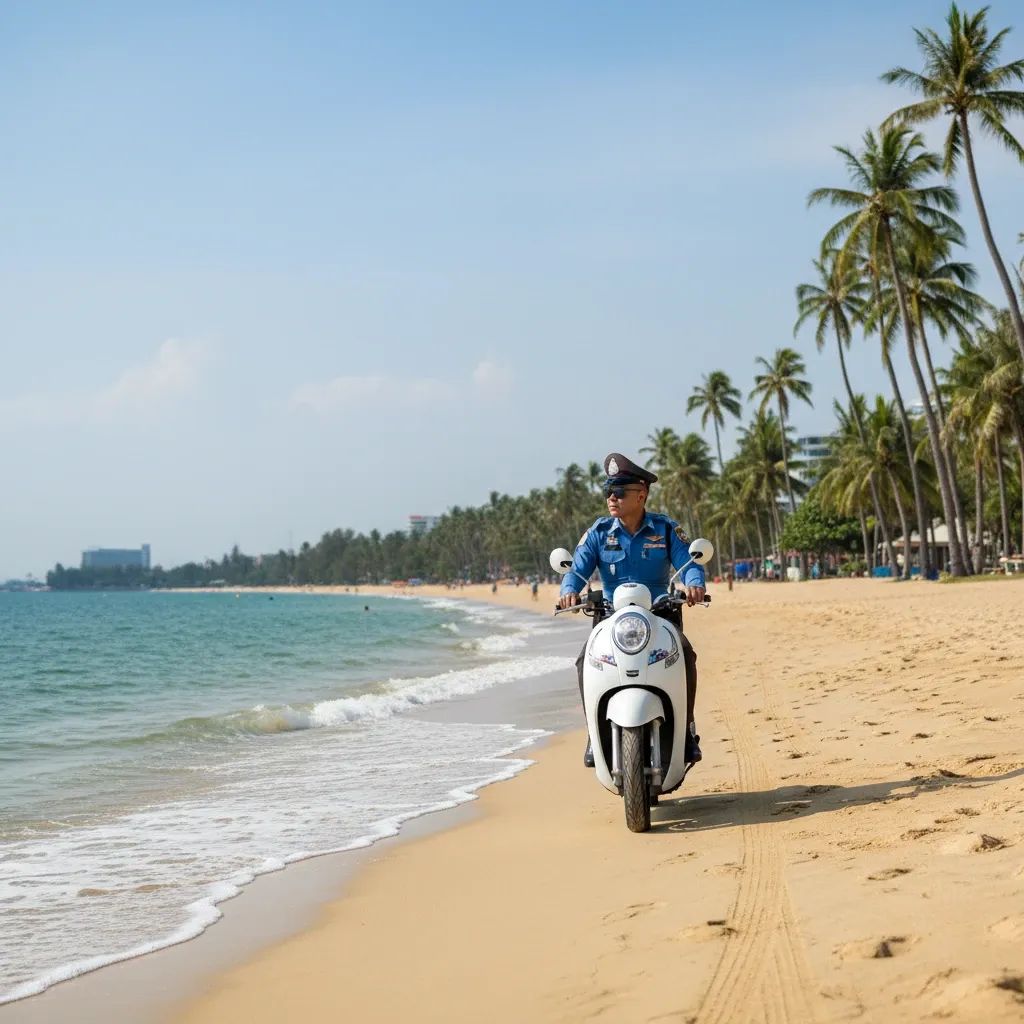
Pattaya is implementing a stricter traffic enforcement regime across its most congested corridors, targeting illegal parking and chaotic soi navigation with alternating-day parking rules and potential one-way conversions—a move that could reshape daily commutes and business access for tens of thousands of residents and tourists navigating the coastal hub.
Why This Matters
• Stricter parking enforcement on South Pattaya Road now includes wheel-clamping and fines between 11:00-21:00; violators risk towing costs exceeding ฿2,000.
• One-way street pilots are under review for narrow alleys like Soi Arunothai 9 and South Pattaya Soi 1, which could alter delivery routes and residential access.
• Major road upgrades along the 16 km railway parallel road continue through mid-2026, with lane closures and detours affecting cross-city travel daily.
• Drainage complaints persist despite infrastructure work, particularly in Khao Noi and Wat Boon Samphan areas where pooling water remains a safety concern.
Pattaya City Hall Targets Narrow Soi Gridlock
Pattaya City officials convened on April 23 under Deputy Mayor Anuphong Phutthanavarat to address mounting congestion in the city's narrow side streets, locally known as sois, where limited road width and surging traffic volumes have created persistent bottlenecks and safety hazards. The session focused on expanding the odd-even parking system—already trialed on South Pattaya Road since early February—and exploring the conversion of select tight corridors to one-way traffic flow.
Authorities identified Soi Arunothai 9 and South Pattaya Soi 1 as priority candidates for the one-way trial, alongside other similarly constrained routes where two-way traffic routinely forces vehicles onto sidewalks or into standstills. The initiative aims to improve flow, curb illegal parking, and enhance pedestrian safety in areas heavily trafficked by both locals and visitors.
City officials emphasized that enforcement will be phased and community feedback will be solicited before full implementation, acknowledging that abrupt changes could disrupt businesses reliant on street access and residents accustomed to existing patterns. However, the push reflects Pattaya's broader ambition to position itself as a more orderly, livable tourism destination amid rapid urbanization tied to the Eastern Economic Corridor (EEC) development.
Odd-Even Parking: Early Success, Persistent Challenges
The city's odd-even parking system—which restricts roadside parking to vehicles with license plates ending in odd numbers on odd-numbered calendar days, and even numbers on even days—was launched on South Pattaya Road on February 3 covering an 850-meter stretch from the Communications Intersection to Chaiyamongkol Temple Junction. Initial results were promising: traffic officials reported "visibly improved flow" and pedestrians reclaimed sidewalk space previously blocked by haphazardly parked vehicles.
By early April, Pattaya Mayor Poramet Ngampichet stated that compliance was high, with only a handful of daily violators, mostly foreign tourists or newcomers unaware of the rules. Encouraged by this outcome, Pattaya City extended the system city-wide on South Pattaya Road from October 1, coupling it with aggressive enforcement including wheel-clamping, towing, and fines starting October 15. The restricted hours were adjusted from 11:00-23:00 to 11:00-21:00 to balance business needs with traffic management.
Field surveys in late October confirmed that most drivers adhered to the regulations, reducing congestion during peak hours and improving road safety. Yet challenges remain: insufficient patrol personnel, lack of hydraulic tow trucks, and delays in issuing citations have hampered consistent enforcement. Pattaya's 2026 fiscal budget is expected to allocate funds for additional enforcement equipment, though critics have noted uneven application across the city, with some high-traffic zones receiving more attention than others due to limited resources.
What This Means for Residents and Businesses
For residents and business owners along affected streets, the new measures introduce both relief and friction. Parking availability will fluctuate daily, requiring careful planning for shop owners reliant on customer access and residents without private driveways. Delivery drivers, especially those servicing restaurants and retail outlets in narrow sois, may face tighter schedules and penalties if caught on the wrong day.
The potential shift to one-way streets could add several minutes to routine trips, forcing detours and altering familiar routes. Ride-hailing drivers using apps like Grab and Bolt will need to update navigation patterns, and motorbike taxis—already navigating tight alleys—may see increased demand as a nimble alternative.
However, the upside is tangible: clearer roads mean faster emergency vehicle access, reduced accident risk, and a more pleasant pedestrian environment. For tourists, the improvements could enhance Pattaya's appeal as a walkable, well-managed destination, indirectly supporting the hospitality and retail sectors that depend on visitor satisfaction.
Railway Parallel Road: 16 Kilometers of Disruption and Promise
Parallel to the parking crackdown, Pattaya continues a major upgrade of the railway parallel road, a critical 16 km corridor stretching from the Huai Yai intersection to Highway 36. The project, which uses both overlay and recycling methods to resurface deteriorated asphalt, is designed to improve traffic flow and support the city's long-term expansion tied to the EEC mega-project.
The work is being executed in phases. A 2 km section in Huai Yai is undergoing overlay resurfacing, while the remaining 14 km requires full scraping and recycling of the old road surface, a more invasive process that has triggered rolling lane closures and detours. From February 17 to March 17, a 400-meter stretch from Khao Talo Junction to Wat Tham Junction was fully closed to allow crews to upgrade drainage catch basins and raise the road level—a response to chronic flooding after heavy rain.
Despite the infrastructure push, drainage complaints have surged. Residents near Soi Wat Boon Samphan in Khao Noi have reported standing water after even moderate rainfall, pointing to gaps in the stormwater system. Social media comments captured public frustration, with one user bluntly noting "no drainage system" and others calling on contractors to clear construction debris that clutters roadsides and poses hazards.
Pattaya's Department of Highways is also advancing a separate ฿621 M project to install 2,000 mm HDPE drainage pipes along 3.7 km of the eastern railway parallel route, a scheme launched in December 2020 but delayed by the COVID-19 pandemic and design conflicts with the high-speed rail link connecting three airports. That project, originally slated for mid-2022 completion, remains ongoing as of April 2025, underscoring the complexity of coordinating multiple infrastructure initiatives in a fast-growing tourism city.
Broader Transport Ambitions: Monorail and Electric Songthaews
Pattaya's traffic reforms are part of a longer-term vision that includes monorail lines and electric public transit. The city has proposed a four-line monorail network, with the Green Line serving as the flagship route connecting Pattaya Railway Station, Terminal 21, Central Festival, Pattaya Night Bazaar, and Laem Bali Hai Pier. That 9.9 km line, budgeted at over ฿10,000 M, is currently undergoing Environmental Impact Assessment (EIA) review and is planned as a public-private partnership.
Additional lines—Purple, Red, and Yellow—are in earlier planning stages, designed to link Pattaya with neighboring districts like Nong Prue and Sattahip, and eventually integrate with the national high-speed rail network. Though construction timelines remain uncertain, the monorail represents Pattaya's ambition to transform the city into a modern, congestion-free tourism and business hub.
In the meantime, electric songthaew trials launched in April 2024 continue to operate on four main routes, offering a zero-emission alternative to traditional shared pickups. The pilot, running through December 2025, is being watched closely as a potential model for broader electrification of Pattaya's iconic "two-row" public transport.
Practical Takeaways for Daily Life
For anyone navigating Pattaya in the coming months, the message is clear: plan ahead, check your license plate, and expect detours. The odd-even parking system is now the norm on South Pattaya Road, with enforcement extending to more streets as resources allow. If you're driving a vehicle with an odd-numbered plate, avoid parking on even-numbered days between 11:00-21:00, or risk a clamp and tow.
If your vehicle is clamped, contact the Pattaya City Traffic Office to arrange payment and secure release of your vehicle. Staff can advise on procedures and applicable fees based on your situation.
If you live or work near Soi Arunothai 9 or South Pattaya Soi 1, watch for public consultations and signage about potential one-way conversions. These changes, if implemented, will require adjusting your daily route and possibly extending travel time.
The railway parallel road project will continue to cause lane closures and slowdowns, particularly during the rainy season when drainage work intensifies. Use Sukhumvit Road or Pattaya Second Road as alternates when possible, and allow extra time for cross-city trips.
Finally, if you're a business owner, consider the impact of restricted parking on customer access and adjust your signage, delivery schedules, or even operating hours to accommodate the new reality. City officials' push for order in Pattaya is accelerating, and compliance will be the path of least resistance.


