
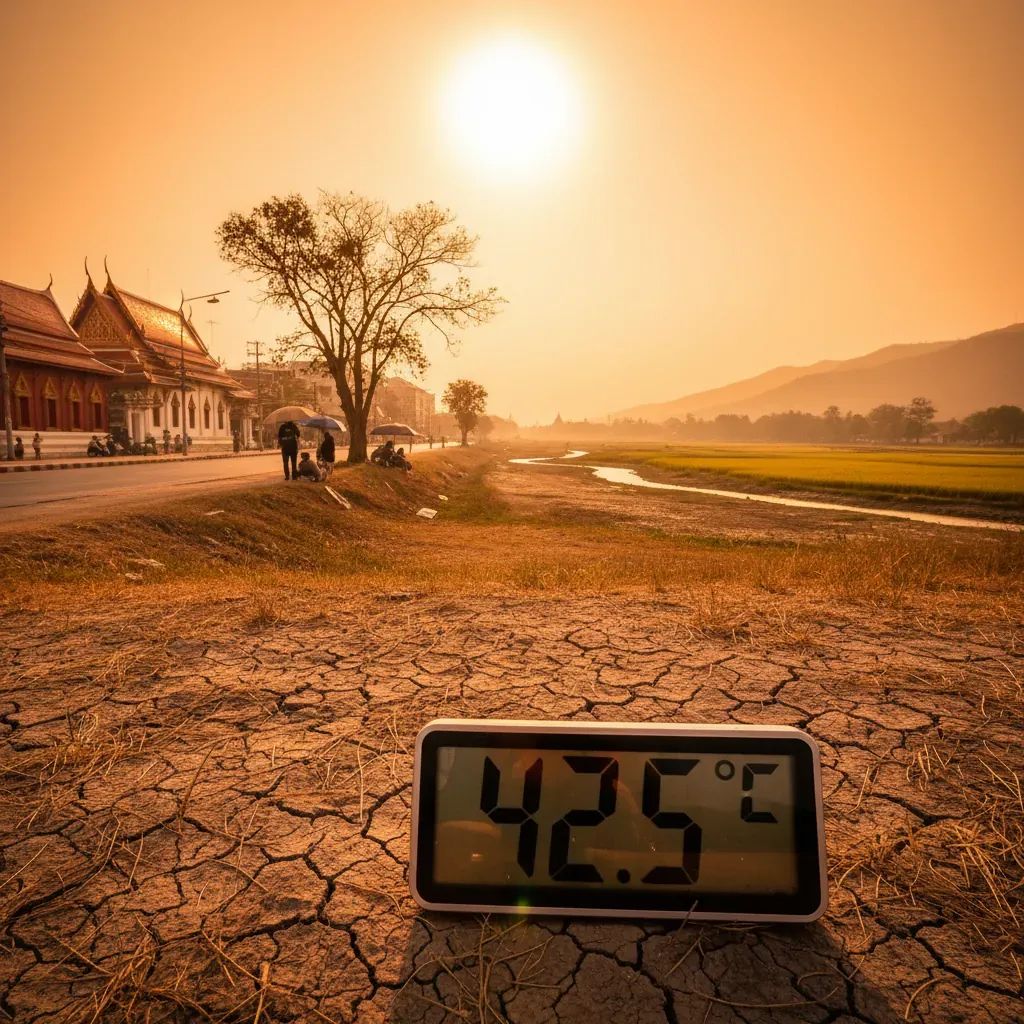
Thailand's eastern seaboard resort hub just experienced a textbook preview of the unpredictable hot season: a brief afternoon downpour that momentarily cooled Pattaya on April 20 before the oppressive heat returned, underscoring a pattern that residents and visitors should expect to continue through the end of the month.
Why This Matters
• Health risk window: Heat index values are hitting 36°C (97°F) with humidity at 66-72%, creating conditions where heat exhaustion and heat stroke become genuine threats, especially for tourists unaccustomed to tropical extremes.
• Daily rain probability: Current forecasts indicate a 5-65% chance of thunderstorms through the end of April, meaning umbrellas are mandatory daily gear.
• Economic pressure point: The Thailand Tourism Authority estimates that extreme heat events can depress visitor satisfaction and reduce stays, threatening a sector worth over 62 billion baht annually.
The Rain That Wasn't Enough
Around 2:00 PM on April 20, scattered showers swept across Pattaya's main thoroughfares, including Sukhumvit Road, beach zones, and residential neighborhoods. The precipitation lasted mere minutes—long enough for beachgoers to retreat under cover and for traffic to momentarily ease, but not long enough to provide lasting relief from the Songkran season's signature swelter.
Meteorological observations from the Thailand Meteorological Department revealed that localized cloud formations developed rapidly over the Gulf of Thailand, drifted inland, and dissipated by mid-afternoon. Sky cover remained overcast briefly after the showers, but the sun reasserted itself within the hour, pushing temperatures back toward the daily high of 32°C (89°F).
For the handful of tourists and locals caught without rain gear, the experience was jarring—not because of the rain itself, but because of how quickly the humidity rebounded. Within 30 minutes of the final drops, the air felt heavier than before, a phenomenon tied to moisture evaporation from sun-heated pavement.
Understanding the Hot Season's Erratic Patterns
April sits at the apex of Thailand's hot season, a period when the interplay between land heating and maritime moisture creates volatile afternoon weather. The Gulf of Thailand acts as a moisture reservoir; as land temperatures soar, convective currents pull humid air inland, where it collides with superheated urban surfaces. The result: short-lived but intense thunderstorms that form, dump rain, and vanish in less than an hour.
This is not anomalous. Thailand's eastern coastal provinces, including Chonburi (home to Pattaya), typically see 10-12 rain days in April, with monthly accumulation around 120 mm. But unlike the monsoon months, these April rains offer little cooling. The heat index—the temperature your body actually perceives when accounting for humidity—remains dangerously elevated even after precipitation.
Current meteorological data confirms that Pattaya will continue to experience highs of 31-34°C through the end of April, with overnight lows rarely dipping below 27°C. Sea surface temperatures are at their annual peak of 31°C, ideal for swimming but a further contributor to atmospheric moisture.
What This Means for Residents and Visitors
The convergence of extreme heat and sporadic rain creates a dual challenge: managing dehydration risk during dry spells and avoiding electrocution hazards or flash flooding during sudden downpours.
Practical steps include:
• Hydration discipline: Aim for 2-3 liters of water daily, even if you don't feel thirsty. Avoid alcohol and caffeine, which accelerate fluid loss.
• Time outdoor activities strategically: Schedule beach visits, sightseeing, and exercise before 11:00 AM or after 4:00 PM, when the sun's intensity wanes.
• Recognize heat illness symptoms: Dizziness, nausea, rapid heartbeat, and confusion signal heat exhaustion, which can escalate to heat stroke—a medical emergency requiring immediate hospital care.
• Dress for both sun and rain: Lightweight, light-colored, breathable fabrics paired with a compact umbrella cover both contingencies.
High-risk groups—including elderly residents, pregnant women, young children, and anyone with cardiovascular or respiratory conditions—should prioritize air-conditioned environments during midday hours. Outdoor laborers face compounded risks and should demand employer compliance with Thailand's occupational safety heat stress guidelines.
Economic Implications for the Tourism Corridor
Pattaya's economy hinges on visitor spending, and extreme weather volatility introduces financial friction. Hotel operators report increased air conditioning costs, while tour companies adjust itineraries to avoid midday exposure. Beach vendors see reduced foot traffic during the hottest hours, compressing their earning windows.
A broader concern looms: economic analysts warn that sustained extreme heat events could significantly impact Thailand's tourism revenue. Pattaya, with its beach-centric appeal, sits on the front line of this economic risk, vulnerable to degraded visitor experiences and potential infrastructure challenges.
Businesses are adapting. Some restaurants now offer extended breakfast hours and late-night menus to capture customers avoiding the midday furnace. Wellness tourism operators promote indoor spa treatments as alternatives to sun-baked beach lounging. Yet these adjustments represent short-term coping, not long-term solutions.
The Week Ahead: More of the Same
Forecast models show no meaningful break from the heat-and-rain cycle through at least the end of April. Thailand's upper regions—including the north and northeast—are expected to experience summer storms with strong gusts and possible hail between April 16-20, but the southern Gulf coast will see only scattered thunderstorms with limited intensity.
The Royal Thai Navy and marine police have advised small craft operators to monitor real-time weather updates and avoid departure during visible storm activity.
For Pattaya residents, the message is consistent: carry water, seek shade, monitor forecasts, and don't mistake a 10-minute rain shower for genuine relief. The Thai Meteorological Department maintains updated forecasts accessible via its website and mobile app, tools worth checking before any outdoor commitment.
Health Infrastructure Under Strain
Local hospitals and clinics in Chonburi Province report upticks in heat-related admissions during April's peak, ranging from minor heat rash cases to severe heat stroke requiring intensive care. Emergency room physicians emphasize that many cases are preventable with basic precautions: hydration, rest, and recognizing early warning signs.
First responders recommend the following if someone exhibits heat illness symptoms:
Move the person to shade or an air-conditioned space immediately.
Loosen tight clothing and apply cool (not ice-cold) water to the neck, armpits, and groin.
Offer small sips of cool water if the person is conscious and alert.
Call emergency services (dial 1669 in Thailand) if confusion, seizures, or loss of consciousness occur.
Pattaya City Hall has opened several public cooling centers in community halls and libraries, offering free access to air conditioning and drinking water during midday hours—a resource particularly valuable for outdoor workers and homeless populations.
Looking Beyond April: Monsoon Transition Ahead
While April's heat feels relentless, relief is statistically near. Thailand's southwest monsoon typically begins influencing the Gulf coast by mid-May, bringing more sustained rainfall, cloud cover, and moderating temperatures. The transition won't be abrupt—expect continued heat spikes through early May—but the rainy season's arrival will fundamentally shift the weather equation.
For now, the sporadic afternoon showers serve as brief intermissions in an otherwise unrelenting performance. Those living in or visiting Pattaya should plan accordingly: embrace early mornings and late evenings, treat midday heat with respect, and keep an umbrella handy for the inevitable downpour that will arrive, soak everything in sight, and vanish before you can properly react.


