
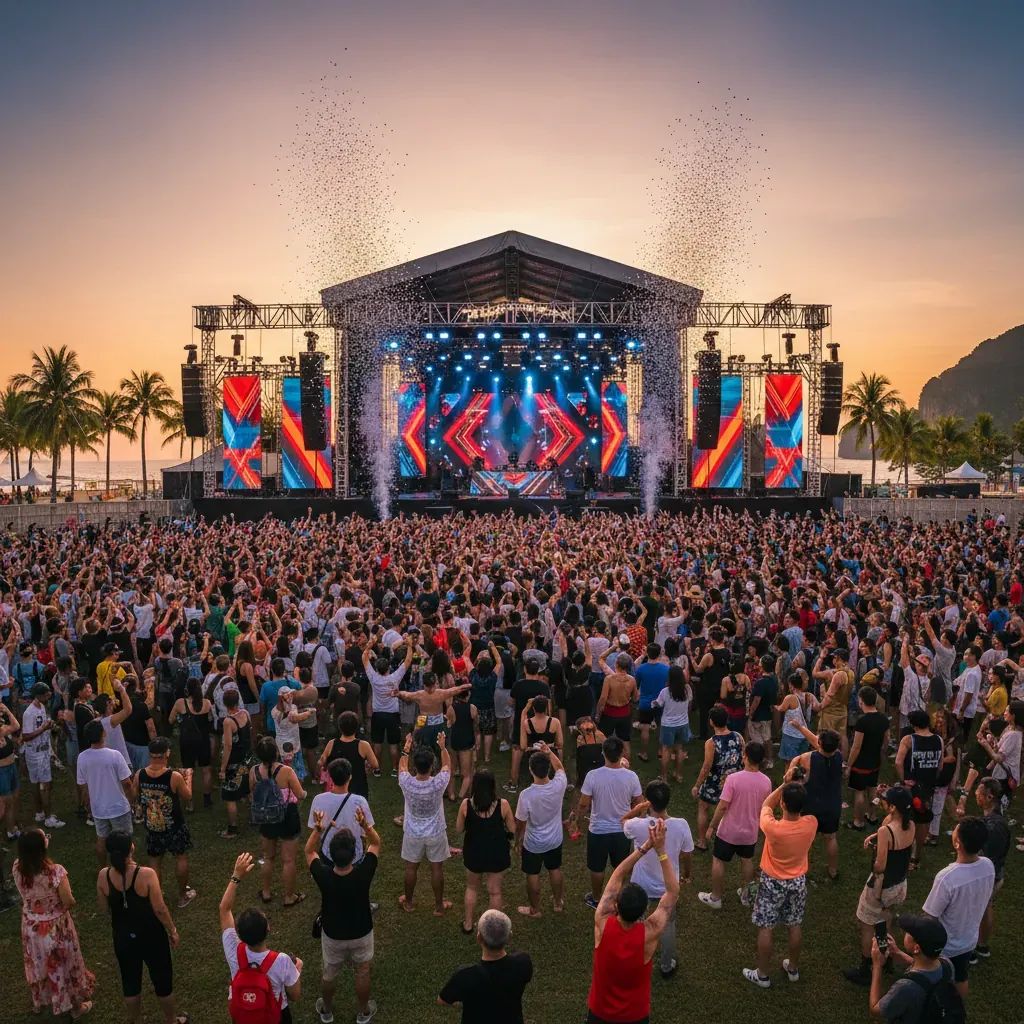
The Thailand Pattaya Municipal Police are ramping up noise enforcement along Jomtien Beach after mounting resident frustration over vehicles blasting stereo systems in public spaces—an issue expected to worsen dramatically as the Songkran water festival draws thousands of revelers to the coastal strip.
Why This Matters
• Immediate enforcement: Officers issued a warning to a driver on April 8 for excessive volume; the individual complied after intervention.
• Songkran timing: Authorities anticipate the problem will escalate sharply during the multi-day holiday, which begins in days.
• Legal framework: Thailand's noise laws allow authorities to issue fines up to ฿5,000 for disturbing the peace.
• Resident backlash: Residents report repeat offenders and reckless driving paired with loud music, fueling demands for stricter penalties.
The Enforcement Model: Balancing Public Enjoyment with Resident Rights
Municipal authorities in Pattaya are deploying a stepped-up enforcement campaign as Songkran approaches. The April 8 incident—triggered by a vehicle parked near Jomtien Beach with a stereo system audible across hundreds of meters—exemplifies the core challenge: balancing recreational use of beaches and promenades with the rights of nearby homeowners, hotel guests, and families.
Officers confirmed the disturbance on-site and delivered a verbal caution. The driver lowered the volume without further issue. Yet the episode is one of dozens logged in recent weeks, according to residents who have flooded social media with complaints about modified exhaust systems, aftermarket subwoofers, and convoy-style groups cruising the beachfront loop with windows down and bass lines shaking storefront glass.
Resident Sentiment: From Frustration to Demands for Action
Public reaction on Pattaya community forums has been unsparing. Multiple commenters recounted scenarios where groups of modified cars park near condominium towers after midnight, engines idling, subwoofers thumping until dawn. Others described "rolling meets"—spontaneous convoys that loop Jomtien Beach Road, honking and revving engines in addition to music playback.
One recurring theme: a sense that existing rules are under-enforced. "We have laws on paper," wrote one expat resident in a widely shared post, "but until officers start impounding vehicles or issuing real fines, nothing will change."
Another resident suggested offenders should be subjected to the same decibel levels they impose on others—an echo of frustration heard in Bangkok's own noise-complaint debates. The broader implication is clear: beaches and waterfronts are perceived as shared commons, and when a minority commandeers those spaces with disruptive behavior, resentment builds quickly.
Noise Complaints Nationwide: A Broader Pattern
Noise complaints rank as a significant pollution grievance across Thailand, particularly in tourism zones like Pattaya, Phuket, and Hua Hin, which see complaint spikes during holiday periods. The Royal Thai Police have also launched parallel crackdowns on vehicles emitting excessive smoke and noise through modified exhaust systems.
The Songkran Factor: Why Timing Matters
Songkran—the traditional Thai New Year water festival—transforms Jomtien Beach and the Pattaya waterfront into a days-long street party. Hotel occupancy typically hits 95%, and the influx brings convoy culture, where groups of young drivers treat the beachfront as a showcase for modified vehicles and sound systems.
Past years have seen isolated incidents of property damage, verbal altercations, and even physical fights sparked by noise disputes. This year, with post-pandemic tourism rebounding and domestic travel surging, authorities worry the concentration of people and vehicles will overwhelm existing enforcement capacity.
Pattaya City has announced it will deploy additional officers along Beach Road, Walking Street, and the Jomtien Second Road corridor during Songkran, with a focus on proactive warnings and enforcement action. Whether that approach satisfies residents demanding stricter penalties remains an open question.
What Residents and Visitors Should Know
With Songkran approaching, here is what to expect:
• For residents: Document repeat offenders with time-stamped video and license plates. File formal complaints via the Department of Pollution Control hotline (1650) or the Traffy Fondue app to create an official record.
• For drivers and visitors: Understand that Jomtien is a mixed-use zone where families, retirees, and tourists share the same coastal strip. Volume levels audible beyond your immediate vicinity risk official warning or fines. Songkran checkpoints will specifically target modified exhausts and audio systems.
• For property owners: If your venue hosts parking or outdoor seating, brief patrons on noise ordinances—liability can extend to property owners who tolerate repeat nuisances.
Looking Ahead
The municipal campaign arrives at a moment when Pattaya's reputation as a tourism destination depends partly on balancing vibrant nightlife with livable neighborhoods. For now, drivers cruising Jomtien Beach with loud sound systems should expect increased police attention, at least through Songkran.


