
Why This Matters
• Eight nights of free live music: Every Friday and Saturday in March transforms coastal Pattaya into a concert destination — no tickets, no gate fees.
• Expect severe congestion: The opening weekend at Pattaya Beach (March 6–7) will draw massive crowds; planners suggest arriving early or choosing the quieter Jomtien, island, or Naklua dates.
• New environmental standards in play: All food vendors face mandatory eco-friendly packaging and hygiene inspections — a shift from past festival cleanups.
• Ferry logistics matter for Koh Larn: The island venue (March 20–21) requires coordination; additional boats run late, but overnight lodging books fast.
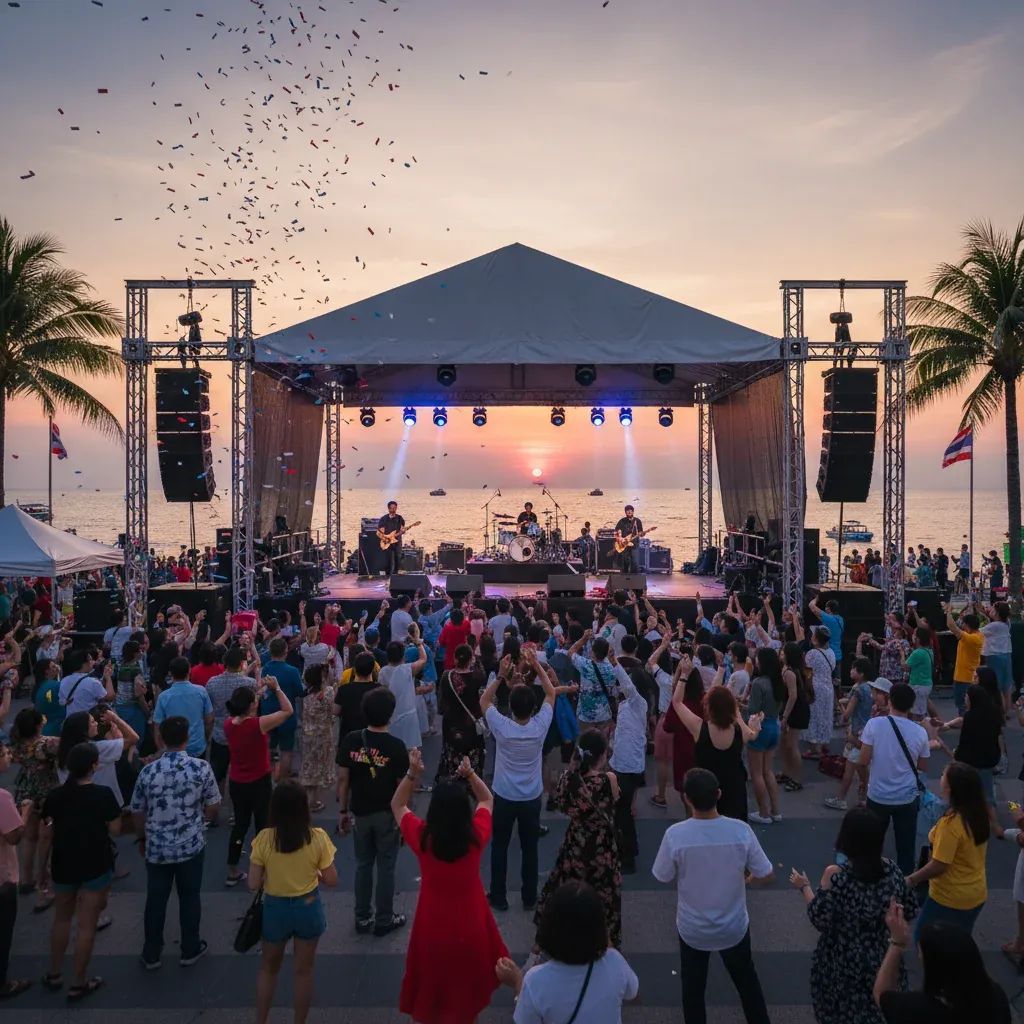
The Pattaya City Municipality has committed to hosting a month-long music series that deliberately spreads attendance across four geographic zones, each with its own sonic identity and crowd dynamics. Rather than concentrating 100,000+ visitors into a single weekend, organizers are testing whether distributed events across multiple venues can sustain tourism revenue while managing environmental and infrastructural strain.
The Geography of Sound
Each weekend targets a different neighborhood, which shapes both the atmosphere and the listener demographic.
Opening Act: Pattaya Central (March 6–7)
The series erupts along Pattaya Beach's main promenade with acts tilted toward K-pop and T-pop fandom: VIIS, TIGGER, JACKIE JACKRIN, PERSES, DA Endorphine, ALALA, VVV, BLUE PONGTIWAT, 4EVE, and ATLAS. Officials have flagged this as the "thickest" crowd moment of the festival — a deliberate choice to draw international tourists during opening weekend when media attention peaks. Accommodation rates in central Pattaya will spike accordingly, benefiting hotels from the mid-range beachfront chains to backpacker hostels.
The electrical energy at this inaugural weekend will set the tone for the entire month. Families with young children might prefer waiting for later venues, while fans of these particular artists should expect elbow-to-elbow conditions and delayed entry during late afternoon hours.
Shift South: Relaxed Vibes at Jomtien (March 13–14)
Moving one beach south, Jomtien Beach offers a deliberate atmospheric change. The lineup — GOODMOOF, LAZYLOXY & SAMBLACK & OG, LOMOSONIC, JOEY PHUWASIT, TAITOSMITH, GAMMA, PROXIE, D GERRARD, PARADOX, and a rap showcase featuring Fiixd, 1mill, 19hunnid, sunnybone, 4Bang, and Ben — skews toward electronic, hip-hop, and rock audiences. The demographic here trends older and the beach itself feels less congested than central Pattaya. For residents of Jomtien or those seeking a less frenzied concert experience, this weekend may prove more comfortable.
Island Escape: Samae Beach, Koh Larn (March 20–21)
The festival's only off-shore venue introduces logistical friction that will test attendee commitment. Ferries from Bali Hai Pier run regularly but operate on schedules that can strand latecomers. The Thailand Tourism Authority and Koh Larn ferry operators have promised extended evening departures and standby boats for concertgoers, but capacity remains finite.
The island lineup — PURPEECH, GUNNER, YOUNGGU, DIAMOND, GAVIN:D, WANYAi, BIG ASS, BLVCKHEART, THAOWAN, and hip-hop collectives including Z9, sexski, 2K, 2tflow, 1st, plus Mirrr, BOWKYLION, and The TOYS — offers rock, indie, and experimental acts that appeal to more specific listener segments. The island venue itself transforms the concert into a partial getaway; some attendees will book overnight rooms on Koh Larn (book early; options are limited). Others will calculate ferry timing and commit to last-boat departures. This weekend alone demonstrates how physical geography shapes event economics: Koh Larn's small hotels and guesthouses will enjoy rare March occupancy boosts.
Grand Finale: Naklua's Green Venue (March 27–28)
Lan Pho Public Park in Naklua positions itself as the festival's most community-integrated location. Featuring FELIZZ, CLO'VER, NANON, PERTH, F.HERO, DEPT, JAONAAY x JAOKHUN, MEAN, Yes'sir Days, and PiXXiE, this finale lineup balances established names with rising acts. The park's natural landscaping and green setting align with the "Green Music Festival" branding — a conscious attempt to signal environmental responsibility rather than raw commercial scale.
Families, local residents, and vendors from surrounding Naklua neighborhoods will likely dominate this weekend. Food stalls, craft vendors, and street commerce historically thrive in park-based venues where the atmosphere permits lingering. This final weekend offers the best opportunity for grassroots businesses to participate meaningfully.
What This Means for Residents
For people living in Pattaya, the festival introduces predictable but manageable friction for four consecutive weekends. Sound levels will rise every Friday and Saturday evening through March 31 at all four venues. Residents adjacent to Pattaya Beach's promenade should expect the most significant acoustic impact, with noise carrying several blocks inland. Similar considerations apply to neighborhoods near Jomtien Beach, Naklua Park, and those living on Koh Larn.
Traffic patterns will shift. The Thailand Royal Police and Pattaya traffic management teams have stated no full road closures are planned, but enhanced CCTV monitoring, rerouted municipal buses, and increased motorcycle taxis will alter commute timing. Those traveling Friday or Saturday evenings should pad travel time by 20–30 minutes during peak concert hours (typically 18:00–22:00).
Vendor opportunity meets regulatory scrutiny. Small business owners with food stalls or beverage carts face mandatory hygiene inspections and requirements for transparent pricing and eco-friendly packaging. While this creates overhead costs, it simultaneously signals legitimacy to visiting consumers and reduces historical criticism around overcharging and poor sanitation. The Thailand Ministry of Public Health has coordinated with local authorities on standards, positioning vendors who comply as premium participants in the event economy.
Utilities and emergency services will be stretched. Mobile restroom units, garbage collection, and emergency medical capacity are being augmented, but expecting toilet queues and occasional waste accumulation during peak hours — particularly at the opening Pattaya Beach weekend — is realistic.
Economic Calculation: Tourism Spending and Local Revenue
The festival operates under a free admission model, meaning no ticket revenue flows directly to organizers. Instead, the economic logic depends on indirect spending: overnight hotel bookings, restaurant meals, transportation services, retail purchases, and vendor transactions among the expected hundreds of thousands of attendees.
Historical precedent exists within Thailand. Comparable festivals like Wonderfruit (held in Chonburi Province, the same administrative region as Pattaya) have generated documented economic impact in the hundreds of millions of baht range and contributed measurably to national GDP. The Pattaya Music Festival 2026, distributed across four weekends and four venues rather than concentrated into a single weekend, may sustain economic activity across a longer window — potentially benefiting businesses that would otherwise face seasonal slumps in late March.
Hotels in Pattaya historically offer discounted rates during March shoulder season. The festival should reverse that dynamic, driving occupancy increases and premium pricing during the four festival weekends. Mid-range establishments, budget chains, and guesthouses will see the most immediate impact. The Pattaya area supports roughly 350+ registered accommodations; even modest occupancy gains across 30+ properties during festival weekends translate to hundreds of millions of baht in room revenue alone.
Restaurants, cafes, and bars aligned with concert venues will experience foot traffic surges. While international visitors may dine at established establishments, Thai attendees and younger demographics typically favor street food and informal vendors — meaning hawker stalls, pushcart noodle vendors, and small shopfront eateries will capture disproportionate volume. For those businesses, March 2026 becomes a rare opportunity for four-weekend financial acceleration.
The Environmental Experiment
"Green Music Festival" is more than branding; it reflects regulatory pressure. Thailand's coastal environmental standards have tightened, and large-scale beach events have historically generated criticism for plastic waste, litter, and marine pollution. The Pattaya City Municipality and Thailand Tourism Authority are mandating vendor compliance with eco-friendly packaging and waste collection protocols.
Enforcement remains the unknowable variable. Past festivals in Pattaya have struggled with post-event beach cleanup, particularly in the early morning hours after performances end. Whether mandatory cleaning staff, enhanced garbage collection, and vendor regulation will produce measurable environmental improvement depends on both regulatory follow-through and attendee cooperation.
For residents and environmental advocates, March 2026 offers a test case: Can a tourism-dependent coastal city implement meaningful sustainability standards without sacrificing economic impact? Success metrics will include waste volume collected, beach condition post-festival, and vendor compliance documentation. Failure would validate skepticism that large-scale tourism events and environmental stewardship remain incompatible in Thailand's current regulatory environment.
Logistics for Attendees
No official artist schedules or precise stage times have been released. Each venue will feature multiple stages, but whether performers occupy different stages simultaneously or operate in sequential time slots remains unclear. Anyone targeting specific artists should monitor the Pattaya City Municipality social media channels and news outlets for schedule updates.
Parking is finite. Designated parking areas will be identified at all venues, but Pattaya's infrastructure has historically struggled during peak tourism periods. Early arrival (13:00–14:00 for evening concerts) or use of ride-hailing services, organized shuttles, or public buses will prove essential.
For Koh Larn specifically: Ferry services typically operate until early evening, but organizers promise extended or additional boats for concertgoers. Confirm return ferry schedules in advance. Overnight accommodation on the island is limited and will book quickly — book 2–3 weeks ahead if staying overnight. Otherwise, calculate departure time to catch the final ferry; missing it creates an expensive last-minute hotel scramble or a costly private boat charter.
Restroom capacity will be tested. Mobile units will be deployed, but peak concert moments (approximately 20:00–22:00) may generate queues, particularly at Pattaya Beach during opening weekend.
The Festival City Reinvention
Pattaya's municipal government has adopted a deliberate strategy to rebrand the city as a "Festival City" — a destination defined by live entertainment, music culture, and seasonal events rather than its historical reputation. The Music Festival is the cornerstone initiative, leveraging free admission to generate social media amplification and organic word-of-mouth marketing without depending on ticket revenue.
This repositioning strategy reflects economic necessity. Pattaya's tourism sector has faced structural headwinds: declining overnight stays among international visitors, aging infrastructure, and shifting travel patterns. Music festivals offer a defensive strategy — they draw new demographics (younger listeners, families, cultural tourists), generate positive media coverage, and create reasons for repeat visits.
If successful, the 2026 festival establishes precedent for recurring events in March, transforming what is historically a slow tourism period into a revenue-generating season. Future planning likely includes similar multi-weekend festivals in different months or different genres, essentially distributing concert-based tourism throughout the calendar year.
The Lineup as Economic and Cultural Snapshot
The artist roster — spanning VIIS, 4EVE, ATLAS, PERSES through F.HERO, BIG ASS, The TOYS, and hip-hop collectives — reflects the current Thai music industry landscape. Established acts share billing with rising T-pop groups and regional hip-hop talent. For international visitors, the names may be unfamiliar, but the beachfront settings and free admission lower barriers to cultural discovery.
For Thai music fans, the lineup signals industry momentum: indie rock acts like BIG ASS receiving major festival platforms; hip-hop gaining co-headline status alongside traditional pop; and experimental electronic artists like LAZYLOXY positioned as mainstream attractions rather than niche acts. The festival becomes a cultural barometer as much as an economic engine.
March Transforms
The phrase "Pattaya Waves Got Rhythm" encapsulates the ambition: redefine the city's identity around sonic energy, oceanfront settings, and cultural vitality. Whether the festival delivers on economic, environmental, and cultural objectives will emerge over the coming weeks. For now, Pattaya residents should prepare for four consecutive weekends of altered traffic, elevated noise, occasional vendor crowds, and the simultaneous disruption and economic activity that comes with hosting hundreds of thousands of concert attendees. For visitors, the distributed four-venue format offers flexible options: choose the opening week's intensity or seek quieter alternatives in weeks two through four. Either way, March belongs to music.


