
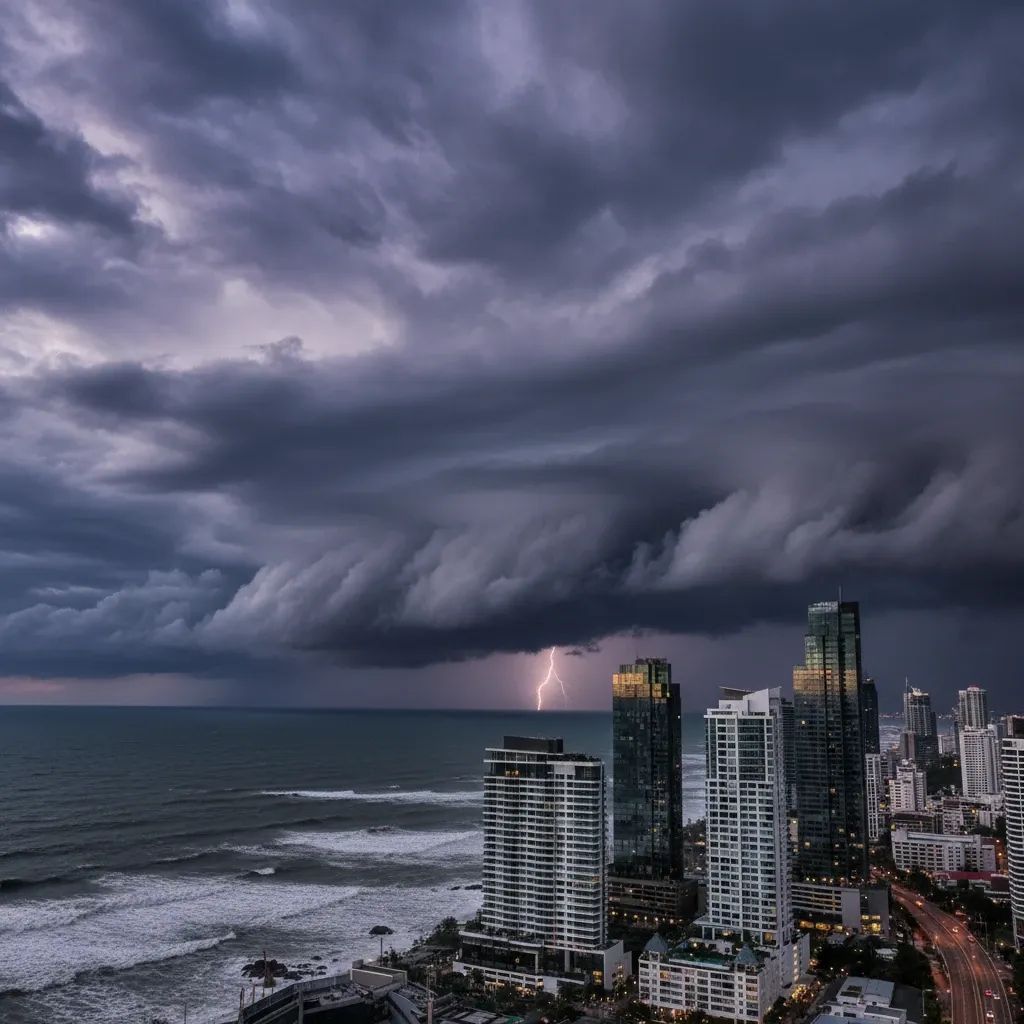
The Thailand Meteorological Department has confirmed that Pattaya and surrounding coastal zones will continue experiencing unstable weather through the remainder of March, as a pattern of summer storms delivers erratic downpours, gusty winds, and lightning strikes across the eastern seaboard. Residents and tourists planning outdoor activities—including this weekend's popular Pattaya Music Festival on Koh Larn—should prepare for abrupt weather shifts that can ground ferries, flood streets, and disrupt events with little warning.
Why This Matters
• Summer storm warnings remain active through at least March 26, bringing thunderstorms, wind gusts, and hail to Chonburi Province.
• Ferry operators to Koh Larn may suspend service when waves exceed 2 meters, stranding festival-goers or forcing last-minute cancellations.
• Flash flooding continues to affect low-lying areas of Pattaya during heavy rainfall, with central zones regularly experiencing temporary street inundation.
• Air quality earlier this month showed moderate-to-high particulate levels recorded across the eastern region before the rain began.
Volatile Conditions Redefine "Peak Season"
March typically marks high season along Thailand's eastern Gulf coast, yet 2026 is proving anything but predictable. On March 18, thick charcoal clouds rolled over Pattaya Bay, triggering localized downpours in neighborhoods such as Nong Ket Yai and Chak Nok, while other areas remained relatively dry. Phratamnak Hill recorded strong gusts, and residents reported sustained rain mixed with gusty winds. By evening, Naklua and surrounding zones saw dense cloud cover deepen, yet nearby areas stayed entirely dry.
This hyper-local variability is typical of summer-storm cells, which form when a thermal low-pressure system sits over northern and central Thailand and collides with moisture-laden southeast winds pushing in from the South China Sea and Gulf of Thailand. The result: isolated but intense thunderstorms that can deliver heavy rainfall in under an hour, putting pressure on Pattaya's drainage infrastructure.
Pattaya City Hall's municipal enforcement office has asked the public to report real-time weather observations—a crowd-sourced early-warning effort that reflects the volatility of localized storm patterns. Officials caution that lightning, sudden downpours, and wind squalls can strike with minimal advance notice, making it essential to seek shelter immediately when storms develop.
What This Means for Residents and Visitors
For anyone living in or traveling to Pattaya, Jomtien, or Naklua, the immediate takeaway is simple: carry an umbrella, avoid open water during storms, and check marine forecasts before boarding any ferry. The Thailand Department of Marine and Coastal Resources has warned that sea conditions can deteriorate rapidly in thunderstorm zones, with waves topping 2 meters—dangerous for the small speedboats and passenger ferries that shuttle tourists between the mainland and Koh Larn.
Road flooding remains a recurring issue for Pattaya. The city's low-lying topography and drainage limitations mean water can accumulate on major roads during heavy rain. During significant storms, motorcycles and compact cars may become inoperable, stranding commuters and forcing ride-hailing drivers to avoid submerged zones. For residents, this translates to traffic delays lasting several hours after each storm.
Tourism operators note that beach water quality can decline after heavy rain, as stormwater flushes debris into the bay. Pattaya Beach has historically experienced erosion during intense storms, with sand washing into the sea and leaving temporary debris. Post-storm algae blooms—triggered by nutrient runoff—can affect nearshore waters, temporarily discouraging swimming.
Festival-Goers Face Ferry Bottlenecks and Storm Risk
This weekend's Pattaya Music Festival 2026, scheduled for March 20–21 (Saturday-Sunday) at Haad Samae on Koh Larn, adds a layer of logistical complexity. The two-night beachside concert series—running 6 PM to midnight both evenings—is expected to draw thousands of music fans, all funneling through the island's narrow piers and limited ferry fleet. Organizers have urged attendees to arrive early and allow extra travel time, anticipating crowded docks and potential weather delays.
Songthaew and motorcycle-taxi fares on Koh Larn are fixed at ฿30 per person per trip, with vehicles shuttling between the temple departure point near Na Baan Pier and the Haad Samae roundabout. Service will continue until the festival ends at midnight, but city authorities have banned golf carts and tricycles from the Na Baan–Haad Samae route during peak hours (4 PM–midnight) to reduce congestion and improve safety.
The wildcard is weather. Should a storm cell develop over the Gulf of Thailand on Saturday or Sunday afternoon, ferry operators may suspend service altogether, leaving festival-goers stranded on the island or unable to depart the mainland. Marine Police and the Department of Harbors have historically issued no-sail orders for small craft when wind and wave conditions exceed safe thresholds, prioritizing passenger safety over convenience. Anyone planning to attend should monitor real-time weather updates and have a contingency plan—overnight accommodation on Koh Larn, or flexibility to skip the event if conditions deteriorate.
Climate and Seasonal Patterns
Thailand's hot-season weather volatility is well-documented, with summer months typically bringing unpredictable rainfall across Southeast Asia. For now, the immediate pattern is one of erratic rainfall and localized flooding, punctuated by stretches of intense heat. Daily highs in Pattaya have ranged from 31–33°C, with humidity amplifying the perceived temperature. Overnight lows hover around 26–27°C, offering little relief. Sea temperatures near 29°C remain ideal for swimming—when water clarity permits—but the combination of heat, humidity, and sudden storms creates uncomfortable conditions for outdoor activities.
Thailand's National Disaster Prevention and Mitigation Command has instructed provincial offices to prepare for multiple scenarios including flash floods and rescue readiness. In Chonburi Province, that means stockpiling emergency water supplies, rehearsing evacuation protocols, and maintaining readiness for relief operations.
Practical Steps for the Next 10 Days
For residents and visitors navigating the remainder of March, a few simple precautions can mitigate inconvenience and risk:
• Check the forecast twice daily. Conditions can shift within hours, and localized storms may not appear in city-wide predictions.
• Avoid open areas, tall trees, and unsecured structures during thunderstorms. Lightning and falling debris cause injuries during the rainy season.
• Park vehicles on elevated ground if you live or work in low-lying zones prone to temporary flooding.
• Delay ferry trips if dark clouds gather over the bay. Wait an hour; storms often pass quickly.
• Drink plenty of water and limit midday sun exposure. Heat stress remains a significant daily concern.
The Pattaya municipal enforcement team has published a hotline for residents to report localized flooding, downed power lines, or blocked drainage—information that helps city crews prioritize emergency response.
Looking Ahead
Pattaya's weather vulnerabilities underscore a broader reality: coastal cities require robust drainage infrastructure and ongoing maintenance to manage intense rainfall. Each flood cycle affects local businesses and residents. For the thousands attending this weekend's music festival, the hope is that Saturday and Sunday evenings deliver clear skies and uninterrupted entertainment. For residents, the priority remains minimizing disruption from weather events while authorities work on longer-term infrastructure solutions.


