
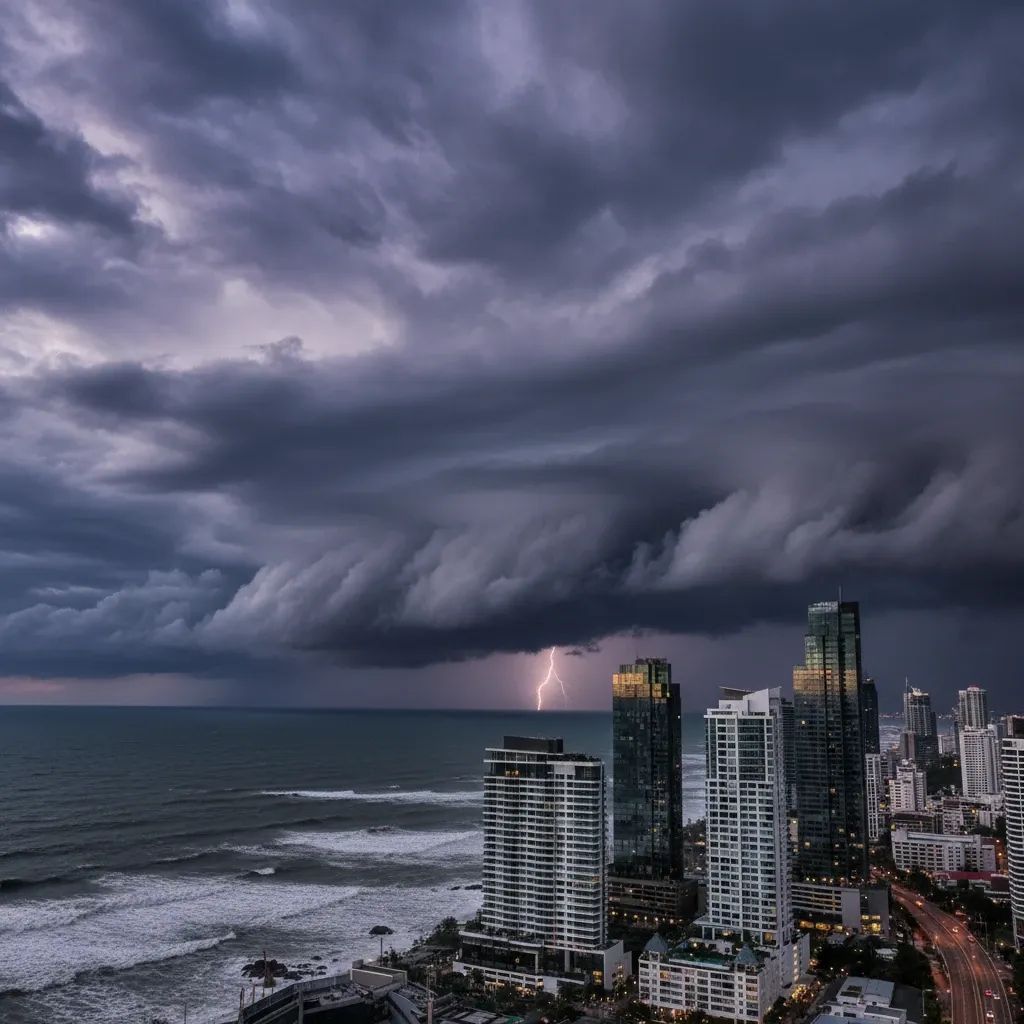
The Thailand Meteorological Department has placed Pattaya and the broader Eastern seaboard on alert for summer storms that could deliver sudden downpours, gusty winds, and lightning through the end of the week—a weather pattern driven by colliding air masses that has already begun disrupting outdoor plans and raising safety concerns for the city's massive tourism and service economy.
Why This Matters
• Thunderstorm probability at 20% in Pattaya today, with localized wind gusts strong enough to topple unsecured structures and large trees.
• Daytime highs will reach 34–36°C, intensifying the storm trigger while nighttime temperatures hover around 25–27°C.
• Air quality remains moderate to elevated due to dust and haze, though rain could temporarily improve conditions.
• Mariners face wave heights up to 2 meters in thunderstorm zones across the Gulf of Thailand.
The Meteorological Setup: Cold Front Meets Tropical Moisture
A high-pressure system carrying cool air from China has extended over the northeastern provinces and the South China Sea, while southerly and southeasterly winds are simultaneously pumping moisture into the eastern provinces, including Chonburi. This atmospheric collision, combined with intense daytime heating, creates the perfect conditions for explosive convective storms that can materialize within minutes.
The Thailand Meteorological Department's advisory No. 6, issued on February 24 and valid through today, warns that these summer storms carry the full spectrum of hazards: thunderstorms, gusty winds, localized heavy rain, and lightning strikes. A westerly wave from Myanmar is also contributing to instability across the upper regions, amplifying the risk.
What This Means for Residents and Visitors
Pattaya's economy—anchored by beachfront hospitality, open-air dining, and water sports—faces operational friction during these weather windows. While the 20% storm probability sounds modest, the sudden onset and intensity of tropical convection means conditions can deteriorate from clear skies to dangerous winds and flooding rain in under 30 minutes.
Immediate safety guidance from authorities includes:
• Avoid open spaces, large trees, unstable structures, and billboards during active thunderstorms.
• Monitor local weather updates closely, as conditions can shift rapidly.
• Farmers in surrounding districts should secure fruit trees and take protective measures for crops and livestock.
• Plan outdoor activities with flexibility, keeping indoor alternatives ready.
The Thailand Royal Police and local disaster management offices have urged vigilance, particularly for construction sites, outdoor markets, and waterfront venues where flying debris and sudden wind gusts pose elevated risk.
Seven-Day Outlook: Heat Persists, Storm Risk Eases
Meteorological experts forecast that the Eastern region will see storm activity gradually decline after today. Between February 26–27, thunderstorm coverage will drop to 10–30% of the region, with southerly winds at 10–30 km/h and wave heights below 1 meter except in active storm cells. From February 28 through March 3, storm probability falls further to just 10%, with winds shifting to southwesterly.
Temperature trends remain punishing: Daytime highs will range from 32–38°C, while overnight lows will settle between 24–27°C. The Thailand Meteorological Department has issued a secondary health advisory for this period, warning residents and outdoor workers to stay hydrated and limit midday sun exposure as the heat index climbs.
Economic and Tourism Implications
While today's weather alert targets immediate safety, the broader context reveals how sensitive Thailand's coastal tourism economy is to weather volatility. Research from the University of the Thai Chamber of Commerce has estimated that sustained flood and storm events in the Eastern seaboard region—including scenarios where Pattaya-area infrastructure faces extended disruption—can generate daily economic losses of ฿1,000–1,500M across trade and tourism sectors. A month-long crisis could push aggregate damage to ฿10,000–15,000M.
Pattaya's resilience stems from its diversified hospitality infrastructure and rapid response protocols, but summer storms test operational continuity for hotels, tour operators, and transport services. Regional tourists, a key demographic for the Eastern seaboard, have historically shown heightened sensitivity to safety concerns during weather events, with cancellation rates spiking during prolonged storm warnings.
Air Quality: A Silver Lining
One positive byproduct of the storm system: improved air circulation and potential rainfall are expected to stabilize or slightly reduce dust and haze concentrations in the upper and eastern regions. Pattaya has experienced moderate air quality this week due to stagnant conditions, but the meteorological shift should flush particulate matter and offer clearer skies once the active weather passes.
Sea conditions in the Gulf of Thailand are rated as moderate, with wave heights around 1 meter rising to over 2 meters in thunderstorm zones. The Thailand Royal Navy and coastal patrol services have advised small craft operators to exercise heightened caution and monitor marine forecasts before departing.
Practical Checklist for the Next 48 Hours
• Check your insurance coverage: Ensure property and vehicle policies are current, particularly for wind and water damage.
• Secure loose outdoor items: Patio furniture, signage, and potted plants can become projectiles in sudden gusts.
• Download weather apps: Real-time radar and lightning detection apps provide granular updates unavailable through broadcast channels.
• Plan alternative routes: Flash flooding can close underpass roads and low-lying thoroughfares within minutes.
• Stock essentials: Keep flashlights, bottled water, and basic first aid supplies accessible in case of short-term power interruptions.
For those managing agricultural operations in the Chonburi hinterland, the Thailand Ministry of Agriculture and Cooperatives has reiterated guidance to reinforce tree supports and move vulnerable livestock to covered shelters ahead of storm cells.
Regional Context: A Broader Pattern
The current alert is part of a seasonal transition affecting much of Thailand's upper regions. While Pattaya sits on the edge of the most intense activity—provinces like Nakhon Nayok, Prachin Buri, Sa Kaeo, Chachoengsao, Rayong, Chanthaburi, and Trat face 40% storm coverage today—the city's exposure to sudden squalls remains significant due to its coastal geography and urban heat island effect.
The Eastern region is experiencing scattered to locally heavy thunderstorms, with the pattern expected to follow the typical February-March transition cycle. The Thailand Meteorological Department continues to monitor atmospheric dynamics in the upper atmosphere and South China Sea region, which could influence conditions later in the week if they strengthen.
Long-Term Preparedness
Pattaya's local government has invested heavily in flood mitigation infrastructure and early warning systems following lessons learned from past monsoon seasons. Emergency operations centers maintain 24-hour coordination with provincial disaster management offices, and evacuation shelters are pre-positioned for vulnerable populations, including bedridden patients, the elderly, and children.
Residents can request assistance or report emergencies via the 1784 hotline or local disaster prevention offices. The Pattaya City Administration also operates a real-time alert system via social media and community loudspeakers in high-risk zones.
For now, the message is clear: stay informed, stay flexible, and prioritize safety as this summer storm pattern plays out across the Eastern seaboard. The weather will improve by week's end, but the next 48 hours demand heightened awareness and smart planning.


