
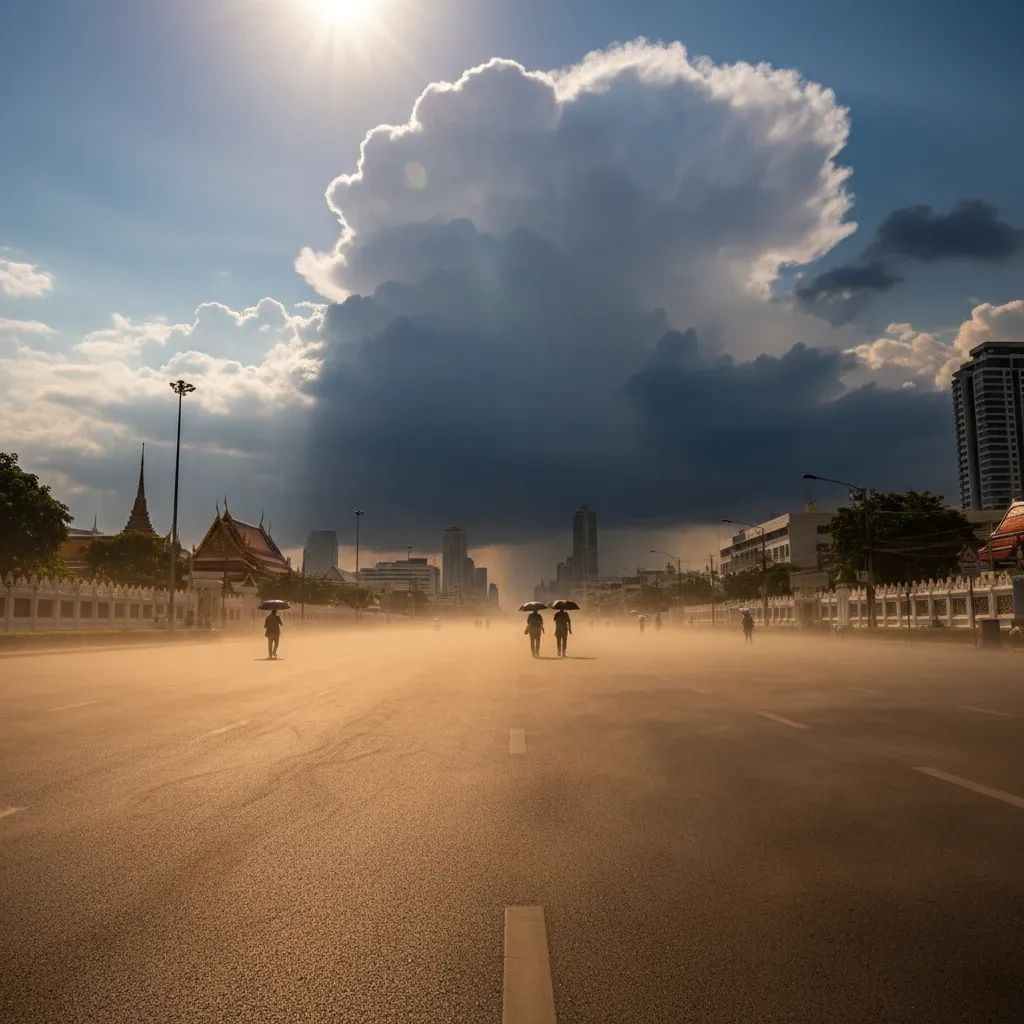
Thailand's coastal resort hub of Pattaya is bracing for a punishing stretch of heat as the Thai Meteorological Department (TMD) issues warnings for dangerous temperatures across much of the country. Residents and tourists face daytime highs reaching 39°C coupled with spotty thunderstorms that could complicate outdoor plans and travel as the Songkran festival approaches.
The weather service has classified conditions across most of Thailand as "hot to very hot," with an atmospheric low-pressure trough parked over the northern provinces feeding unstable air south. For anyone living in or visiting coastal areas, the message is straightforward: prepare for oppressive heat during the day, hazy skies that reduce visibility, and sudden afternoon downpours that arrive with little warning.
Why This Matters
• Peak temperatures will hit 33–39°C in eastern provinces including Pattaya, with overnight lows offering minimal relief at 24–28°C.
• Thunderstorm probability sits at 20% region-wide, bringing gusty winds and hazardous conditions for small watercraft.
• Air quality concerns are rising in northern and northeastern zones due to stagnant circulation and elevated particulate matter.
• Timing coincides with Songkran travel season, potentially affecting road safety and tourism logistics.
What This Means for Residents
The eastern seaboard, which encompasses Pattaya, Chonburi, and neighboring coastal districts, will see the same oppressive heat pattern that has gripped the region for weeks. TMD forecasters emphasize that the combination of a thermal low-pressure system and weak wind circulation creates a recipe for both extreme heat and volatile afternoon weather.
For those with outdoor commitments—whether construction work, beachside commerce, or simply commuting—the window of relatively safe exposure is narrowing. The period between late morning and mid-afternoon will be the most dangerous, with the heat index climbing well beyond the raw temperature reading due to humidity along the coast.
Health officials recommend frequent hydration and minimizing sun exposure during peak hours. Indoor workers in air-conditioned environments should also be mindful of the thermal shock when stepping outside, which can trigger heat exhaustion faster than gradual acclimatization.
Volatile Afternoon Weather Pattern
While much of the focus remains on heat, the 20% thunderstorm forecast should not be dismissed as insignificant. When storms do materialize in this setup, they tend to arrive suddenly and carry strong gusts capable of toppling unsecured outdoor furniture, scaffolding, and signage. Coastal businesses accustomed to seasonal squalls know the drill, but newcomers and tourists may be caught off guard.
Sea conditions in the Gulf of Thailand are rated as moderate, with wave heights around one meter under calm skies. However, the TMD cautions that localized thunderstorms can push waves significantly higher, creating hazardous conditions for jet skis, longtail boats, and other small craft. Beach operators and marine tour companies are being advised to monitor real-time radar and be prepared to halt operations on short notice.
The unpredictability of these afternoon cells also complicates planning for anyone relying on consistent weather—whether that's a construction project timeline, an outdoor event, or a wedding ceremony on Jomtien Beach. The window of stable conditions is shrinking as the season progresses.
Air Quality Pressures Mount
Beyond the immediate heat threat, residents in northern and northeastern Thailand face deteriorating air quality as weak atmospheric flow allows fine particulate matter to accumulate. The TMD notes that dust and haze levels are trending toward the moderate to unhealthy range, particularly in provinces with active agricultural burning or urban congestion.
While Pattaya itself is not in the primary haze zone, prevailing wind patterns occasionally push polluted air masses south, especially during late afternoon and evening hours. Those with respiratory sensitivities—children, the elderly, and individuals with asthma or chronic obstructive pulmonary disease—should monitor local air quality indices and consider limiting outdoor exercise during elevated readings.
The hazy daytime skies that accompany this weather pattern are a visible indicator of suspended particulates, even if formal pollution alerts have not yet been issued for the eastern region. The lack of clearing rainfall over the past weeks has allowed this buildup, and the scattered thunderstorms in the forecast are unlikely to provide sustained improvement.
Songkran Timing Adds Complexity
The convergence of extreme heat and unstable weather with the Songkran holiday period creates a multi-layered challenge for Thailand's tourism infrastructure. Pattaya, one of the nation's most visited coastal destinations, expects a surge in domestic and international arrivals for the traditional water festival, which typically sees streets filled with revelers engaged in prolonged outdoor activity.
Authorities are concerned that the combination of sustained heat exposure, alcohol consumption, and energetic celebration could elevate the risk of heat-related medical emergencies. Local hospitals and clinics in Chonburi Province are being advised to stock additional intravenous fluids and prepare for an uptick in dehydration and heat exhaustion cases.
Traffic safety is another concern. The sudden onset of afternoon thunderstorms on highways linking Bangkok to the eastern seaboard has historically contributed to accidents during holiday travel periods, as drivers accustomed to dry conditions encounter slick roads and reduced visibility without warning. The Thailand Royal Police have indicated they will deploy additional patrols along high-risk corridors and increase messaging around weather-related hazards.
Practical Precautions
For residents navigating this weather phase, a few straightforward measures can reduce risk significantly. Outdoor workers should schedule physically demanding tasks for early morning hours, ideally before 10 a.m., and ensure access to shaded rest areas and ample drinking water. Employers in construction, agriculture, and hospitality sectors bear legal responsibility under Thailand's labor safety regulations to provide these protections.
Tourists unfamiliar with tropical heat patterns should recognize that exertion in 37°C heat with high humidity is fundamentally different from a warm day in temperate climates. Sunscreen, lightweight clothing, and frequent breaks are non-negotiable. Hotel staff and tour operators are increasingly briefing guests on the signs of heat illness—dizziness, nausea, confusion—and the importance of seeking shade and fluids at the first symptom.
For marine activities, the guidance is simple: check weather radar before heading out and return to shore at the first sign of darkening skies or rising wind. The Gulf's relatively shallow coastal shelf means storm-driven waves can build quickly, and rescue resources are stretched thin during peak tourism periods.
Broader Regional Context
This heat episode is consistent with long-term climatological trends across mainland Southeast Asia, where the pre-monsoon hot season has grown more intense and prolonged over the past two decades. While annual temperature records are not yet being set, the frequency of days exceeding 38°C in coastal provinces has increased measurably.
The thermal low currently anchored over northern Thailand is a natural feature of the seasonal transition, but its persistence and intensity are being amplified by broader atmospheric circulation changes. The weak pressure gradient means minimal wind relief, trapping heat at the surface and allowing humidity to compound the physiological burden on anyone spending time outdoors.
Urban planners and public health officials in Pattaya and similar resort cities are beginning to reckon with the implications of these shifting baseline conditions. Shaded public spaces, accessible drinking water stations, and real-time weather alert systems are moving from "nice to have" to essential infrastructure as extreme heat becomes a recurring feature of the March-to-May calendar.


