
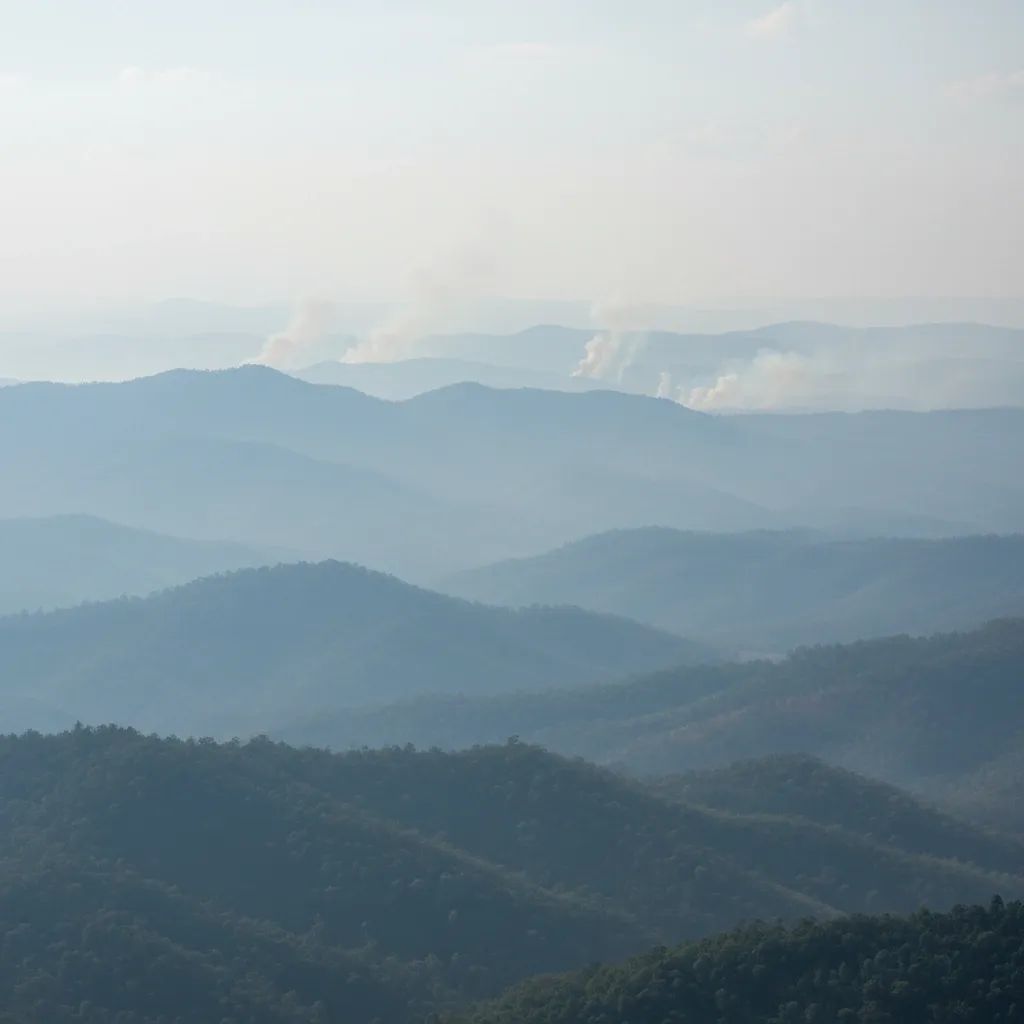
The Thailand Ministry of Natural Resources and Environment has locked down forest access across northern provinces as illegal burning drives PM2.5 levels to 808 micrograms per cubic meter in some monitoring stations—more than 20 times the safe threshold. Chiang Mai's hospitals now report more than double their normal patient volumes, with residents developing acute respiratory and cardiovascular symptoms from prolonged exposure to hazardous air.
Why This Matters
• Health crisis escalating: Hospital admissions in Chiang Mai have surged, with previously healthy residents now requiring oxygen and presenting with coughing blood.
• Severe legal penalties: Anyone caught starting fires in protected areas faces 4 to 20 years in prison and fines up to ฿2M.
• Daily life disrupted: Visibility remains critically low, outdoor activities are unsafe, and families are relocating children to cleaner provinces.
• Regional coordination underway: Thailand has activated a 2026-2027 joint action plan with Laos and Myanmar using satellite surveillance to combat cross-border pollution.
Forest Lockdowns and Enforcement Intensify
The Thailand Department of National Parks has imposed complete entry bans on reserved and protected forest areas across 17 northern provinces, with enforcement teams conducting round-the-clock patrols. As of early April, authorities arrested 192 individuals for forest encroachment and illegal burning, signaling a zero-tolerance approach that marks a departure from previous years' enforcement patterns.
Provincial governors now hold emergency powers to make immediate operational decisions, bypassing the usual bureaucratic channels. The Thailand Ministry of Interior has decentralized wildfire management, establishing war rooms in high-risk provinces like Kanchanaburi and empowering local volunteer teams to act as first responders. Helicopters equipped with water-dropping systems are deployed daily to tackle fires in steep terrain that ground crews cannot reach safely.
Satellite technology has become the backbone of detection efforts. Real-time monitoring identified 1,073 fire hotspots across the north on April 17 alone, with Nan province recording 257 incidents—the highest single-day count. In Chiang Mai, the 89 hotspots were concentrated in Chiang Dao (14 fires), Mae Taeng (12), and Hot (11), areas where rugged geography complicates suppression efforts.
Medical System Under Pressure
Lanna Hospital specialists report outpatient numbers exceeding twice the normal baseline, with emergency departments seeing patients who had been stable for years suddenly requiring intensive intervention. Doctors describe cases of individuals coughing up blood, developing acute ischemic heart conditions, and experiencing unexplained shortness of breath—all directly linked to the toxic air.
The Chiang Mai Provincial Public Health Office has documented a sharp rise in eye inflammation, severe nasal congestion, nosebleeds, allergic skin reactions, and asthma exacerbations. Children, elderly residents, and pregnant individuals face the highest risk, with health officials warning that vulnerable groups can develop life-threatening symptoms within 48 to 72 hours of exposure to extreme pollution.
In response, the Thailand Ministry of Public Health has distributed N95 masks and established dust-free rooms in hospitals, schools, and care facilities across affected provinces. Medical staff are being rotated to prevent burnout as the crisis enters its fourth month with no clear resolution in sight.
What This Means for Residents
If you live in or plan to travel to northern Thailand, the air quality crisis imposes immediate constraints on daily routines. Current PM2.5 readings in Chiang Mai range from 66 to 144 micrograms per cubic meter, well above the national safety standard of 37.5. The Air Quality Index consistently places the city in the "Unhealthy" to "Very Unhealthy" range (160-270 AQI), with some monitoring stations in districts like Mae Rim recording "extremely dangerous" levels of 409 micrograms per cubic meter.
For context, these concentrations mean you are inhaling air roughly equivalent to smoking multiple cigarettes per hour of outdoor exposure. The health implications are not theoretical—hospitals are overwhelmed with pollution-related admissions, and even typically healthy adults are falling ill.
Practical steps for residents:
• Limit outdoor activity to essential trips only, particularly during morning and evening hours when pollution peaks.
• Use N95 or equivalent masks when leaving home; standard cloth or surgical masks offer inadequate protection against PM2.5 particles.
• Keep windows and doors sealed, and run air purifiers indoors if available. Models with HEPA filters are most effective.
• Monitor real-time air quality through platforms like IQAir or the Thailand Pollution Control Department's official channels before planning any outdoor commitments.
• Consider temporary relocation if you have young children, chronic respiratory conditions, or cardiovascular disease. Some families have moved dependents to Pattaya and other coastal areas where air quality remains stable.
Agricultural Burning Faces Crackdown
The Thailand Ministry of Agriculture is targeting slash-and-burn farming practices that contribute significantly to the annual pollution cycle. New regulations threaten farmers who burn rice paddies, maize fields, or sugarcane plantations with loss of government subsidies and assistance programs—a significant financial penalty in rural communities heavily dependent on state support.
Satellite monitoring now tracks agricultural burning in real time, allowing enforcement teams to pinpoint violations within hours. The government aims for a 15% reduction in burned farmland this season and is promoting microbial products that decompose crop residues without combustion, offering farmers a practical alternative to traditional burning methods.
However, behavioral change in rural areas takes time, and many farmers view controlled burning as the most cost-effective way to prepare land for the next planting cycle. The tension between enforcement and economic reality remains a challenge as authorities balance environmental protection with the livelihoods of small-scale agricultural communities.
Chiang Mai Ranks Among World's Most Polluted Cities
On April 17, IQAir placed Chiang Mai as the third most polluted major city globally, behind only Cairo and Delhi, with an AQI of 231 and PM2.5 concentrations at 156 micrograms per cubic meter. Earlier in the month, the city briefly claimed the top spot on April 7, a grim milestone that underscores the severity of this year's crisis.
Monitoring stations operated by the Thailand Pollution Control Department in Chang Phueak, Si Phum, Suthep, Hang Dong, Chom Thong, Mae Chaem, and Chiang Dao all registered readings in the "harmful" to "very harmful" range. On April 3, the Chiang Dao station peaked at 808 micrograms per cubic meter, a reading so extreme it exceeded the measurement capacity of some consumer-grade air quality devices.
By April 1, several areas within Chiang Mai were officially declared disaster zones, triggering emergency protocols that included school closures and restrictions on non-essential transportation. The Ministry of Interior extended disaster zone status to Lamphun and Phayao provinces on April 4 as the pollution spread beyond Chiang Mai's immediate vicinity.
Regional Cooperation and Long-Term Solutions
Thailand is not addressing the crisis in isolation. The government has activated a 2026-2027 Joint Action Plan with Laos and Myanmar, focusing on shared satellite data, unified air quality reporting systems, and joint fire-risk mapping across porous borders. The initiative aims to reduce cross-border burning, which accounts for a significant portion of northern Thailand's pollution burden.
Through ASEAN channels, Thailand participates in the Transboundary Haze Pollution Control framework, a legally binding agreement that mandates cooperation on wildfire prevention and sustainable land management. The roadmap, extended to 2030, prioritizes early detection systems and sustainable agricultural practices over reactive emergency responses.
While regional coordination shows promise, implementation remains uneven. Myanmar's ongoing internal conflict complicates enforcement on its side of the border, and differences in agricultural policy across neighboring countries create regulatory gaps that allow illegal burning to persist.
Contrast with Southern Regions
Pattaya and other coastal areas in central and southern Thailand continue to experience stable air quality with good visibility and minimal pollution. The geographic and meteorological divide is stark—while Chiang Mai chokes under hazardous smog, beach towns along the Gulf of Thailand enjoy clear skies and air quality readings well within safe parameters.
This disparity has triggered internal migration, with northern residents temporarily relocating to cleaner regions until seasonal winds shift and monsoon rains eventually clear the air. Tourism operators in Chiang Mai report significant booking cancellations, while Pattaya hotels see an uptick in domestic travelers seeking refuge from the pollution crisis.
What Comes Next
The combination of illegal burning, dry weather, and seasonal wind patterns has created a perfect storm that authorities struggle to contain. Firefighters have worked continuously through the Songkran holiday period with minimal rest, and the relentless pace of new fire outbreaks strains both personnel and equipment.
The Thailand government's multi-pronged approach—forest lockdowns, satellite surveillance, severe legal penalties, and agricultural subsidy threats—represents the most aggressive response to date. However, meaningful improvement requires behavioral change across thousands of small farmers and an end to illegal burning in remote forest areas where enforcement remains challenging.
For residents in affected provinces, the immediate future means continued vigilance, restricted outdoor activity, and reliance on air filtration systems. Medical experts warn that this year's pollution episode ranks among the most severe in recent history, with health impacts likely to persist even after air quality improves. The crisis underscores the urgent need for sustainable land management practices and regional cooperation to prevent similar disasters in future dry seasons.


