
Why This Matters Right Now
Thailand's air is turning hazardous across nearly 40% of the nation. The Thailand Center for Air Pollution Mitigation confirmed that dangerous particulate matter has breached safety thresholds in 39 provinces, with the North experiencing readings so severe that stepping outside unprotected becomes a genuine health gamble. For anyone working, studying, or raising a family in these zones—especially Chiang Mai, Chiang Rai, or the Northeast plateau—air quality management is now a daily priority affecting your routines.
The Geographic Reality: Where Danger Zones Peak
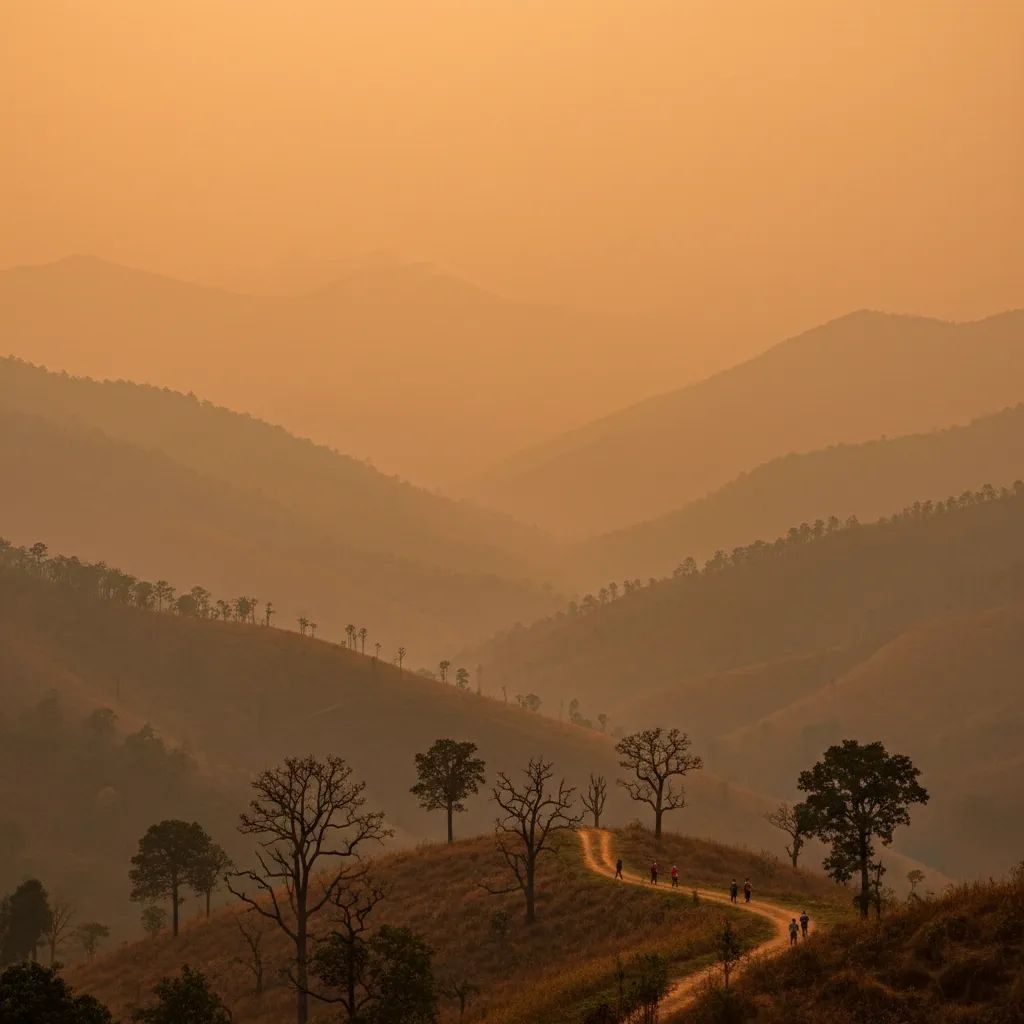
Northern Thailand sits in genuine crisis. Readings there range between 56.7 and 228.8 micrograms per cubic meter—well above Thailand's 24-hour safety standard of 37.5 µg/m³ and roughly 50 times the World Health Organization's annual guideline of 5 µg/m³. Mountain towns and highland areas in the North are experiencing particularly severe conditions due to topographic factors that trap pollution.
The Northeast provinces aren't spared, with readings ranging between 25.8 and 196.4 µg/m³. Even the Central and western regions—including areas in Sukhothai, Kamphaeng Phet, and Ratchaburi—have crossed safe thresholds. Bangkok and surrounding provinces maintain "good" status at 18.4 to 35.9 µg/m³, a buffer zone that depends partly on geographic luck. The South has essentially avoided the crisis, hovering at 11.7 to 21.3 µg/m³.
The mountainous topography of the North deserves explicit blame. These valleys and ridges function as natural pollution traps. When high-pressure systems stall above the region—which happens predictably during the dry season—smoke gets bottled in. Without meaningful wind movement, pollutants accumulate rather than disperse, compounding exposure with each passing day.
The Sources: Three Overlapping Problems
Agricultural burning dominates the immediate cause. Farmers across the region, particularly in corn-growing zones, clear fields after harvest by igniting stubble. This slash-and-burn method costs almost nothing and clears land quickly. The livestock industry's appetite for corn feed has expanded cultivation acreage dramatically, widening the burning footprint each year. Government policies incentivize rapid field turnover, creating pressure to burn rather than explore costlier alternatives like composting or stubble incorporation.
Forest fires, both ignited accidentally and deliberately, form the second pillar. The dry season's heat and low humidity turn forested provinces into tinderboxes. Provinces with substantial forest coverage experience hundreds of fire hotspots simultaneously. Some fires start from agricultural burning that spreads into adjacent woodland. Others ignite from careless campfires or land-clearing operations. The result is predictable: dense, lingering smoke that can persist for weeks.
Cross-border haze complicates any purely domestic solution. Myanmar's Shan State and northern Laos engage in similar agricultural burning, often on a larger scale. When seasonal winds favor northwesterly flows during April, this regional burning drifts into Thailand, intensifying local pollution even in areas where domestic burning has been minimized.
Beyond these primary sources, secondary aerosols—fine particles that form through atmospheric chemical reactions between nitrogen oxides, sulfur compounds, and volatile organic compounds—account for a substantial portion of actual PM2.5 mass. These particles develop hours or days after initial burning, often far downwind, which is why even neighborhoods with minimal visible smoke accumulate dangerous readings.
What Doctors Are Encountering
Health authorities have activated emergency response protocols in affected provinces as respiratory cases increase during peak pollution periods.
Short-term exposure—spanning hours to a few days in hazardous conditions—triggers immediate respiratory distress. Asthma attacks accelerate, COPD symptoms worsen, and even people without diagnosed lung disease report persistent coughing and throat irritation. Eye irritation is commonly reported. Vulnerable patients experience respiratory discomfort, and cardiovascular patients face particular peril: PM2.5 initiates inflammatory processes that can elevate acute heart attack and stroke risk during high pollution episodes.
The long-term health calculus is concerning. Children developing in high-pollution environments show measurably reduced lung capacity that may never fully recover. Pregnant individuals exposed to sustained PM2.5 face elevated risks of premature delivery and low birth weight. For the broader population, lung cancer risk climbs with cumulative exposure. Air quality is recognized as a significant environmental health factor in urban areas.
Children, elderly residents, pregnant individuals, and anyone with pre-existing heart or respiratory conditions occupy the frontline of vulnerability. The biological reality is straightforward: children breathe more air per unit body weight than adults, meaning identical ambient pollution represents a disproportionately larger dose to their developing lungs and cardiovascular systems.
What the Government Is Actually Doing
The Thailand National Environment Board has established air quality management frameworks and coordination with relevant agencies. The National Agenda Action Plan encompasses strategies spanning agricultural reform, vehicle emissions, industrial controls, and cross-agency health coordination.
Agricultural policy targets reduction in stubble burning for current and future seasons. The Ministry of Agriculture and Cooperatives has deployed satellite monitoring and enforcement mechanisms. Farmers engaged in uncontrolled burning face penalties including subsidy disqualification and potential land tenure consequences. The government has allocated resources toward projects promoting burn-free farming—stubble incorporation into soil, organic fertilizer production, biomass conversion for animal feed, and high-value crop substitution. Controlled burning registration systems permit burning only under specified conditions and supervision.
In urban areas, air quality management initiatives have expanded. Vehicle black smoke limits have tightened, triggering stricter inspections. Industrial steam boilers face routine emissions audits. Green transportation and vehicle maintenance programs encourage pollution reduction in urban centers.
The Public Health Ministry has distributed protective equipment to vulnerable populations in affected areas. Air quality improvement initiatives in schools and childcare facilities have been implemented, upgrading air filtration systems to minimize outdoor air infiltration during high pollution episodes. Government agencies and private employers have been encouraged to permit work-from-home arrangements during peak pollution periods.
The Royal Rainmaking and Agricultural Aviation Department has conducted weather modification operations to address temperature inversions. Diplomatically, Thailand has engaged neighboring countries to reduce transboundary burning sources, though coordination mechanisms remain ongoing.
The Practical Guidance: What Residents Should Do
Air quality monitoring systems now provide real-time updates on affected provinces. In red-zone areas—particularly the North—outdoor exposure should be minimized or eliminated. If outdoor time is unavoidable, use certified N95 or P100 respirators. Surgical masks provide insufficient filtration. Vulnerable groups should shelter indoors during peak pollution windows—typically early morning and late afternoon.
Bangkok residents should monitor air quality through available air quality applications and official dashboards updated regularly. While current readings remain in acceptable ranges, residents should remain aware of potential changes. Anyone experiencing respiratory symptoms—unrelenting cough, shortness of breath, wheezing—should seek medical evaluation promptly rather than self-managing at home.
Southern regions maintain "very good" air quality with no immediate advisory. Residents there face no health threat from current pollution patterns.
The public can contribute to enforcement. Mobile applications enable crowdsourced reporting of open burning or vehicles discharging excessive black smoke. These reports feed into local authority enforcement systems, supplementing satellite monitoring and routine inspections.
April's Predictable Pattern and What It Reveals
April has crystallized into Thailand's most consistently hazardous month for air quality. The convergence factors remain consistent: late-season agricultural burning, peak forest fire season, high-pressure weather systems, low-wind conditions, and temperature inversions that trap pollutants near ground level. This meteorological sequence recurs annually unless intervention alters agricultural or fire management practices substantially.
Current air quality readings suggest significant pollution challenges are occurring this season, with patterns consistent with previous years' dry-season pollution episodes.
The Economic Spillover Beyond Health
Northern Thailand's tourism sector feels the impact acutely. International bookings to popular destinations have reportedly shifted as travelers adjust travel timing citing air quality concerns. Hotels and tourism operators experience business impacts during high pollution periods. Social media amplifies visitor accounts of air quality challenges, with reputational effects that persist beyond actual pollution episodes.
Productivity losses ripple through the workforce. Some employers shifted to remote work voluntarily during high pollution periods. Others face staff pressures regarding working conditions during peak pollution. Schools in affected areas have transitioned to modified schedules during severe pollution episodes, disrupting childcare arrangements for working parents and creating economic stress that extends beyond direct health impacts.
The Legislative Gap That Keeps Repeating This
Advocates continue pushing for comprehensive air quality legislation that would strengthen enforcement authority, embed environmental responsibility principles, and establish better coordination mechanisms. Supporters argue such legislation would provide enforcement with greater effectiveness and create stronger incentives for pollution reduction. Opposition remains organized, citing economic concerns from various sectors. Until such legislation passes—a timeline that remains uncertain and subject to ongoing policy discussions—Thailand will likely experience air quality crises recurring seasonally as a managed rather than prevented disaster.
The current framework, while expanded in recent years, remains largely reactive. Each dry season, authorities activate emergency protocols, distribute protective equipment, and issue guidance. Each rainy season, as weather patterns shift and conditions improve naturally, pollution retreats temporarily. The underlying drivers—agricultural burning practices, forest fire management, and transboundary pollution—persist largely unchanged, guaranteeing that future dry seasons will likely repeat similar cycles unless deeper policy transformation occurs.


