
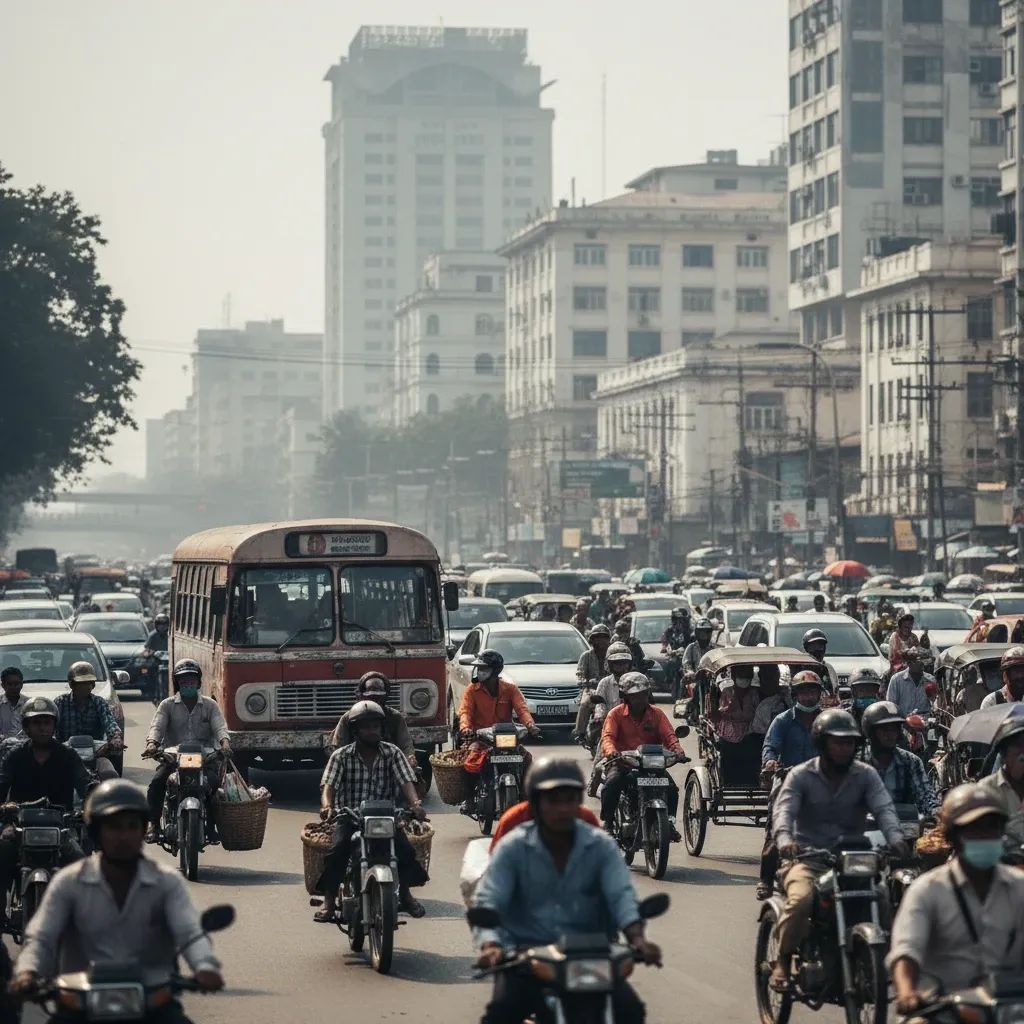
The State Administration Council (SAC), Myanmar's military junta, now presides over a conflict that has killed more than 100,000 people across all sides since the February 2021 coup, according to independent conflict monitors. For expatriates, humanitarian workers, and businesses operating in Thailand, the escalating crisis across the border has direct implications—from surging refugee flows to regional stability concerns that affect investment and security planning.
Why This Matters
• Displacement pressure: Over 4 million people have been displaced multiple times within Myanmar, with cross-border displacement projected to reach 5.2 million in 2026, increasingly spilling into Thailand's border provinces.
• Humanitarian funding gap: The 2026 response plan requires $890M but faces chronic underfunding, forcing affected populations into dangerous coping mechanisms.
• Airstrikes escalate civilian toll: The Myanmar military was responsible for at least 702 civilian deaths between August 2025 and January 2026 alone, primarily through aerial bombardment.
The Human Cost Behind the Numbers
Families across Myanmar now gather in silent ranks, bowing in grief for relatives lost to a conflict that has become one of the world's most lethal and least-reported humanitarian emergencies. The death toll documented by the Armed Conflict Location & Event Data (ACLED) organization encompasses fatalities from direct combat, torture, executions, and indiscriminate attacks on civilian areas. A report from the Office of the United Nations High Commissioner for Human Rights (OHCHR) identified airstrikes as the primary killer of civilians during the six-month period ending January 2026.
The grief is compounded by displacement. Approximately 3.7 million people were internally displaced as of March 2026, with many families forced to flee multiple times as battlefronts shift. The March 2025 earthquake added another layer of devastation, destroying infrastructure and displacing communities already reeling from violence. Recovery efforts have stalled due to insecurity, resource shortages, and blocked access to affected regions.
A Multi-Sided War with No Clear Resolution
The conflict pits the military junta against a sprawling coalition of opposition forces. The National Unity Government (NUG), formed by ousted officials and pro-democracy activists, commands the People's Defense Force (PDF), which coordinates guerrilla operations alongside established Ethnic Armed Organizations (EAOs). Key EAO players include the Arakan Army, the Kachin Independence Organization, the Karen National Union, the Myanmar National Democratic Alliance Army (MNDAA), and the Ta'ang National Liberation Army (TNLA).
The junta has increasingly lost territorial control, with rebel forces and ethnic armies holding significant swathes of the country. In response, the military has escalated its use of airstrikes—both deliberate and indiscriminate—targeting civilian infrastructure, schools, and healthcare facilities. At least 1,900 incidents of violence against healthcare infrastructure have been documented since 2021, severely limiting access to medical services for ordinary citizens.
The junta's attempt to legitimize its rule through multi-phased elections held between December 2025 and January 2026 was widely condemned. The National League for Democracy (NLD), the main opposition party, was barred from participating, and international observers dismissed the vote as a sham designed to entrench military power rather than restore democracy.
What This Means for Residents and Businesses in Thailand
Thailand faces mounting pressure from the conflict next door. Border provinces have absorbed waves of refugees fleeing violence, straining local resources and complicating provincial governance. For expatriates and Thai nationals living near the Myanmar border, the humanitarian crisis translates into heightened security concerns, disrupted cross-border trade, and increased military presence in frontier areas.
Businesses with supply chains or operations linked to Myanmar face operational risks. Access restrictions, military roadblocks, and bureaucratic impediments hinder the delivery of goods and services. Investors assessing regional stability must factor in the conflict's trajectory—there is no indication of de-escalation, and international mediation efforts, including ASEAN's Five-Point Consensus, have made negligible progress.
Humanitarian organizations operating from Thailand report severe access challenges inside Myanmar. The junta routinely obstructs aid delivery, exacerbating food shortages and leaving vulnerable populations without life-saving assistance. The 2026 Humanitarian Needs and Response Plan aims to assist 4.9 million people in the hardest-hit areas, but chronic underfunding mirrors 2025's shortfalls, when millions were left without critical support.
The Mental Health Emergency Within the Crisis
Nearly one-third of Myanmar's population—an estimated 16.2 million people—now requires humanitarian assistance, driven by armed conflict, recurrent natural disasters, and economic collapse. Mental health and psychosocial support (MHPSS) needs are widespread, though services remain under-resourced and concentrated in urban centers, leaving rural and conflict-affected populations largely unserved.
The International Organization for Migration (IOM) and UNICEF are scaling up MHPSS interventions in 2026. UNICEF plans to reach 441,831 children, adolescents, and caregivers through community and school-based programs integrated with case management. The World Health Organization (WHO) is working to integrate mental health into primary healthcare and support community-based projects, though the destruction of healthcare infrastructure complicates these efforts.
For bereaved families—those who have lost loved ones to violence, displacement, or disease—formal grief support services are scarce. MHPSS interventions provide the closest approximation, addressing trauma, anxiety, and psychological distress through local partnerships. The European Union has allocated €38.6M for humanitarian aid in Myanmar in 2026, with portions earmarked for healthcare and protection services, but the scale of need far exceeds available resources.
International Response Remains Fragmented
The international community has imposed targeted sanctions on individuals and entities linked to the junta, including asset freezes, travel bans, and restrictions on financial transactions. The United States, European Union, United Kingdom, and Canada have all implemented measures aimed at cutting revenue streams to the military. Several nations have also enacted arms embargoes to prevent weapons shipments.
Despite these efforts, external actors like China and Russia continue to provide arms and political backing to the junta, complicating enforcement and undermining sanctions regimes. Diplomatic condemnation has been consistent, but concrete mechanisms to halt violence or compel negotiation remain elusive.
ASEAN, the regional bloc that includes Thailand, has struggled to enforce its Five-Point Consensus, which calls for an immediate cessation of violence, inclusive dialogue, humanitarian access, and the appointment of a special envoy. The junta has largely ignored these provisions, and the consensus has made little tangible progress.
No End in Sight
Myanmar's conflict shows no signs of abating. The military junta, despite losing significant territory, retains control over key urban centers and continues to receive external support. Opposition forces, while gaining ground, remain fragmented and lack the resources for a decisive victory. Civilians, caught in the middle, endure relentless violence, displacement, and deprivation.
For families across Myanmar, the toll is immeasurable. Bereaved relatives gather to mourn the dead, knowing that the cycle of violence offers no immediate reprieve. As one observer grimly noted, many feel there is "nothing left except death" in a conflict that has already claimed 100,000 lives and shows little prospect of resolution.


