
Seized Crystal Methamphetamine in Nakhon Phanom Underscores the Region's Ongoing Smuggling Crisis
Over a half-ton of high-purity crystal methamphetamine has landed in the hands of Thailand's Northeast Border authorities, a seizure that arrived without fanfare or arrest—just sacks abandoned along the Mekong's muddy banks in Tha Uthen District. The haul marks one of dozens of interceptions this year in a province where the water itself has become the primary artery for narcotics flowing into Thailand's heartland.
Why This Matters
• Nakhon Phanom remains the trafficking epicenter: The 320-kilometer boundary with Laos accounts for a disproportionate share of crystal methamphetamine confiscations—over 3 tons in recent months alone.
• Abandonment as strategy: When patrols tighten, traffickers ditch cargo rather than risk capture, suggesting operations are large enough to absorb losses.
• Spillover affects daily life: Increased security checkpoints, armed confrontations, and recruitment of local couriers create friction for residents and legitimate cross-border commerce.
The Logistics of Moving Volume Across Water
Traffickers have abandoned traditional single-shipment models. Instead, they deploy what security analysts call the "ant army" system—dozens of smaller loads sent via long-tail boats, motorcycles, and pickups, each worth ฿50–180 million depending on purity and destination. If one consignment gets intercepted, the financial blow remains manageable for larger syndicates.
The Mekong River creates perfect conditions for this approach. Its width shifts seasonally, sandbars multiply during dry months, and fishing villages provide natural cover. Thailand's Border Patrol Police operate armed speedboats and deploy drone surveillance, but resources stretch thin across multiple provinces. Tha Uthen District alone witnesses multiple attempted crossings weekly.
The seized cargo was stashed in sacks—a textbook ant army drop meant for collection by downstream operatives. Traffickers coordinate landing points via encrypted messaging apps, transmitting GPS coordinates in real time to avoid predictable patterns. The "Golden Flying Horse" branding stamped on the packages signals ultra-pure product tied to syndicates operating in the Golden Triangle, the Myanmar-Laos-Thailand production zone that has ramped up output considerably since 2024.
How Interdiction Operations Intensified in 2026
The first four months of 2026 saw an extraordinary acceleration in enforcement activity across Nakhon Phanom's border:
January brought immediate results: Early in the month, authorities seized significant quantities of methamphetamine pills as part of ongoing enforcement operations. Five days later, Mekong security teams intercepted 400 blocks of heroin valued at ฿72 million along the riverbank.
March escalated into crisis-level violence: March 13 saw the confiscation of approximately 2 million methamphetamine tablets abandoned in sacks near Tha Uthen after traffickers fled under darkness. Eighteen days later, a coordinated operation dubbed "Pituk Rim Nam Khong" (Protect the Mekong Riverbank) netted additional methamphetamine pills and led to arrests. April brought the pattern to a crescendo when joint forces captured 597 kilograms of ice and over 2 million tablets in That Phanom District, resulting in additional arrests.
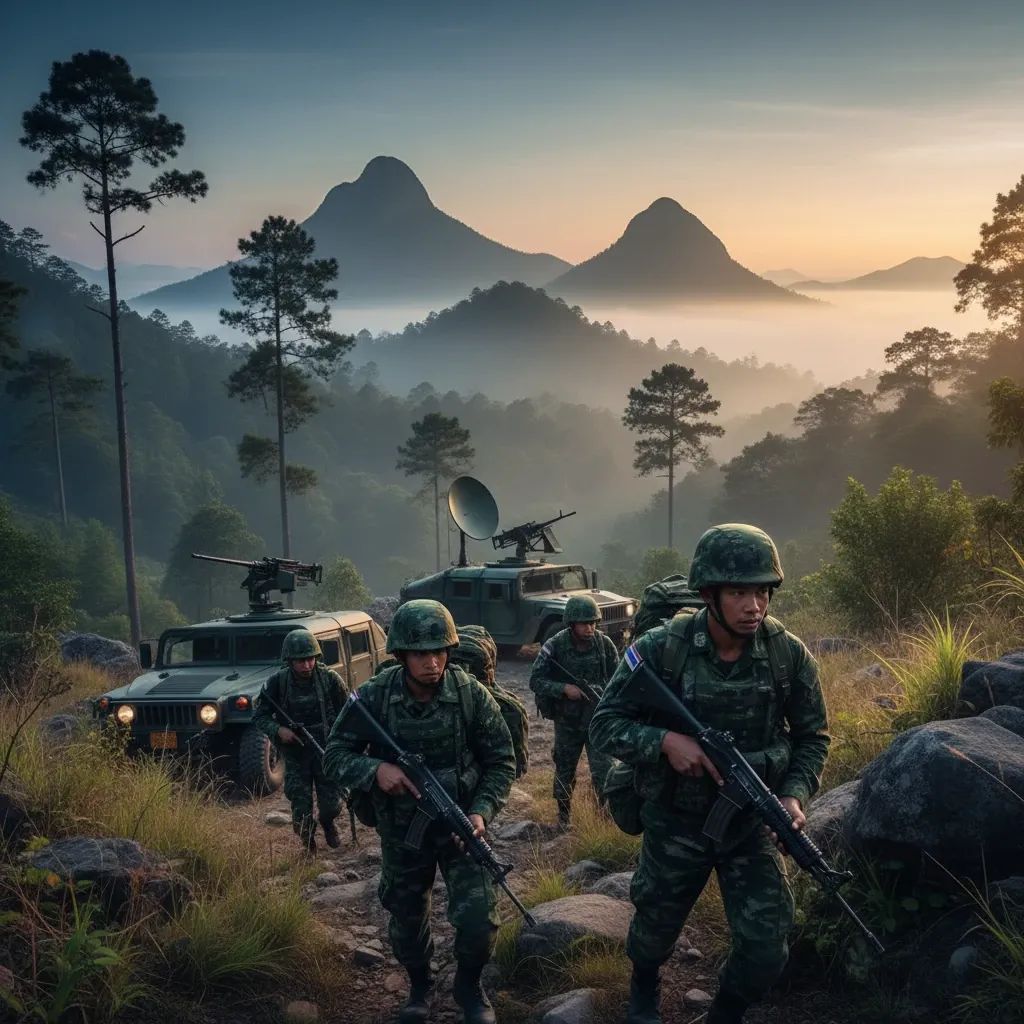
Armed encounters became routine. On April 7, Mekong River Security Force personnel engaged a Lao trafficking crew in an exchange of fire that left 2 suspects dead and a third wounded. The previous day, Thailand's Rangers traded gunfire with smugglers attempting to land 240 kilograms of crystal methamphetamine—the traffickers fired first before retreating across the border.
Over the six-month span from October 2025 through April 2026, the Northeast Border Drug Suppression Command (Unit 24) tallied stunning numbers: over 100 million methamphetamine pills, 7 tons of crystal meth, and 196 kilograms of heroin seized across the northeastern frontier, totaling more than ฿4 billion in street value. Nakhon Phanom accounted for a disproportionate slice of this total.
What This Means for Residents
For those living in Nakhon Phanom and adjacent provinces, the implications are immediate and uncomfortable.
Security measures have become invasive. Highway 212, the arterial route paralleling the Mekong between Tha Uthen and That Phanom, now hosts regular checkpoints staffed by military and police units. Routine stops consume time and create friction for legitimate travelers, farmers transporting goods, and merchants conducting cross-border commerce. Vehicle inspections—once rare—are now standard.
Employment patterns have warped. The methamphetamine pipeline creates perverse economic incentives for unemployed youth in rural areas. Mule work—carrying small packets across the border or between safe houses—pays ฿10,000–50,000 per trip, substantially more than agricultural day labor. Enforcement has responded with mandatory 20-year sentences and capital punishment for major traffickers, yet recruitment continues as supply-side pressure intensifies.
Violence has become tangible. Armed clashes are no longer exceptional events confined to distant military operations. Stray gunfire, roadblocks during active pursuits, and vehicle searches create palpable danger during routine commutes. The April 6 firefight that erupted over 240 kilograms of ice involved exchanges across a span of 5 minutes—close enough that local residents heard automatic weapons fire.
Legitimate cross-border activity has slowed. Agricultural exports to Laos, tourism, and commerce face expanded inspection protocols. A ฿50 million agricultural shipment now requires hours of scrutiny to clear authorities, adding cost and delay that undermines profit margins.
The Syndicates Behind the Branding
The "Golden Flying Horse" stamp is not ceremonial. It identifies premium-grade crystal methamphetamine originating in specific clandestine labs located in Myanmar's Shan State and Laos's northern provinces, where industrial-scale production has accelerated in recent years. The branding helps distributors and street-level retailers identify verified product—critical in a market flooded with adulterated alternatives.
Intelligence links this particular logo to networks supervised by figures such as "Sia Ma Bin" (alias "A Chang"), a wanted kingpin whose operations span the Golden Triangle. This individual oversees production coordination with Lao-based manufacturing facilities and orchestrates the logistics of moving product across the Mekong. The Thailand Ministry of Justice and the Office of the Narcotics Control Board have frozen assets tied to such figures under anti-money laundering statutes, but kingpins typically operate from safe havens beyond Thai jurisdiction, insulated by layers of proxies and front companies.
Why Laos-Side Cooperation Remains Elusive
Thailand's border agencies have sought greater enforcement collaboration with Lao counterparts, yet results remain inconsistent. Corruption, inadequate resources, and the involvement of armed ethnic militias complicate joint efforts. The Lao government lacks the capacity—or sometimes the political will—to suppress production facilities that generate revenue and employment in remote northern provinces.
This asymmetry means Thai enforcement absorbs the burden of interdiction almost unilaterally. The Border Patrol Police, Mekong River Security Force, Provincial Police, and the Narcotics Suppression Bureau coordinate operations through the Provincial Drug Prevention and Suppression Center, chaired by Nakhon Phanom's Governor. Yet deterrence relies entirely on making smuggling more costly and risky than the profit margin can justify—a threshold that remains unmet as long as demand persists on streets from Bangkok to Tokyo.
The Economics of Destruction
Seized crystal methamphetamine enters a formal destruction protocol. The Office of the Narcotics Control Board catalogs each seizure, tests samples for chemical fingerprints, and eventually incinerates the haul under supervised conditions at industrial furnaces in Bangkok or regional military facilities. The 500-kilogram cache discovered near Tha Uthen will follow this trajectory within weeks.
Destruction alone, however, does not interrupt supply chains. Each gram incinerated is replaced by new production in Myanmar and Laos. As long as precursor chemicals flow across the Golden Triangle and demand remains strong in Thailand, Malaysia, Indonesia, Australia, and Japan—where crystal methamphetamine commands premium prices—production shows no signs of slowing.
The Persistent Frontier
Nakhon Phanom's Mekong border will not resolve through enforcement alone. The seized 500 kilograms represents a single consignment from a likely weekly quota. Patrols will continue at intensity, dragnet operations will expand, and firefights will recur. Yet each bust is a temporary setback for syndicates operating with the capital to absorb losses and the production capacity to quickly replenish stock.
For residents of this border province, the reality is stark: the war on drugs is not winding down—it is escalating. The scale and frequency of seizures reflect both determination within Thailand's law enforcement apparatus and the staggering volume of narcotics flowing across the Mekong. Until production curbs materialize, demand erodes, or cross-border cooperation transforms fundamentally, the river will remain contested terrain, with each interception a temporary victory in a prolonged, unresolved conflict.


