
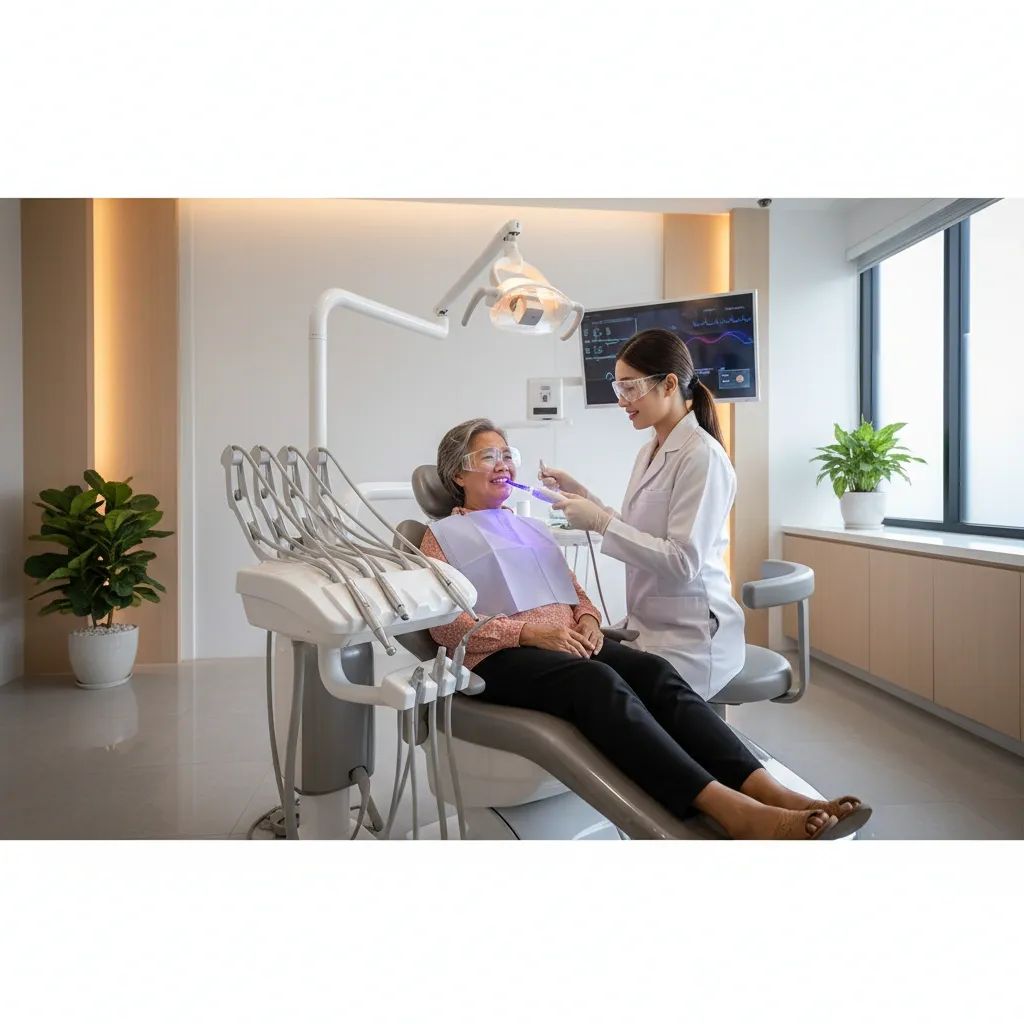
Chiang Mai University researchers have published a systematic review consolidating evidence for light-based therapy in geriatric dentistry, a development that positions Thailand as a regional hub for non-invasive oral care innovation amid the country's rapidly aging population.
Why This Matters
• Cancer patients: Strong evidence now supports photobiomodulation (PBM) for preventing and managing oral mucositis, cutting severe lesions by up to 70% in radiation therapy cases.
• Dry mouth sufferers: Moderate evidence shows PBM increases unstimulated salivary flow, addressing a condition affecting millions on multiple medications.
• Dental tourists: Thailand's world-class facilities may soon integrate PBM protocols, offering alternatives to invasive procedures or pharmaceutical management.
The findings, published in Dentistry Journal this month, arrive as Thailand grapples with demographic shifts that demand healthcare systems retool for elderly populations. The review examined clinical trials through March 2025, analyzing how targeted light wavelengths—red to near-infrared—can stimulate cellular repair, reduce inflammation, and accelerate healing in oral tissues without the risks of surgery or drug interactions.
The Science Behind the Light
Photobiomodulation works by activating mitochondria within cells, the energy-producing organelles that power tissue repair. When specific wavelengths penetrate oral tissues, they trigger cytochrome c oxidase, an enzyme that ramps up adenosine triphosphate (ATP) production—essentially fueling the body's natural healing machinery. The process also releases nitric oxide, which dilates blood vessels and improves circulation to damaged areas.
For older adults, this cellular boost translates to practical outcomes. A trial presented in September 2025 showed patients receiving LED-based intraoral PBM during head and neck radiation experienced a 70% relative reduction in severe oral mucositis at two weeks post-treatment, compared to placebo. By six weeks, the reduction still held at 36%—a meaningful difference for patients already battling cancer.
The Chiang Mai University review assigned confidence levels to various applications. Cancer therapy-induced mucositis received "strong evidence" status, while burning mouth syndrome and hyposalivation earned "moderate evidence" designations. Conditions like postoperative pain and oral lichen planus showed potential but require more standardized protocols before clinicians can reliably predict outcomes.
What This Means for Residents
Thailand's dental tourism industry, already known for internationally trained practitioners and competitive pricing, stands to gain a technical edge. PBM devices are non-invasive and require no anesthesia, making them accessible to elderly patients who may avoid procedures due to medication conflicts or surgical risks. The therapy typically involves positioning a light-emitting device near affected tissues for several minutes per session—no drills, no needles, no recovery downtime.
For expatriates and retirees living in Thailand, the implications extend beyond tourism. As the country's "longevity economy" expands, local clinics are investing in technologies that address age-related conditions without compounding pharmaceutical burdens. Dry mouth, a side effect of common medications for blood pressure, diabetes, and depression, affects salivary gland function and increases infection risk. Traditional management relies on saliva substitutes or drugs that stimulate production—PBM offers a third option by enhancing microcirculation and glandular cellular activity directly.
Comparing Light to Conventional Care
Traditional geriatric dentistry leans on mechanical fixes: fillings for cavities, crowns for weakened teeth, implants or dentures for missing ones. Gum disease demands scaling, root planing, sometimes surgical intervention. These methods work but carry inherent trade-offs—discomfort, recovery periods, and for some seniors, complications tied to anesthesia or post-operative infections.
PBM functions as an adjunct rather than replacement. After implant surgery, for example, targeted light accelerates osseointegration, the process by which titanium posts fuse with jawbone. A January 2025 meta-analysis found PBM significantly reduced xerostomia severity in radiotherapy patients, a population where medication options often fall short. Another review confirmed PBM's efficacy in preventing chemotherapy-induced mucositis across wide age ranges, including frail elderly cohorts.
The therapy's safety profile matters here. The Chiang Mai University review noted no clinically significant adverse events in studied populations—a stark contrast to pharmaceuticals that risk drug interactions in patients already managing multiple prescriptions. For Thailand's older residents, many of whom navigate polypharmacy, a non-pharmacological intervention that reduces inflammation and pain without adding to their medication list represents a practical advancement.
Standardization Challenges Ahead
Despite promising results, the review's authors emphasize gaps. Treatment parameters—wavelength, power density, duration, frequency—vary widely across studies. A trial might use 810-nanometer wavelengths at 100 milliwatts per square centimeter for five minutes daily, while another opts for 660 nanometers at 300 milliwatts for 90 seconds twice weekly. Without consensus protocols, clinicians lack clear guidelines for optimizing outcomes.
Ongoing trials aim to fill these voids. One study (NCT06532454), updated in April 2026, investigates PBM for hard-to-heal ulcers in frail older adults, comparing healing times against standard care. Another (NCT05335434) evaluates intraoral PBM to prevent mucositis in hematopoietic cell transplant recipients, with updates posted through December 2025. These efforts should clarify dosing and frequency questions that currently hinder widespread adoption.
Regenerative Potential Beyond Symptom Relief
The cellular mechanisms driving PBM's effectiveness also hint at broader applications. The therapy stimulates proliferation and differentiation of dental pulp stem cells, periodontal ligament stem cells, and dental follicle stem cells—the building blocks for regenerating tooth structure and supporting tissues. Research has documented dentin formation triggered by low-power laser light, suggesting PBM could one day support regenerative dentistry beyond implant integration.
For Thailand's aging population, this matters because bone metabolism slows with age, making periodontal disease more stubborn and implant success less predictable. PBM's ability to enhance bone morphogenic proteins (BMPs) and vascular endothelial growth factor (VEGF) addresses these age-related declines at a molecular level. Clinical trials have shown PBM reduces bleeding on probing, pocket depth, and inflammatory parameters when combined with traditional scaling and root planing—measurable improvements that translate to longer tooth retention.
Market and Policy Implications
Thailand faces demographic realities that make geriatric oral health a policy priority. The country's proportion of citizens over 60 has climbed steadily, straining healthcare resources designed for younger populations. Innovations that reduce hospital visits, shorten recovery times, and minimize pharmaceutical dependence align with government efforts to manage longevity-related costs.
The dental tourism sector, a significant revenue generator, could leverage PBM as a differentiator. International patients seeking implant procedures, periodontal treatment, or cancer care support might opt for Thailand-based providers offering adjunctive light therapy—especially if outcomes data continues strengthening. The Chiang Mai University review provides the evidentiary foundation needed to market these services credibly.
What Comes Next
The research community's focus now shifts to randomized controlled trials with standardized methodologies. Thailand's university networks and dental hospitals are positioned to contribute, given existing infrastructure and patient populations suitable for longitudinal studies. The key questions center on optimal wavelengths for specific conditions, ideal treatment durations, and long-term efficacy beyond the six-month follow-ups typical in current literature.
For residents and medical tourists alike, the practical takeaway is straightforward: photobiomodulation represents a validated, low-risk option for managing multiple age-related oral conditions. Whether addressing chemotherapy side effects, chronic dry mouth, or post-surgical healing, the therapy's non-invasive nature and absence of systemic side effects make it particularly suited to elderly patients navigating complex health profiles. As protocols standardize and adoption spreads, light-based treatments may become as routine in Thailand's dental clinics as fluoride treatments or routine cleanings.


