
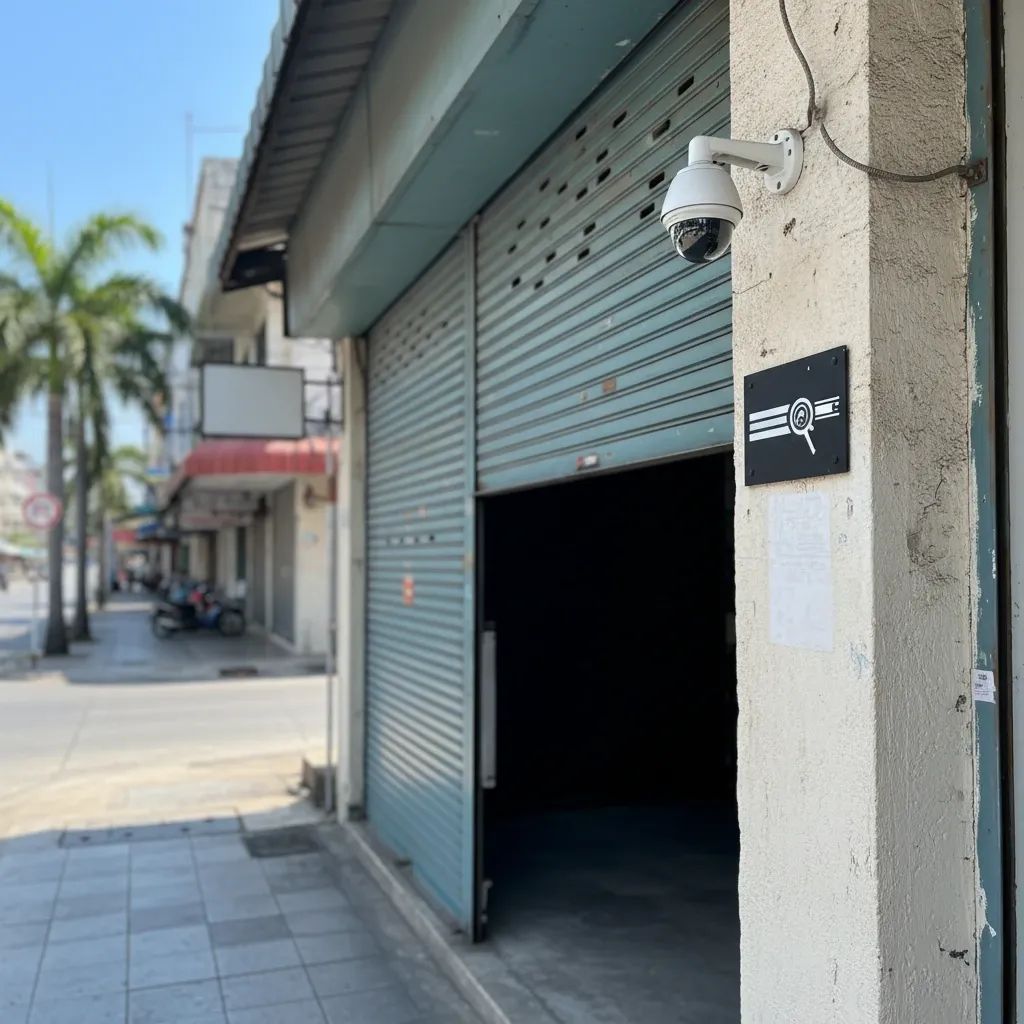
Thailand's real estate market is no longer a gray zone where legal workarounds quietly operate. In early 2026, a coordinated push by the Thailand Department of Business Development (DBD), the Thailand Department of Special Investigation (DSI), and the Thailand Central Investigation Bureau (CIB) has turned nominee structures from accepted practice into prosecutable offense. If you own property through a Thai-registered company, the time to examine that structure is now—not later.
Why This Matters
• Enforcement has teeth: Criminal penalties now include up to 3 years imprisonment and fines reaching ฿1,000,000 for facilitating nominee arrangements; professionals face license revocation.
• Coordinated multi-agency audits underway: Deep financial probes are tracing beneficial ownership and capital origins across high-value property zones, with audits expected to expand nationwide.
• Your lawyer is exposed: Legal and accounting professionals now face criminal liability if they certify false documents or fail to verify client identity in person—a deliberate policy designed to close facilitator gaps.
• Legitimate pathways remain open: Freehold condominiums (up to 49% foreign ownership), 30-year leaseholds, and Article 96 bis land acquisition still function as legal alternatives.
How Bangkok Got Serious About Enforcement
Thailand has spent years issuing gentle warnings about nominee structures. The shift in 2026 is fundamentally different: three separate government agencies are now operating under a unified intelligence framework, sharing databases and cross-referencing corporate filings in real time.
These coordinated enforcement operations have revealed what authorities had long suspected: networks of "super-nominees" — Thai nationals whose names appear as majority shareholders across multiple separate companies, controlling substantial combined assets. The pattern is consistent across investigation zones: registered owners of numerous entities represent textbook Foreign Business Act violations that trigger immediate license revocations and prosecutions.
The intelligence infrastructure now in place represents the real structural change. The DBD, DSI, and CIB have deployed algorithmic screening tools to identify suspicious shareholding patterns that manual review would require decades to uncover. Cross-agency databases mean that when one office flags a suspect company, the information instantly propagates to enforcement units nationwide. Consider the scale: approximately 118,016 Thai-registered companies maintain foreign shareholders at equity levels between 0.01% and 49.99%. Conservative estimates suggest 80% of these entities involve nominee arrangements designed to bypass land ownership restrictions.
The New Compliance Requirements Reshaping Corporate Structure
Two recent ministerial directives have created concrete compliance burdens that separate legitimate operations from suspect entities.
DBD Order 2/2568 took effect January 1, 2026. It requires Thai shareholders in companies with foreign investment below 50% to file three consecutive months of bank statements proving genuine capital contribution. This single requirement reduced suspect new company registrations by 60–65% in the opening quarter alone. The logic is deliberate: a genuine Thai shareholder can produce documentation proving where their investment originated; an artificial shareholder cannot.
DBD Order 1/2569, effective April 1, 2026, elevates personal accountability. Managing directors and authorized signatories must now file written declarations confirming that all shareholders made legitimate investments and that the company is not structured as a nominee entity. Submitting false information carries criminal penalties. This policy shifts liability directly onto the professionals signing these certificates—a deliberate pressure point designed to eliminate passive complicity.
What these orders accomplish is straightforward: they make nominee structures administratively impossible. A Thai shareholder cannot credibly produce three months of bank statements from funds that do not belong to them. A director cannot sign a declaration of legitimacy knowing the structure is false. The DBD has essentially weaponized paperwork as a compliance filter.
Distinguishing the Safe from the Indefensible
The current regulatory climate punishes opacity and rewards transparency. Understanding which structures invite investigation versus which ones operate safely is now essential.
High-risk structures exhibit telltale patterns. A Thai shareholder claiming 51% ownership of a ฿50 million property company while bank records show monthly personal income of ฿30,000 immediately signals impossibility. Equally problematic are companies holding valuable beachfront property, commercial real estate, or residential land that generate zero operational revenue, employ no staff, and file no tax returns. These are precisely the entities the DBD, DSI, and CIB now hunt systematically.
Legitimate operations function as genuine businesses. A property management company maintains active staff, files regular tax returns with the Thailand Revenue Department, shows audited income aligned with its shareholding structure, and can document that Thai shareholders possess actual financial capacity to justify their equity stake. The company generates legitimate business revenue from real commercial activity—rentals, management fees, development returns—not merely passive asset appreciation.
Implementing strict Know Your Customer (KYC) protocols has become the baseline defense mechanism. This means verifying the identity and financial standing of all stakeholders, maintaining documentation of capital sources, and preserving transaction records for at least five years. Foreign investors who cannot produce three years of bank statements evidencing international wire transfers are now, practically speaking, indefensible in any investigation.
Workable Legal Pathways: What Still Functions
Foreign nationals retain several legitimate mechanisms for property acquisition in Thailand, and these avenues have become strategically more attractive as the regulatory cost of nominee structures has risen dramatically.
Freehold condominium ownership remains the most straightforward path. Under the Thailand Condominium Act, foreigners can acquire full ownership of individual units within a single restriction: no more than 49% of total saleable area in any building can be held by foreign nationals collectively. Funds must originate via international wire transfer. Transactions exceeding $50,000 USD require filing a Foreign Exchange Transaction Form (FETF) with the Thailand Bank of Thailand, but this process is routine and transparent. The Thailand Cabinet explored raising the foreign ceiling to 75% in mid-2024 as an economic stimulus measure, but that proposal remains under review and would likely arrive bundled with restrictions on voting rights in condominium association governance.
Long-term leasehold arrangements provide a second established option. Foreigners can lease land for up to 30 years with renewal options negotiable under contract terms. Leases must be registered at the Thailand Land Department to be legally binding and enforceable. The structure legally separates building ownership from underlying land title: the foreigner owns the villa, house, or commercial structure outright; the Thai landowner retains title to the soil. This arrangement completely sidesteps land ownership restrictions and has grown increasingly popular among both investors and owner-occupants.
Article 96 bis of the Thailand Land Code creates a narrow but tangible pathway for high-capacity individuals. Retirees, remote workers, and specialists in fields Thailand seeks to attract can acquire up to 1 rai (approximately 0.4 acres) of residential land. The entry requirements are substantial: demonstrating a minimum ฿40 million investment in Thailand, maintained continuously for at least 5 years, plus securing approval from both the Thailand Cabinet and the Minister of Interior. The land must sit within designated zones—typically Bangkok, Pattaya, or recognized municipal areas. While administratively cumbersome, this pathway is genuinely available and increasingly utilized by serious long-term investors seeking permanent residential status.
Why Professional Intermediaries Are Now Vulnerable
The government has deliberately targeted the ecosystem that enabled nominee structures: lawyers, accountants, and business facilitators operating as intermediaries. This targeting represents the sharpest enforcement innovation of 2026.
The DBD now conducts unannounced physical inspections of law offices, verifying that notarizations and signature certifications occur in the actual presence of clients rather than as rubber-stamp formalities executed behind closed doors. Any professional caught certifying signatures without eyewitness verification, failing to authenticate shareholder identity, or preparing false declarations faces criminal prosecution and permanent license revocation through the Thailand Lawyers Council.
High-profile prosecutions demonstrate the government's commitment to enforcement. Cases involving nomination arrangements have targeted both Thai nationals and foreign nationals connected to corporate structures designed to obscure beneficial ownership. These prosecutions accomplish multiple objectives: they signal that cross-border enforcement is operationalized, they demonstrate that the government treats real estate manipulation as organized crime rather than civil regulatory violation, and they establish that complex corporate structures receive the same scrutiny as domestic operations.
Lawyers and accountants now face a genuine dilemma: either implement rigorous compliance procedures that slow transaction velocity and demand extensive documentation, or operate as accessories to criminal enterprise. Most professional firms have made the obvious choice, retreating from the facilitator ecosystem entirely. Those remaining in this space face escalating audit frequency and criminal exposure.
Geographic Concentration and Sectoral Targeting
Enforcement resources are strategically concentrated. The Thailand government has designated 12 provinces as priority investigation zones: Bangkok, Chonburi (including Pattaya), Surat Thani, Phuket, Samut Prakan, Chiang Mai, Pathum Thani, Prachuap Khiri Khan, Nonthaburi, Samut Sakhon, Rayong, and Krabi. These regions collectively account for the majority of foreign investment in tourism, hospitality, real estate, and e-commerce—sectors now under systematic examination.
Specific industries receive particular focus. Real estate developers, hospitality operators, land-holding companies, and property investment firms rank at the top of investigative priority. The Thailand Anti-Money Laundering Office (AMLO), Thailand Revenue Department, and Thailand Royal Police now collaborate operationally with the DBD in tracing capital flows and verifying fund source legitimacy across international boundaries.
The geographic concentration has practical consequences. A property transaction in Phuket or Chonburi now faces higher procedural scrutiny than the same transaction in a peripheral province. However, authorities have signaled intention to expand geographic scope progressively throughout 2026 and into 2027.
An Emerging Regulatory Loophole: Company Acquisition
While registrations of suspect new companies have collapsed, investigators report a concerning trend gaining momentum: shell company acquisition. Rather than establishing new entities, foreign investors are now purchasing dormant Thai companies—already-registered, historically inactive corporations—and repurposing them for property holdings or investment vehicles. This approach exploits an inspection gap: acquiring an existing company attracts less regulatory scrutiny than registering one from scratch.
The DBD has publicly signaled that remedial safeguards are forthcoming. Expect additional rules governing the sale, ownership transfer, and operational awakening of previously dormant or historically inactive companies within the coming quarters. Intelligence suggests that mechanisms to track beneficial ownership transfers and trace capital flows through acquired shells are currently under development.
Auditing Your Current Position: Four Critical Questions
If your Thai real estate sits within a Thai-registered company structure, conducting a structural audit now functions as essential risk management rather than optional prudence.
Ask yourself four foundational questions. First: can your Thai shareholders credibly demonstrate financial capacity? Can they produce years of personal bank statements, business income tax returns, asset documentation, and professional references establishing genuine wealth? Second: does your company operate as a genuine business with revenue streams aligned to its shareholding structure? If tourism is the stated business model, are tourism revenues being generated and documented? If it is property management, are management contracts and fee payments being processed through company accounts? Third: can you produce comprehensive source-of-funds documentation stretching back multiple years, establishing that capital entered Thailand via legitimate international wire transfers and can be traced to documented foreign sources? Fourth: have you implemented and maintained strict Know Your Customer protocols including identity verification, financial background validation, and comprehensive transaction documentation?
Companies that cannot satisfactorily answer these questions face material legal exposure. The Thailand Foreign Business Act carries criminal penalties reaching 3 years imprisonment and fines from ฿100,000 to ฿1,000,000 for nominee violations. Beyond criminal risk, authorities possess power to seize assets, revoke business licenses, invalidate land titles, and impose additional civil penalties.
The Practical Reality for Foreign Investors
Pattaya, Phuket, and Bangkok retain genuine attractiveness for legitimate foreign investment. Tourism, hospitality, commercial real estate, and residential development remain viable sectors for competent investors operating through transparent structures.
However, the operating environment has fundamentally transformed. The shortcuts that once seemed operationally convenient—establishing a company with a pliant Thai shareholder, maintaining minimal financial documentation, avoiding rigorous beneficial ownership scrutiny—have become operational liabilities exposing investors to criminal jeopardy. The government has invested substantially in enforcement infrastructure and demonstrates no appetite for retreating from this enforcement posture.
Full legal compliance is no longer an optional feature of a Thailand property strategy; it functions as the prerequisite for sustainable asset protection and legal security. The era of gray-market arrangements and regulatory workarounds has conclusively terminated. Investors who transition now toward unambiguously legal pathways—freehold condominiums, leasehold arrangements, or Article 96 bis land acquisition—are positioning themselves ahead of the regulatory curve. Those who delay are gambling with both their assets and their personal freedom. The calculation has shifted decisively in favor of compliance.


