
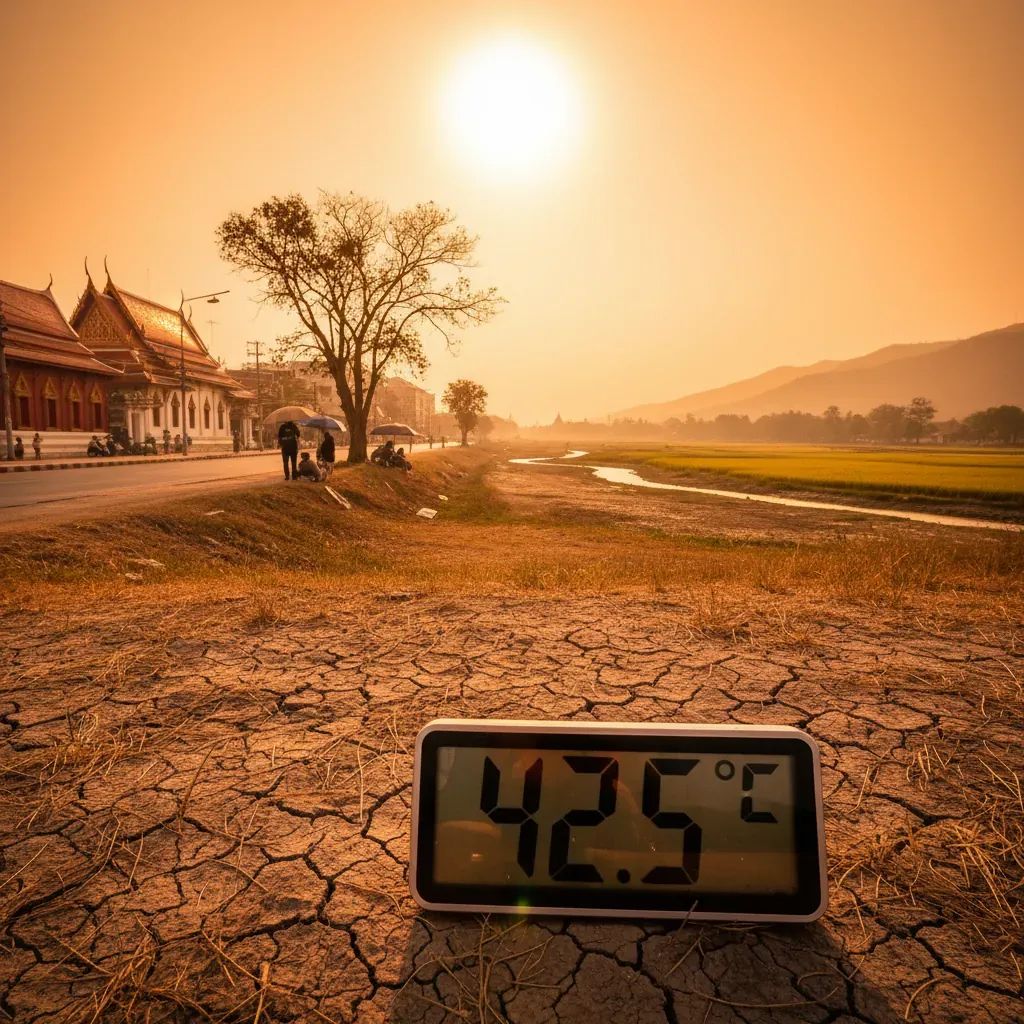
Thailand Faces Heat and Scattered Storms Through Early April
The Thai Meteorological Department forecasts extreme heat across northern and northeastern Thailand through early April, with temperatures reaching 37-41°C in upper regions and 35-37°C in Bangkok. This transition period between seasons combines high temperatures with isolated thunderstorms and weak winds, creating challenging conditions for residents and outdoor workers.
Regional Temperatures and Conditions
Northern Region: Phetchabun and Tak provinces will experience the most extreme conditions, with daytime highs of 37-41°C and minimal nighttime relief (lows of 17-26°C). Isolated thunderstorms will affect mountainous areas and some commercial zones. Haze from air pollution will accumulate in stagnant conditions, affecting visibility and air quality.
Northeastern Region: Loei and Nakhon Ratchasima will see similar conditions with temperatures of 38-40°C during the day and 21-26°C at night. Scattered thunderstorms are expected, with haze affecting provincial areas.
Central Region: Saraburi and Kanchanaburi will experience 36-40°C temperatures with isolated thunderstorm activity. Weak southwesterly winds (10-15 km/h) will provide limited relief and allow haze to accumulate.
Bangkok and Surrounding Areas: The capital will reach 35-37°C with relatively better conditions than the North and Northeast. The urban heat island effect may make conditions feel 2-3°C warmer in densely built areas. Overnight temperatures will remain around 26-28°C.
Eastern Region: Coastal and industrial zones will see 33-38°C temperatures with scattered thunderstorm activity. Sea conditions will remain generally calm at around 1 meter.
Southern Region: The South will experience milder conditions with temperatures of 32-37°C. Thunderstorms will affect only about 20% of areas, providing more comfortable conditions compared to northern provinces.
Why This Weather Pattern Occurs
Thailand sits at a critical seasonal transition between the cool season and the arrival of the southwest monsoon. During this interim period, a heat-induced low-pressure system develops as solar radiation heats ground surfaces rapidly. Weak prevailing winds lack the strength to consolidate moisture patterns, resulting in scattered thunderstorm development rather than organized rainfall systems. This arrangement creates unstable conditions that are difficult to predict precisely, requiring forecasts to shift as conditions evolve.
Safety Recommendations for Residents
Outdoor Workers: Reduce outdoor work during peak heat hours (roughly 10 AM through 4 PM). Schedule essential tasks for early morning and late evening when temperatures are lower. Take frequent breaks in shaded areas and maintain adequate hydration throughout the day.
Urban Residents: Monitor local weather updates for thunderstorm developments. Prepare for possible rapid weather changes, particularly in areas prone to sudden storms.
Motorists: Exercise caution when traveling through northern and central regions, particularly during afternoon hours when thunderstorms are most likely. Reduce speed and increase following distance if visibility decreases suddenly due to storms or heavy rainfall.
Property Owners and Market Operators: Secure outdoor equipment, temporary structures, and market canopies immediately. Isolated thunderstorms can develop rapidly and generate wind gusts capable of causing damage.
Coastal and Maritime Operations: Beach and water-sport operators should implement rapid shelter procedures for participants, as afternoon thunderstorms can develop with limited warning. Fishing fleets should remain alert to changing sea conditions during storm activity.
Outlook
This extreme weather window represents Thailand's normal transition period between distinct seasonal patterns. Similar conditions may persist through April as the system gradually weakens. The southwest monsoon is expected to become established by May or June, bringing more predictable and organized rainfall patterns.
The Thai Meteorological Department will continue issuing updated forecasts as conditions evolve. Residents should check official weather updates regularly during this transitional period rather than relying on extended forecasts, as conditions can change rapidly. For the most current information and regional weather alerts, monitor the TMD website and official announcements.


