
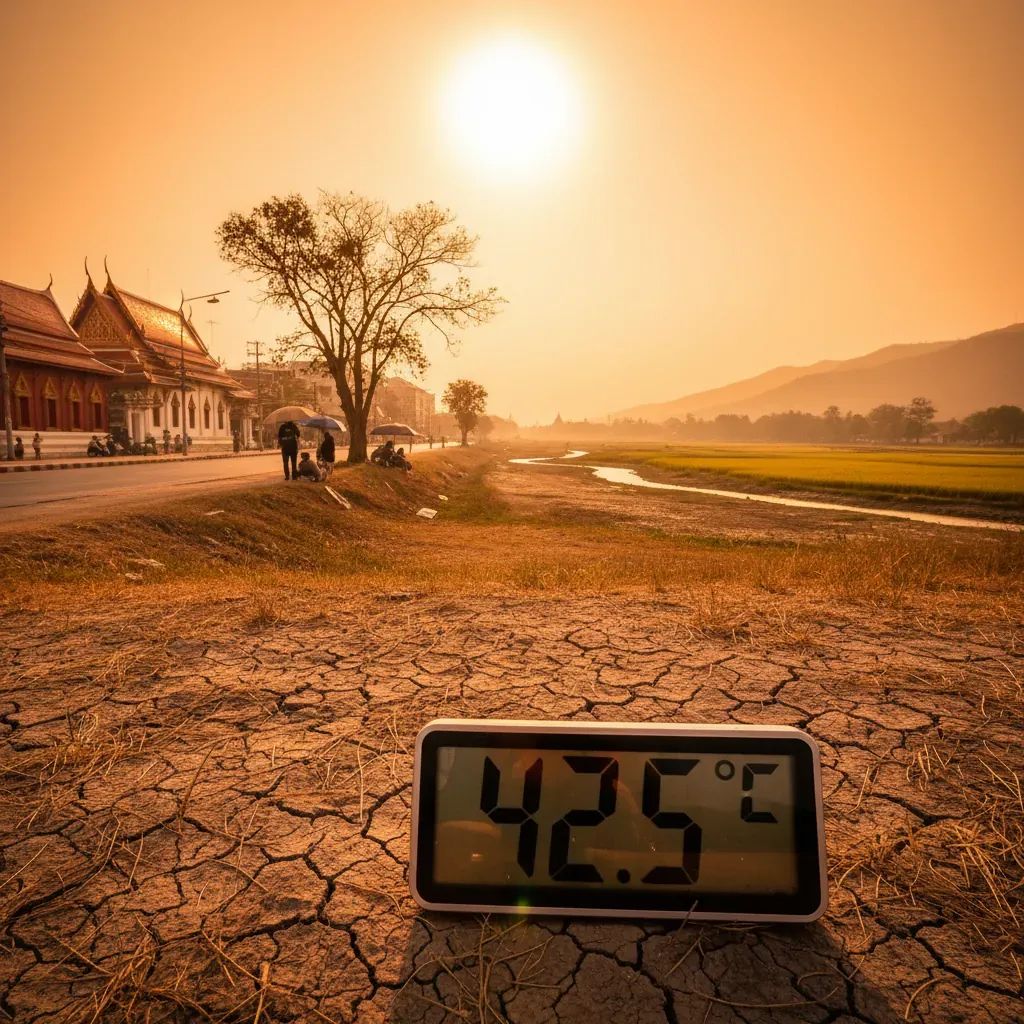
The Thailand Royal Thai Meteorological Department has confirmed that coastal resort city Pattaya is deep into its annual heat surge, with conditions forecast to remain oppressive through May 2569. The thermal reality for residents and arriving visitors is stark: daytime temperatures are reaching 33-34°C, humidity is hovering between 63% and 70%, and the combination of direct sun and moisture-laden air creates a "feel-like" temperature that feels considerably hotter due to the tropical humidity levels.
For anyone planning to spend time outdoors in Pattaya this month, the window of tolerable heat is shrinking. The critical danger zone runs from 11:00 AM to 3:00 PM, when ultraviolet exposure peaks and the combination of direct sun and moisture-laden air can trigger heat exhaustion within minutes. International tourists, unaccustomed to tropical intensity during Thailand's hottest month, are visibly recalibrating their routines.
Why This Matters
• Peak danger hours: Avoid outdoor activity between 11:00 AM and 3:00 PM—this is when heat stress becomes most severe and UV exposure peaks.
• Health risk escalation: Heat exhaustion can develop rapidly during peak hours; officials urge caution and preventive measures.
• Tourism impact: The extreme heat conditions are affecting visitor comfort and travel patterns during April and May.
• Songkran caution: The Thai New Year festival (April 13-19) coincides with peak heat; water play helps, but prolonged sun exposure remains a medical risk.
How the Heat Wave Is Reshaping Daily Life
Foreign visitors interviewed along Beach Road and Walking Street describe a tactical shift in how they navigate the city. Morning excursions now begin before 9:00 AM, when temperatures still hover around 28°C. By noon, beachfront cafés and shopping malls with air conditioning become refuges until late afternoon. Evening promenades don't start until after 5:00 PM, when onshore breezes from the Gulf of Thailand begin to cool the waterfront.
Local hospitality operators report that pool areas and indoor attractions are seeing extended occupancy, while daytime boat tours and outdoor temple visits have dropped noticeably. One Scandinavian couple remarked that they now schedule their day in "thermal blocks"—a practice learned after a first afternoon spent walking Naklua market left them dizzy and dehydrated.
The Thailand Ministry of Public Health has issued formal guidance urging both residents and tourists to carry bottled water, apply sunscreen every two hours, and recognize early symptoms of heat illness: flushed skin, rapid pulse, headache, confusion, or fainting. High-risk groups—elderly travelers, pregnant women, small children, and those with chronic illness—are advised to limit outdoor exposure entirely during the 11:00 AM-3:00 PM corridor.
What This Means for Residents and Expats
If you live in Pattaya or the broader Chonburi-Rayong corridor, this year's heat wave carries practical implications beyond discomfort:
Energy demands are increasing. Hotels and condominiums are running air conditioning at higher capacity during peak heat hours. Some properties are exploring energy-efficient measures to manage cooling needs, but residents should expect increased electricity usage during the hottest months.
Outdoor work schedules are compressing. Construction crews, landscapers, and market vendors are starting shifts at dawn and wrapping by early afternoon. If you're coordinating home repairs or deliveries, expect availability to taper sharply after midday.
Hydration infrastructure is under strain. Convenience stores are experiencing increased demand for bottled water during peak hours, and public drinking fountains are seeing heavy traffic. Keep a personal supply at home and in your vehicle.
Health services are on alert. The 1669 emergency hotline has issued standing instructions for first responders to prioritize heat-related medical cases. If you or someone nearby shows signs of heat illness—hot or flushed skin, dizziness, headache, confusion—move to a cool location, apply cool water or ice to key areas like the neck and wrists, and call for immediate transport if symptoms are severe.
How Heat Affects Tourism
The extreme heat is affecting Thailand's tourism sector. High temperatures during traditionally busy months can discourage visitors and shift travel patterns toward cooler seasons. The combination of heat and other factors like fuel costs influences tourism destination choices.
Natural marine ecosystems around coastal areas are also sensitive to temperature changes, including coral reefs near island destinations like Koh Larn, which can experience stress during warming periods as ocean temperatures rise.
Government and Private Sector Response
Thailand's public health authorities have rolled out a multilayered response. Coastal lifeguard stations are monitoring swimmers more closely and adjusting safety protocols during peak heat hours. The Pattaya City Administration has installed additional shade structures at major beach access points and is coordinating with hotels to offer assistance to tourists managing the heat.
At the national level, the Ministry of Tourism and Sports is working to develop indoor attractions and experiences that allow visitors to enjoy the destination regardless of weather conditions—cooking classes, museums, and cultural centers. The government is also working on urban cooling strategies, including increasing green space and creating shaded rest areas in public spaces.
Hotels are adapting in real time. Air-conditioned lobbies are being reconfigured as co-working lounges to serve guests throughout the day. Pools and recreational areas are adjusting their operating hours to accommodate guest preferences during heat fluctuations, and many properties are providing complimentary water and hydration assistance at check-in.
What You Should Do Now
1. Rethink your schedule. If you're a resident or long-term visitor, adopt the local rhythm: essential outdoor errands before 11:00 AM, indoor work or rest from noon to 3:00 PM, and social or recreational activity after 5:00 PM.
2. Hydrate aggressively. The Thailand Ministry of Public Health recommends drinking plenty of water throughout the day, especially during and after sun exposure. Avoid alcohol and sugary sodas, which accelerate dehydration.
3. Monitor the heat index. Several weather apps now display heat and temperature readings for Thai cities. Check forecasts and plan outdoor activities during cooler periods.
4. Check your medications. Certain medications can affect your body's ability to regulate temperature. If you take blood pressure medications, antihistamines, or other drugs regularly, consult a pharmacist about additional heat-related precautions.
5. Plan for Songkran carefully. The festival's water fights offer relief, but they also encourage prolonged street activity during peak heat. Balance the fun with frequent breaks in shade and stay hydrated throughout events.
6. Invest in cooling measures at home. If you rent or own in Pattaya, fans, blackout curtains, and adequate hydration supplies are practical essentials during peak heat months.
The Long View: Climate Adaptation
Thailand's tourism sector must continue adapting to heat conditions. Destinations that improve shade coverage, diversify indoor attractions, and communicate heat safety guidance transparently will better serve both residents and visitors during increasingly hot seasons.
Pattaya, with its established infrastructure and flight connections, has the opportunity to lead in thoughtful heat adaptation. The city must balance its beach resort reputation with practical solutions that make extreme heat survivable and comfortable for guests and residents alike.
For now, the message is simple: respect the heat, adjust your routine, and take Thailand's public health warnings seriously. The consequences of ignoring heat safety guidance are measurable in emergency room admissions, canceled trips, and health impacts for those who underestimate tropical heat's intensity.


