
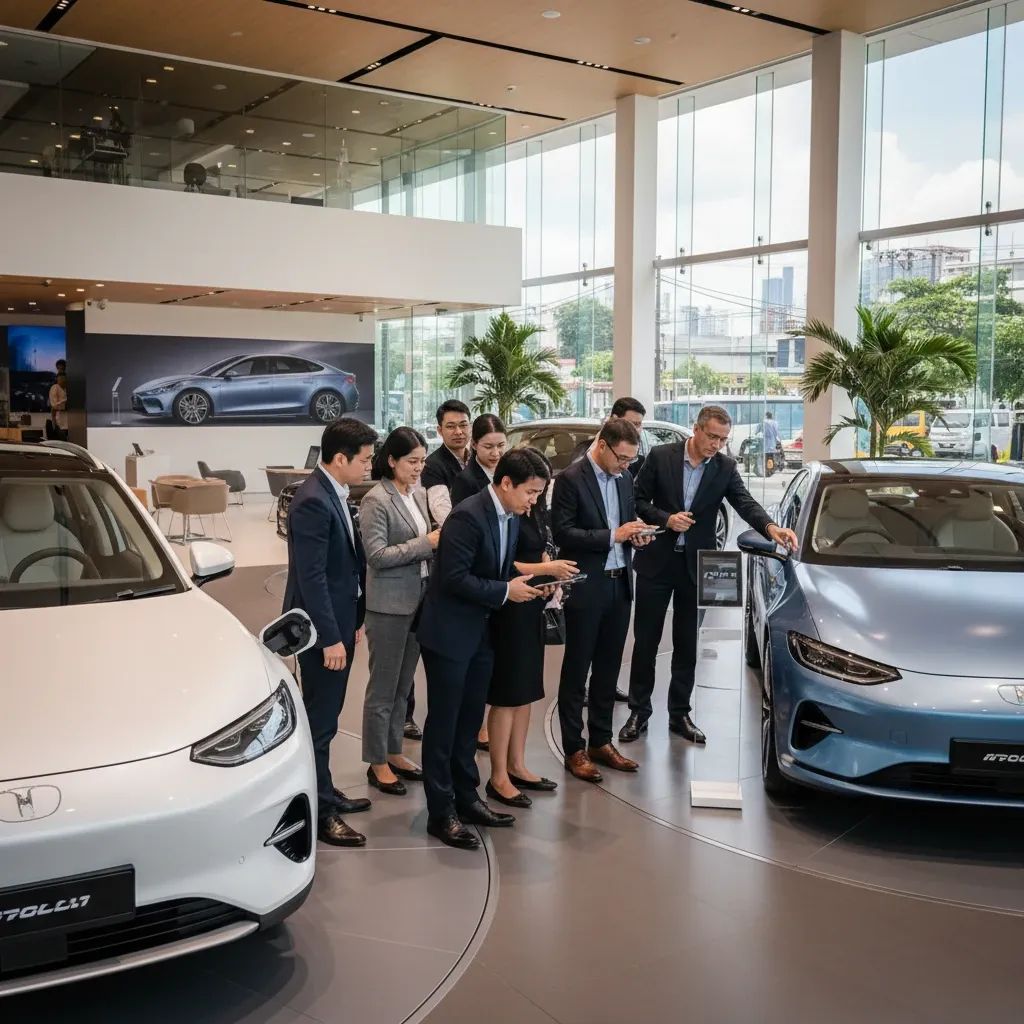
Thailand's automotive sector witnessed a significant market shift at the Bangkok International Motor Show, which concluded on April 5. The event attracted 132,951 car bookings and 2,056 motorcycle pre-orders—a 71.8% surge compared to the previous year's 77,379 total reservations, signaling accelerating consumer demand for electric vehicles.
Chinese Manufacturers Lead the Charge
The motor show results revealed a dramatic reshaping of Thailand's automotive competitive landscape. Chinese manufacturer BYD claimed the top position with 17,354 orders, decisively outpacing traditional Japanese dominance that has defined Thailand's market for decades. BYD's subsidiary DENZA added another 2,703 orders, reinforcing the brand's commanding market presence.
Toyota retained second place with 15,750 bookings, demonstrating that established automakers can compete through accelerated electrification efforts. However, the margin narrowed significantly compared to previous years, reflecting intensifying competition from Chinese entrants.
Chinese brands collectively secured approximately 62.7% of total reservations—a market concentration that would have seemed unlikely five years ago. Omoda & Jaecoo posted 15,088 orders for third place, while MG achieved 10,537 orders in fourth position. Changan followed with 8,573 orders, further illustrating the competitive pressure facing Japanese and international rivals.
Traditional Powers in Retreat
Japanese brands experienced notable erosion. Honda placed 10th with 5,907 orders, a striking decline for a brand historically among Thailand's top three sellers. Nissan fell to 18th position with 1,608 orders, effectively signaling a significant market retreat for the Japanese manufacturer.
European premium brands including Mercedes-Benz and BMW posted respectable results, suggesting that Thailand's affluent segment remains receptive to established luxury credentials and premium positioning.
Market Drivers Behind the Surge
The dramatic increase reflects convergent consumer motivations. Fuel cost savings remain a primary driver—with crude prices climbing, urban commuters cite monthly operational savings ranging from ฿3,000 to ฿5,000 compared to traditional vehicles. Over a vehicle's ownership lifecycle, these savings accumulate substantially for high-mileage users including commercial operators and delivery services.
Battery technology anxiety has demonstrably declined as charging infrastructure expands. Government-backed public charger deployment along provincial highways, combined with private-sector expansion by retailers and service stations, has reduced perceived range anxiety that previously deterred adoption. Bangkok and surrounding provinces now host sufficient charging infrastructure to support mainstream EV ownership.
Model proliferation has expanded the addressable market. The motor show featured dozens of EV and plug-in hybrid variants across multiple body styles and price points, enabling consumers to select options that match diverse preferences and budgets—a maturation that distinguishes today's market from the niche EV selection of five years ago.
Government Policy and Regulatory Framework
Government incentives remained decisive for purchase decisions, though subsidy structures are evolving. The transition from prior incentive frameworks toward domestically focused manufacturing mandates reflects Thailand's deliberate policy pivot favoring local production over imports. Regulatory changes are reshaping manufacturer competitiveness and influencing which models appeal to Thai consumers.
What This Means for Thailand
The motor show's results represent more than commercial success; they reflect a fundamental consumer shift toward electric propulsion. For people living in Thailand, this transition promises lower operational costs, expanded vehicle choice, and evolving service infrastructure. However, benefits will likely concentrate initially among Bangkok metropolitan residents and urban professionals, while rural adoption remains constrained by charging infrastructure limitations.
The coming months will determine whether Thailand's automotive sector can sustain this momentum while managing employment transitions in manufacturing and ensuring that EV ownership becomes accessible across income segments rather than remaining an urban affluence marker.


