
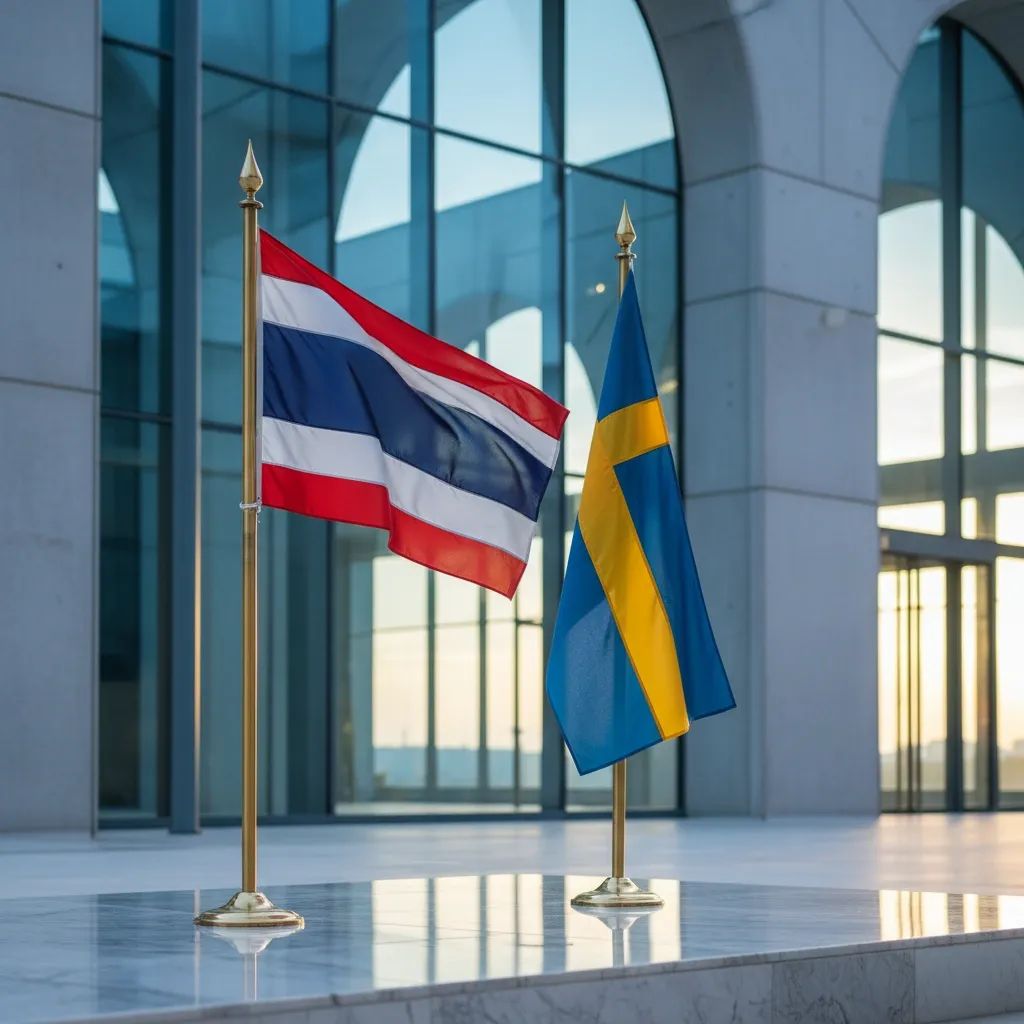
Prime Minister Anutin Charnvirakul arrived in Paris this week to formalize a Strategic Partnership with France, a diplomatic elevation that will reshape how Thailand sources defense technology, invests in clean energy infrastructure, and positions its cultural assets on the world stage for the next three years. The cornerstone is a Joint Action Plan signed on May 25, establishing a concrete roadmap for collaboration spanning military procurement, renewable energy investment, and industrial partnerships—domains where French technical expertise aligns with Thailand's stated industrial development goals.
Why This Matters
• Defense procurement acceleration: France is positioned as a primary supplier partner for defense equipment, potentially meaning faster procurement timelines and access to advanced technologies for Thailand's military modernization efforts.
• Energy costs and grid stability: Joint clean energy projects could help Thailand reduce electricity costs and improve supply reliability as the nation pursues decarbonization goals, with potential benefits for industrial zones and manufacturing sectors.
• UNESCO cultural recognition: Thailand is pursuing registration of traditional Thai dress (Chud Thai) as Intangible Cultural Heritage, which could enhance tourism value and provide international legitimacy for Thailand's fashion and textile sectors.
• Regional diplomatic engagement: French diplomatic expertise could support ongoing efforts to address regional challenges and strengthen Thailand's international partnerships.
The Machinery Behind "Strategic Partnership"
Thailand's Cabinet approved the four-pillar framework in advance: political-security dialogue, defense industry partnerships, economic integration, and research exchanges. For residents and businesses in Thailand, the impact will vary—defense-related sectors and energy firms may see direct opportunities, while other industries could experience indirect benefits through improved bilateral cooperation and regulatory alignment.
A letter of intent signed in mid-May between Thailand's state defense and energy agencies and France's Direction Generale de l'Armement (DGA) established initial cooperation mechanisms. French aerospace and industrial firms are evaluating opportunities for collaboration, though specific contract timelines have not been publicly announced. The government has indicated interest in strengthening local manufacturing capacity in defense-related industries as part of broader industrial development strategy.
Aviation and logistics infrastructure represent potential areas of cooperation. Thailand's government has indicated interest in infrastructure modernization projects, while France's expertise in sustainable mobility and logistics infrastructure could support Thailand's development objectives. French firms specializing in connectivity and infrastructure development have expressed interest in Thailand's regional integration goals, though specific projects remain under discussion.
Energy Transition: Strategic Priority
Prime Minister Anutin's meeting with international energy partners underscores Thailand's commitment to energy transition. Thailand is pursuing the balance between cutting carbon emissions while maintaining industrial output—a stated policy priority. France's experience with low-carbon energy and advanced renewable infrastructure offers potential models Thailand may adapt to its context.
Concretely, this could mean solar developers in Thailand may gain access to French technology and potential investment partnerships, battery storage and renewable technology sectors may expand through technical cooperation, and grid operators may coordinate on smart-grid infrastructure to manage renewable energy integration. For manufacturing exporters—particularly those facing European carbon regulations—improved energy efficiency through French partnerships could enhance competitiveness in international markets. The partnership framework mentions joint investment principles, suggesting discussion of potential financing mechanisms.
Trade relations between Thailand and France show opportunity for expansion. The partnership aims to strengthen bilateral trade through regulatory cooperation, business-to-business engagement, and better alignment between Thai suppliers and European industrial requirements. Established Thai exporters in sectors like agriculture and manufacturing represent potential areas for growth under improved bilateral frameworks.
The UNESCO Bid: Cultural Heritage and Tourism
Prime Minister Anutin's meeting with the UNESCO Director-General targeted the pursuit of registering Chud Thai as Intangible Cultural Heritage of Humanity. UNESCO designation would provide international recognition for traditional Thai cultural practices, potentially benefiting textile artisans and cultural heritage communities in Thailand and supporting Thailand's broader cultural tourism objectives. Bangkok-based creative industries and tourism operators could benefit from enhanced international positioning of Thai cultural heritage.
Thailand's government frames this as part of a broader strategy: promoting Thai culture globally and positioning Thailand's creative sectors internationally. France, with its own cultural diplomacy capacity, can provide support and advocacy within UNESCO's approval processes. The partnership mentions creative industries collaboration, raising the prospect of potential cultural and creative sector partnerships and tourism and cultural exchange programs.
Cambodia Border Issues: Diplomatic Context
Before the visit, Thai opposition leaders publicly noted that French diplomatic engagement could contribute to regional stability and Thai-Cambodian relations. The suggestion reflects interest in strengthening international diplomatic relationships on regional issues.
Historical Franco-Siamese treaties established the original framework for regional boundaries. France has historical documentation related to these arrangements. Thailand and Cambodia continue working through bilateral and multilateral channels on border-related matters. ASEAN remains the primary regional framework for addressing these issues through established mechanisms, and international peaceful resolution of disputes remains the stated approach.
For residents in border regions, diplomatic engagement aimed at stability remains important for local security and development. Thailand continues to pursue peaceful resolution through established international and regional channels.
What Unfolds for Different Stakeholder Groups
Defense and industrial sectors: French technical partnerships could create opportunities for Thai firms with relevant capabilities. Procurement processes and timelines will be important to monitor through official government channels.
Energy developers and utilities: Clean energy frameworks may create opportunities for partnerships and investment discussions. Energy sector stakeholders should monitor official announcements for developments relevant to their operations.
Exporters to Europe: Enhanced bilateral cooperation could potentially reduce regulatory barriers and improve market access. Firms currently exporting to European markets should stay informed through Thai government trade offices about any new frameworks or opportunities.
Tourism and hospitality operators: UNESCO designation for Chud Thai could support cultural tourism development. Tourism operators focused on heritage experiences may benefit from enhanced international recognition of Thai cultural heritage.
Regional engagement: Diplomatic partnerships contribute to Thailand's broader regional and international positioning, supporting the nation's development and strategic objectives.
Historical Context and Strategic Positioning
The partnership coincides with the 170th anniversary of formal Thai-French relations, dating to the Franco-Siamese Treaty of 1856 under King Mongkut (Rama IV). The modern diplomatic relationship has developed through the 19th and 20th centuries. The current trajectory emphasizes pragmatic cooperation on areas of mutual interest.
France as a permanent UN Security Council member and leading EU economy offers Thailand valuable partnership opportunities in technology, investment, and strategic engagement. For Thailand's international positioning, the partnership represents engagement with developed democracies as part of Thailand's broader international relations strategy. As ASEAN states develop multiple partnerships, Thailand's France engagement reflects Thailand's approach to diversified international relationships while maintaining regional ASEAN cooperation.
The Road Ahead: Official Framework
The three-year framework establishes cooperation mechanisms and working arrangements. Official announcements from Thai and French authorities will provide information about specific initiatives and timelines. Business leaders and stakeholders should monitor official government communications from Thai government ministries and official bilateral channels for developments relevant to their sectors.
For Thailand-based businesses and residents, the Strategic Partnership represents Thailand's commitment to strengthening international cooperation with developed democracies. The partnership focuses on areas identified as priorities: defense cooperation, energy transition, creative industries, and trade expansion. Implementation and outcomes will depend on the specific initiatives developed under the official framework and official government communication of developments.


