
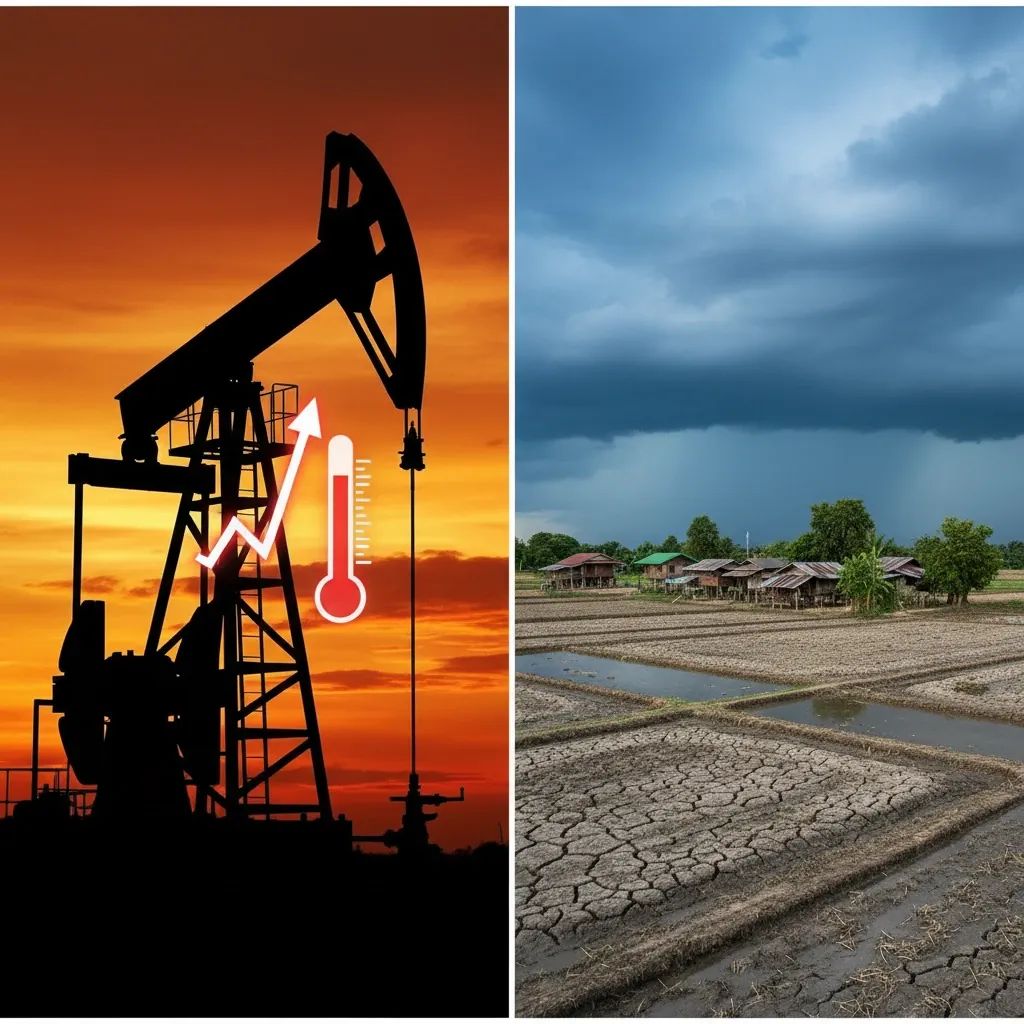
The Thailand Meteorological Department has issued a critical forecast for the 2026 monsoon season: provinces along the Andaman Coast should prepare for rain extending into November and possibly early December, well beyond the traditional October cutoff, as an emerging El Niño pattern disrupts the usual monsoon calendar. This extended wet season will reshape travel plans, agricultural schedules, and daily life for residents across six coastal provinces.
Immediate Impacts for Andaman Residents
The six Thai provinces most affected are Ranong, Phuket, Krabi, Phang Nga, Satun, and Trang.
• Shortened high tourism season: November traditionally marks the start of peak season when foreign visitors arrive. Extended monsoon rains into mid-November will likely compress the lucrative dry-season window and push cancellations forward.
• Agricultural pressure: Farmers cultivating rubber, palm oil, and rice face a narrower planting window for dry-season crops. Prolonged soil saturation raises the risk of root rot and complicates fertilizer schedules.
• Flood risk: Flood mitigation infrastructure, already strained during peak monsoon months, will need to handle extended surge periods, particularly in low-lying urban centers like Phuket Town and Trang city.
• Extended construction delays: Projects scheduled to resume in November may face weather-related postponements extending into December or early 2027.
What Residents and Businesses Should Do Now
Homeowners in flood-prone neighborhoods should inspect drainage channels, clear roof gutters, and stock sandbags before mid-May when the season begins.
Businesses reliant on outdoor operations—tour operators, seafood farms, construction contractors—should consider front-loading schedules into April and early May or budget for weather-related delays extending into late November. Hotel associations and tourism councils should adjust marketing campaigns now to manage expectations about November conditions.
Agricultural cooperatives in Krabi, Trang, and Satun should evaluate early-harvest strategies for annual crops and review crop-insurance policies to ensure coverage against waterlogging losses. Local governments should pre-position emergency pumps and coordinate with the Department of Disaster Prevention and Mitigation to update evacuation maps.
All residents should monitor the Thai Meteorological Department website and sign up for SMS alerts, which provide localized warnings for heavy rain, flash floods, and tropical disturbances.
Understanding the Extended 2026 Monsoon Season
On April 24, Surapong Sarapa, director of the Weather Forecast Division, explained that southeasterly winds—the engine behind Thailand's wet season—will linger longer than usual because of El Niño's interference with Pacific circulation patterns. Normally, the Andaman Coast experiences heavy rain from May through October, peaking in September and October when tropical depressions track across the Bay of Bengal. This year, however, the tail end of the rainy season is expected to stretch into November and possibly early December, as warm Pacific waters delay the usual shift toward the northeast monsoon.
Early onset confirmed: The monsoon is forecast to reach the Andaman Sea between May 18–25, with initial precipitation running 30–60 mm above normal. For businesses dependent on the November–April dry window—beachfront hotels, diving operators, construction firms—the compressed high season will shrink revenue opportunities.
The El Niño Mechanism
El Niño occurs when sea-surface temperatures in the central and eastern equatorial Pacific climb 0.5°C or more above the long-term average. That warming shifts atmospheric pressure gradients, weakening trade winds that normally carry moisture-laden air westward. For Southeast Asia, the result is paradoxical: an initial delay or reduction in monsoon intensity, followed by sustained wet conditions once the system stabilizes.
Current satellite data and ocean buoy readings indicate a transition toward El Niño conditions by June–August 2026. International forecasting agencies including the U.S. National Oceanic and Atmospheric Administration (NOAA) and the Japan Meteorological Agency assign a 60–70% probability to a strong El Niño developing by early autumn 2026. Historically, strong El Niño events—such as those in 1997–98 and 2015–16—triggered droughts in the Mekong basin, heatwaves in Bangkok, and forest fires in northern provinces.
Regional and Longer-Term Context
Beyond Thailand's Andaman Coast, the 2026 El Niño is expected to deliver mixed conditions across Southeast Asia. Vietnam faces elevated heatwave risks, while Indonesia braces for forest-fire danger on Sumatra and Kalimantan. Malaysia and the Philippines are preparing for water shortages as dry-season drought intensifies inland.
For Thailand specifically, the regional contrast is pronounced: while the Andaman Coast contends with extended rain, the Chao Phraya basin and Isan plateau may experience below-normal precipitation and temperatures 2–3°C above average by late summer. That divergence complicates national water-resource planning, forcing authorities to balance flood control on the west coast with irrigation demands in the central plains.
Climate scientists caution that El Niño events, while natural, are becoming more frequent and intense as background ocean temperatures rise. The 2026 cycle may offer a preview of monsoon variability in the decades ahead, underscoring the need for adaptive infrastructure and flexible planning frameworks.
Moving Forward
The Thailand Meteorological Department will issue updated monsoon outlooks in early May, incorporating real-time Pacific sea-surface data and refined forecasts. Residents and businesses along the Andaman Coast should bookmark the department's website and sign up for alerts.
The bottom line: the 2026 monsoon season will extend well into November. Early preparation—clearing drains, adjusting business schedules, reviewing insurance—will determine whether the extended rains become a manageable inconvenience or a costly disruption.


