
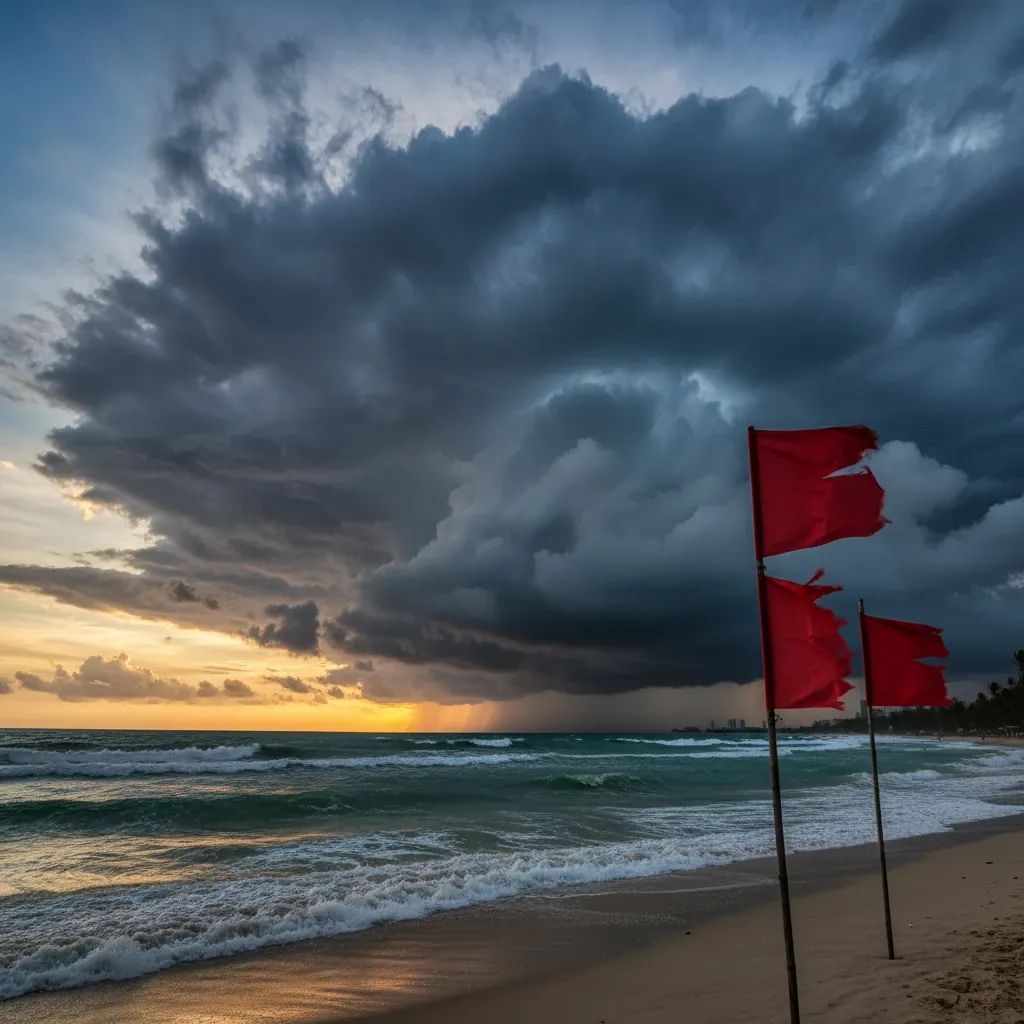
Eastern Thailand Braces for Intensifying Heat and Afternoon Thunderstorms
As of mid-March 2026, Thailand's transition into the summer season is proceeding as forecasters anticipated. The Thailand Meteorological Department confirms that daytime temperatures will climb to between 33–37°C across the eastern provinces through March 21, and residents should prepare for brief scattered afternoon thunderstorms that can develop with limited warning. What makes this pattern notable is the narrow window for day-to-day planning. Most days will deliver clear skies ideal for beach activities, but the forecast suggests roughly 1 in 10 days will see isolated storm cells develop between 14:00 and 18:00, with that likelihood increasing to 2–4 in 10 days by late March.
Why This Matters:
• Brief operational adjustments likely for marine industries and tourism through March 21; isolated thunderstorms expected in 10–40% of eastern province coverage depending on day
• Elevated sea caution as wave heights surge from 1 meter to 2+ meters within storm zones, creating conditions requiring vigilance for fishing fleets and inter-island ferries
• Heat awareness needed: combined humidity and rising temperatures will create apparent heat (what the body experiences) of 45–50°C in several areas by late March, warranting standard heat-safety precautions
• Seasonal transition: the current weather pattern marks the shift toward April's warmer period, when several northern provinces may reach 42–43°C
Understanding the Setup
A retreating high-pressure system originating over mainland China continues to influence upper Thailand, particularly the Northeast and South China Sea basin. Rather than clearing completely, this system is weakening gradually, creating conditions where surface heating triggers scattered afternoon thunderstorms. Easterly to southeasterly winds at 15–30 km/h across the eastern seaboard are generating isolated pockets of atmospheric instability. These aren't the organized monsoon squalls of May or the sustained afternoon convection of deeper summer; instead, they're scattered cells that develop and fade unpredictably over brief windows.
For Chonburi, Rayong, Chanthaburi, and Trat provinces, where fishing, resort operations, and island-hopping tourism anchor the regional economy, this weather pattern requires standard seasonal awareness. Overnight lows of 23–27°C provide relief, and sunrise conditions typically appear calm—the high-pressure ridge dominating. By early afternoon, however, surface heating and moisture transport from the gulf can trigger isolated convection. Forecasters estimate the probability at roughly 1 in 10 on March 16–17, climbing to 2–4 in 10 by March 19–21 as pre-monsoon moisture increases.
What Residents Should Know
The practical concern for most people living in Eastern Thailand centers on flexible planning. Tour operators, beach vendors, and small boat captains should monitor daily forecasts that cannot be finalized until mid-afternoon. Insurance companies report increased claims for cancelled water-sports bookings during this seasonal window. The Thailand Department of Disaster Prevention and Mitigation recommends that leisure visitors maintain travel insurance with flexible coverage, while marine operators should maintain real-time communication with harbor control authorities in Laem Chabang, Si Racha, and Pattaya port.
For residents managing fruit orchards, fish farms, or livestock operations in Prachinburi, Nakhon Nayok, and surrounding areas, standard seasonal precautions apply. Wind gusts exceeding 30 km/h can affect unprepared structures. The Thailand Department of Disaster Prevention and Mitigation has directed provincial agricultural offices to inspect equipment and reinforce supporting structures. Fish farmers should have aeration equipment readily available and temporarily reduce feeding schedules on high-risk days to maintain water quality during sudden storms.
Marine Safety Warnings
The shifting sea state requires attention from marine operators. In the lower Gulf of Thailand, baseline wave heights will hover near 1 meter under fair conditions, but localized storms can produce buildup to 2+ meters. The Thailand Marine Department has issued navigational alerts advising all vessel operators—commercial fishing fleets, ferry operators, and recreational charter services—to monitor real-time weather updates and coordinate with maritime traffic control centers. Decisions often come down to 2–3 hour forecasts updated every 30 minutes.
Chumphon northward will experience easterly winds at 15–30 km/h, while Surat Thani southward will face 15–35 km/h. Ferry operators connecting Pattaya to Koh Samet, Koh Chang, and island communities have implemented standard schedule buffers to accommodate adjustments when convective activity threatens.
Heat Building Toward April Peak
The late March forecast signals the opening phase of Thailand's typical warm season. The Thailand Meteorological Department analysis indicates daytime highs will average 36–37°C, roughly 1.5–2°C above the historical 30-year average of 35.4°C. Northern provinces including Mae Hong Son, Lampang, and Tak face the likelihood of recording temperatures around 42–43°C during the peak window from mid-March through late April. Heat index values—what the body experiences when combining temperature and humidity—will frequently reach 45–50°C in coastal and valley locations.
The Thailand Public Health Ministry recommends standard heat-safety practices, emphasizing reduced outdoor activity between 10:00–19:00 when conditions peak and heat sensitivity reaches highest levels.
Forecast Escalation Through March 21
Current projections indicate thunderstorm probability will increase gradually after March 17. The Thailand Meteorological Department's extended outlook suggests 20–40% area coverage for scattered cells between March 17–21, with southeasterly winds at 15–30 km/h. Temperatures will remain in the 31–36°C range but with higher humidity, making conditions feel warmer. Wave heights will hold 1–2 meters baseline with 2+ meter surges in active storm zones.
This escalation pattern aligns with typical pre-monsoon transition behavior, signaling the atmosphere becoming more active as solar heating increases.
Preparedness Measures in Place
The Thailand Department of Disaster Prevention and Mitigation has positioned response teams across eastern provinces, with 24-hour monitoring operational through the THAI DISASTER ALERT mobile application and the emergency hotline 1784. Provincial disaster offices maintain direct communication links to the Thailand Meteorological Department for real-time alert distribution.
The Thailand Royal Irrigation Department has instructed all reservoir management teams nationwide to optimize water-storage operations, balancing accommodation for sudden heavy rainfall while preserving capacity for drier months ahead. Hyacinth-removal operations and drainage-infrastructure inspections are proceeding to maximize flow capacity through urban zones and agricultural areas.
The Thailand Ministry of Natural Resources and Environment has deployed forest rangers to headwater regions and steep terrain prone to runoff, particularly in communities adjacent to protected conservation areas. Personnel maintain readiness for emergency response in remote terrain.
Residents throughout Eastern Thailand should verify travel insurance includes weather-related coverage, establish daily habits of monitoring official TMD channels before scheduling outdoor activities, and maintain emergency supplies including potable water, battery-powered lighting, and basic first-aid materials. The transitional weather window will likely persist for another 7–10 days before the established summer pattern dominates through May.


