
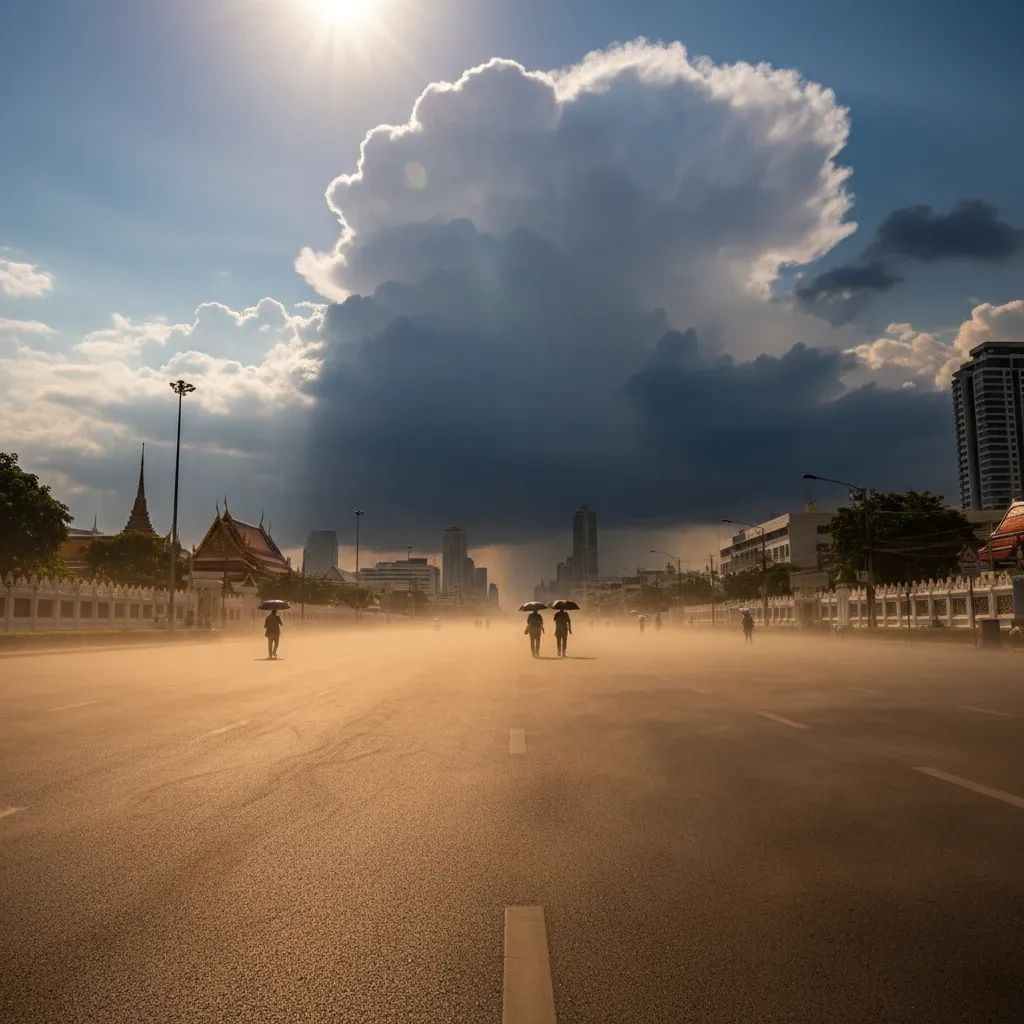
The Thailand Meteorological Department (TMD) has declared the official start of the hot season this Sunday, a shift that will immediately expose large parts of the country to extreme heat and short-lived summer storms.
Why This Matters
• Temperatures could top 43 °C in Mae Hong Son, Lampang and Tak by late March.
• First wave of summer storms is forecast for 23-25 February, bringing lightning, hail and temporary cooling.
• Electricity bills are expected to swell as air-conditioner use spikes; the Energy Regulatory Commission warns peak demand may surpass last year’s record 34,000 MW.
• Outdoor workers and festival-goers face higher risk of heatstroke during the Songkran holiday if precautions are ignored.
Forecast Snapshot
TMD’s seasonal outlook shows average highs of 36-37 °C nationwide, roughly 1 °C above the long-term norm. A lingering weak La Niña is sliding toward neutral, but early signs of El Niño suggest the second half of the hot season could turn even drier, with rainfall running 30-40 % below normal in much of the Central Plain and the East.
Heat Records and New Highs
Northern provinces have historically logged the country’s most searing readings—44.6 °C was set in Mae Hong Son in 2016. While that benchmark may hold, forecasters see a credible chance of 42-43 °C spikes between late March and mid-April. The current heat-index model indicates conditions that "feel like" 48 °C when humidity is factored in, raising the threat of heat-related illnesses.
Storms at the Doorstep
Before the mercury really soars, cool continental air will collide with building heat, spawning convective storms across the Northeast, then sweeping over the North, Central region and Bangkok Metropolitan Area. Officials warn of gusts strong enough to fell billboards, sporadic hailstones and cloud-to-ground lightning. Once these cells pass, daytime highs may dip briefly, but the reprieve seldom lasts more than 24 hours.
Health & Safety Measures
The Department of Medical Services urges people to hydrate—one 250 ml glass every 20 minutes for anyone laboring outdoors. Employers are advised to implement a buddy system and relocate heavy tasks to the early morning. Vulnerable groups—elderly, young children, pregnant women and those with heart or kidney conditions—should remain in air-conditioned or shaded spaces. Provincial hospitals have been told to stock IV fluids and cooling blankets after last year’s 61 heat-stroke fatalities.
Economic Ripples
• Agriculture: Mango and longan orchards may see flower drop if temperatures exceed 40 °C for multiple days. The Department of Agriculture recommends pre-dawn irrigation and installing shade nets.• Energy: Higher cooling demand could lift the household power tariff above ฿4.40 per kWh, roughly equal to the cost of a street-food lunch box.• Tourism: The Songkran water-festival window (13-15 April) is still attractive, but travel insurers now treat heat exhaustion as a notable seasonal claim.
Government Response
The Department of Disaster Prevention and Mitigation (DDPM) has ordered all 77 provincial administrations to activate drought-response plans, including water-tankers on 24-hour standby. Meanwhile, Bangkok City Hall is expanding its "Cooling Point" network—air-conditioned libraries, temples and malls offering free refuge during the hottest hours. The Pollution Control Department pairs these efforts with extra fire-watch patrols to curb crop-residue burning that often worsens PM2.5 levels.
What This Means for Residents
Plan your day around the heat. Schedule errands before 10 a.m. or after sunset and check the real-time heat index on the TMD smart-phone app.
Reassess your utility budget. Air-con usage of 8 hours per night could add ฿600-฿800 per month to a typical Bangkok condo bill.
Storm-proof loose items. Secure rooftop water tanks, satellite dishes and garden furniture ahead of the 23-25 February squall line.
Protect your health. Keep oral rehydration salts in the household medical kit and know the nearest Cooling Point in your district.
Stay informed. TMD’s hotline 1182 and website tmd.go.th issue bilingual alerts round-the-clock.
While Thailand has weathered fierce hot seasons before, this year’s blend of record-challenging temperatures, early-season storms and potential El Niño escalation demands extra vigilance—from households setting thermostats to farmers guarding cash crops. Adapting now could spell the difference between inconvenience and costly disruption.


