
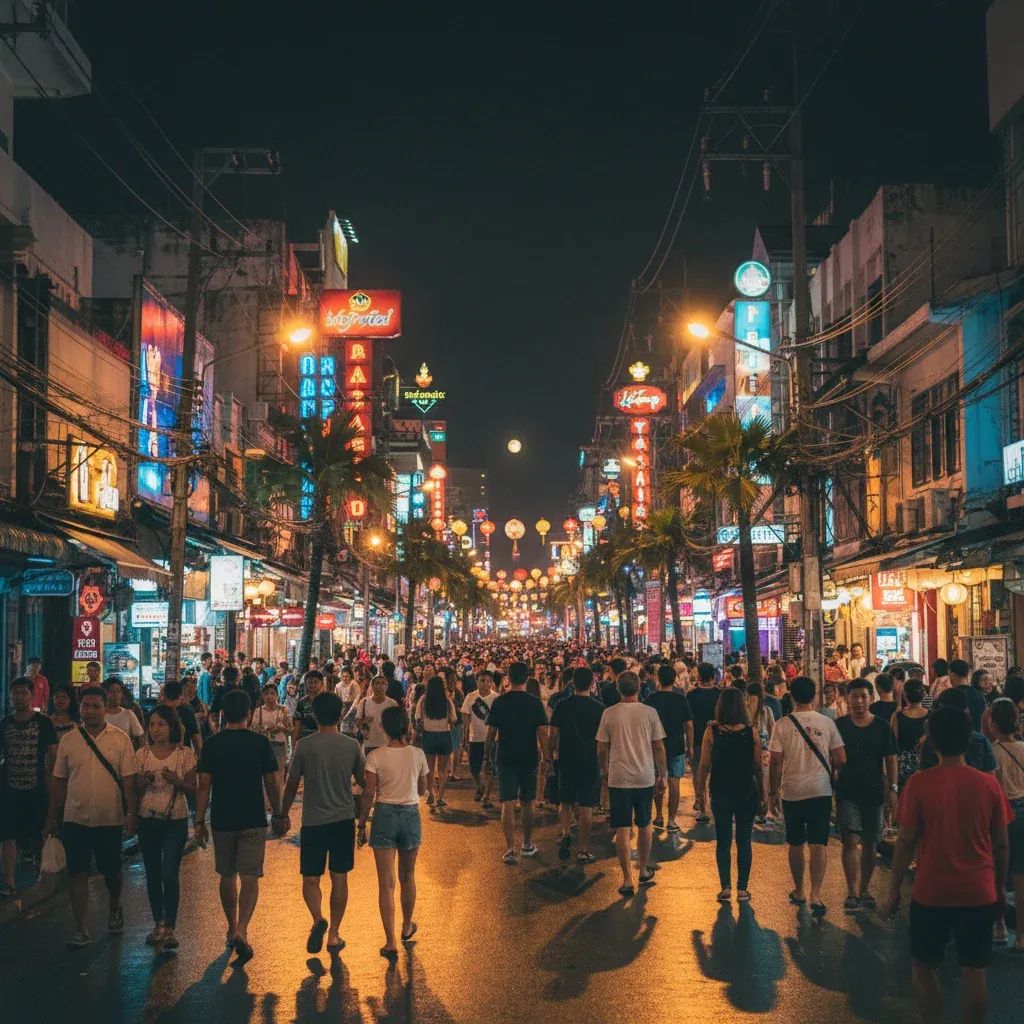
Walking Street in Pattaya serves as a lens through which locals, expats, and travelers view safety and order in one of Thailand's most commercially vital neighborhoods. A recent nighttime altercation involving foreign women and transgender individuals has prompted residents and observers to ask a more direct question: who were actually involved, and does calling them "tourists" tell us anything useful about what happened?
Why This Matters
• The "tourist" label oversimplifies who creates disturbances in nightlife zones—it lumps short-term visitors together with long-term residents and visa-holders whose relationship to the city is far more complex.
• Misidentifying troublemakers leads to misguided policy responses that target the wrong groups while missing the real sources of friction.
• Pattaya's economy depends on international visitors. Every incident affects how the city is perceived; incidents can discourage bookings and prompt travelers to reconsider their safety.
The Setting and Its Hidden Dynamics
Walking Street transforms after midnight. The rules that govern daytime Pattaya don't apply here. The narrow lanes fill with a specific crowd—bartenders finishing shifts, sex workers preparing for clients, backpackers on pub crawls, expats unwinding after work, and others whose income and housing rely on the nightlife economy. Alcohol flows freely, spaces grow crowded, and cultural friction emerges faster than resolution can follow.
This environment attracts people who know their way around. A first-time tourist typically experiences Walking Street as theater—something to witness, photograph, and leave. Repeat visitors and residents become part of the machinery. They know which bars tolerate certain behaviors, where to find specific services, how late things run, and which confrontations bring police involvement.
The recent clash occurred within this precise context, yet media coverage and initial official statements called everyone involved "tourists." That word carries weight—it suggests outside troublemakers briefly disrupted an otherwise orderly system. But observers in online forums quickly questioned whether that framing was accurate.
Who Gets to Be Called a Tourist?
Thailand's immigration system creates real ambiguity around identity that simple labels cannot resolve. A person holding a 60-day tourist visa is technically a tourist. So is someone on a 30-day exemption. But what about someone who has cycled through multiple visa categories over 18 months, rents a local apartment, works remotely, and frequents the same bars weekly?
The tourism sector and government agencies often call such people "tourists" for statistical and marketing purposes. Pattaya welcomed approximately 10 million international visitors in 2025, according to Thailand's Ministry of Tourism and Sports. That figure likely conflates transient visitors with people who have lived in the city for months or years. The distinction matters when incidents occur, because it shapes how the city understands its own problems and how outsiders perceive them.
One forum participant on Pattaya Mail articulated the distinction clearly: if someone has lived in Pattaya for months, rents locally, and frequents the same nightlife venues regularly, they have moved beyond the tourist category. Yet media outlets, working with tight deadlines and limited information about visa status or personal history, reflexively use the simpler term.
The Reputation Stakes
For Pattaya, reputation functions as infrastructure. The city's economy depends on the continuous flow of international money—hotel bookings, bar tabs, real estate sales to expats, tour packages. Images of street violence, regardless of who perpetrates it, create hesitation for travelers weighing whether to visit.
Negative stories trigger secondary effects throughout Thailand's government and hospitality sector. Tourism boards work to contextualize incidents. Hotels receive concerned inquiries. Travel bloggers amplify concerns. What starts as a local clash becomes a datapoint in international travel forums and risk assessments.
But several residents pushed back against the assumption that Pattaya had fundamentally changed or grown unsafe. Most nights pass without incident, they noted. The city serves millions without major disruption. The infrastructure for handling large volumes of international visitors—security, language services, medical facilities—remains functional.
The real tension lies between anecdotal evidence (one brawl) and systemic reality (millions of uneventful encounters annually). Managing that gap requires precision in language and clear-eyed assessment of who actually generates friction.
Enforcement and the Identity Question
Thai authorities who responded to the incident had to determine nationality, visa status, and circumstances. But those details have not been released publicly, leaving the population to speculate. Did the individuals involved hold tourist visas? Long-term permits? Education credentials? Had they been in Thailand days or months?
This lack of transparency perpetuates confusion. Without clarity, the "tourist" label becomes a catch-all placeholder. It obscures whether the problem originates from transient visitors (who may represent a manageable, temporary challenge) or from longer-term residents whose behavior reflects more persistent tensions within Pattaya's expatriate communities.
For policymakers and residents alike, missing information creates a vacuum. Some conclude that tighter tourist screening is necessary. Others argue that enforcement within expat and long-stay visa communities needs strengthening. Neither response can be properly calibrated without accurate demographic data.
The Broader Context
Pattaya has long navigated the friction between its marketing identity and its operational reality. It promotes itself as a family-friendly beach destination during daylight hours and as an adult entertainment destination at night. That dual identity requires careful management, particularly when incidents could undermine either market segment.
The nightlife district, where the recent altercation occurred, serves a specific economic function. Sex work, bars, and clubs generate substantial local revenue and employ thousands. But that same ecosystem creates environments where cultural misunderstandings, substance consumption, and competition for resources can turn volatile quickly.
The transgender individuals involved in the incident represent a visible and economically integrated part of Pattaya's service sector. They work in bars, provide entertainment and companionship, and navigate a legal and social landscape that offers protections and vulnerabilities simultaneously. Tensions involving them are not new; they reflect deeper questions about labor, dignity, and social space within Thailand's tourism economy.
Moving Forward
What Pattaya actually needs is twofold: more accurate demographic reporting when incidents occur, and an honest conversation about who is present in the city, why, and what their needs and vulnerabilities are.
Local authorities could require visa status disclosures during incident investigations, creating a more complete picture than media outlets working with limited information can generate. Tourism promotion agencies could acknowledge that long-term visitors and residents, not just transient tourists, constitute Pattaya's actual population mix.
Residents themselves have signaled that they want precision over simplification. The debate on forums was less about defending or condemning the participants and more about insisting that labels match reality. In a city built on hospitality and image management, getting the basics right—knowing who is actually present and why—becomes essential for effective policy and honest communication.
The recent clash will fade from headlines. But the question it exposed—whether Pattaya knows itself well enough to accurately describe its own dynamics—remains urgent.


