
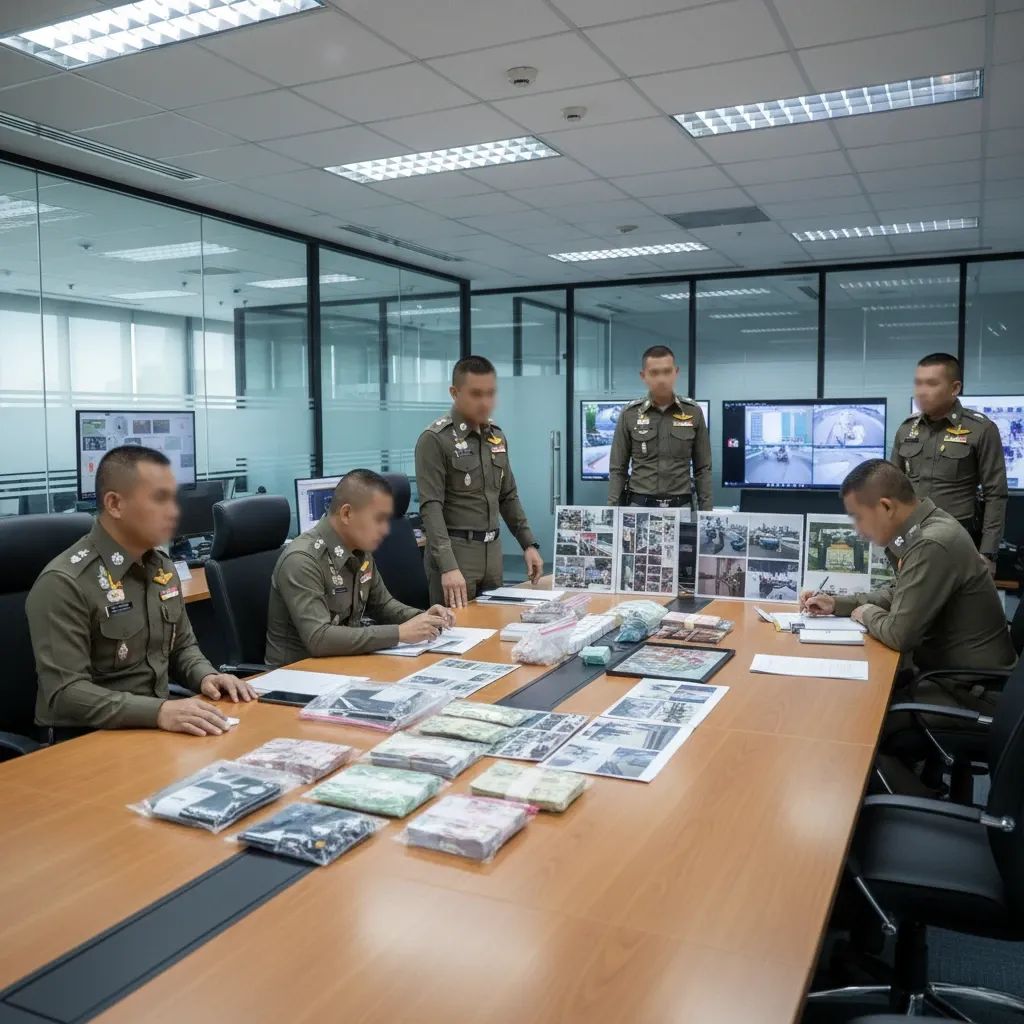
The Royal Thai Police have dismantled an international cocaine trafficking operation centered in the capital's entertainment zones, arresting a Nigerian national believed to have orchestrated the network for nearly two decades while residing in the country under what authorities describe as a fraudulent marriage arrangement.
Why This Matters
• Duration and scale: The suspect allegedly operated the network for over 17 years, using a sham marriage to secure family visa status in Thailand.
• Cash seizures: Investigators recovered more than ฿1.5M in cash hidden in a luxury condo, plus foreign currency and a vehicle—signaling the operation's profitability.
• Encrypted coordination: The group relied on secure messaging platforms to coordinate sales across Bangkok's nightlife districts, highlighting the sophistication of modern drug rings operating in Thailand.
• Tourist hotspots targeted: The network focused on foreign visitors in areas including Silom, Sukhumvit, Phuket, and Koh Samui, raising safety concerns for travelers and residents alike.
The Operation and Arrests
Thai narcotics suppression officers concluded a four-month surveillance operation on April 19, culminating in the arrest of Patrick, a 47-year-old Nigerian man, near the entrance of Silom Soi 1 in central Bangkok. Authorities identified him as the primary orchestrator of a transnational cocaine distribution network that had been operating across Thailand for approximately 17 years.
Three additional suspects were taken into custody in coordinated raids: Thomas, a 60-year-old Swiss national detained in Nonthaburi province with 0.87 grams of cocaine in his possession, and two Thai men—Thanayot Asawamethi, 35, and Nattawat Wangkitjinda, 34—arrested in Bangkok on joint possession charges. The Thai suspects are believed to have functioned as local distributors and customer liaisons, facilitating logistics and money collection for the network.
During searches of Patrick's residence—a condominium in the upscale Rama 3 district—investigators discovered over ฿1M concealed above ceiling tiles in a bathroom, a classic tactic used by traffickers to hide liquid assets. In total, police seized approximately 30 grams of cocaine, one vehicle, roughly ฿1.5M in Thai currency, assorted foreign banknotes, and other property valued at more than ฿400,000. According to police statements, Patrick reportedly confessed to the charges and expressed surprise at being apprehended after years of undetected operations.
Marriage Fraud as a Visa Strategy
One of the most striking aspects of the case is Patrick's alleged use of a fraudulent marriage to a Thai national to secure long-term residency. Thai immigration law allows foreign nationals married to Thai citizens to obtain renewable family visas, which can lead to permanent residence status after continuous lawful residence. Authorities suspect Patrick exploited this provision for nearly 17 years, using the legal cover to build and maintain his distribution network while avoiding scrutiny from immigration enforcement.
This case is the latest in a series of arrests exposing how organized crime figures misuse Thailand's visa frameworks. The practice of sham marriages has been under increasing scrutiny by the Thailand Immigration Bureau, which has launched periodic crackdowns on fraudulent applications tied to transnational crime.
Network Operations and Technology
The dismantled network reportedly coordinated sales through encrypted messaging applications, including Telegram and WhatsApp, which have become standard tools for international drug syndicates seeking to evade law enforcement detection. Thai police managed to infiltrate these closed chat groups, allowing them to monitor transactions, identify customers, and map the hierarchy of the operation over several months.
The network's distribution model targeted foreign tourists and expatriates in high-traffic entertainment zones across Thailand, including Silom, Sukhumvit, Pattaya, Phuket, and Koh Samui. By focusing on transient populations with disposable income, the group minimized the risk of local community reporting while maximizing profit margins. Thai accomplices reportedly handled on-the-ground logistics—securing safe houses, recruiting clients, and collecting payments—while Patrick managed supply chains and financial flows.
What This Means for Residents and Visitors
For anyone living in or traveling to Thailand, this bust underscores the persistent presence of cocaine distribution networks in the kingdom's tourist zones. While cocaine remains classified as a Category 2 narcotic under Thai law—carrying severe penalties including lengthy prison sentences and substantial fines—the drug's availability in nightlife districts presents an ongoing public safety concern.
Legal Consequences and Asset Forfeiture
Conviction for commercial distribution of a Category 2 narcotic in Thailand can result in sentences ranging from five years to life imprisonment, depending on the quantity involved and the defendant's role in the network. Asset forfeiture is also a key component of enforcement strategy, with authorities empowered to seize cash, vehicles, real estate, and other property linked to drug proceeds.
The ฿1.5M in cash and additional assets seized in this case will likely be subject to civil forfeiture proceedings, with funds potentially redirected to anti-narcotics programs or victim compensation schemes. For Patrick, the combination of immigration fraud and narcotics trafficking charges may also result in permanent deportation and a lifetime entry ban following any prison sentence.
Impact on Expats and Investors
The crackdown on visa fraud connected to organized crime underscores the importance of transparency in visa applications for the expatriate community in Thailand. Immigration officials continue to scrutinize marriage-based visa applications, particularly those involving nationals from countries identified as high-risk for trafficking activity.
For investors and business owners, the case highlights the importance of due diligence when engaging with service providers, tenants, or partners in Thailand's hospitality and entertainment sectors. Properties used for drug storage or distribution can be subject to seizure, and landlords may face legal exposure if they are found to have facilitated illegal activity, even unwittingly.
Thailand's reputation as a regional hub for tourism and investment depends in part on public safety and the rule of law. Continued success in dismantling trafficking networks will be essential to maintaining that reputation, particularly as the kingdom seeks to attract high-value visitors and digital nomads under new visa schemes.


