
Suicide Prevention Gets a Tech Upgrade at Bangkok's Most Vulnerable Landmark
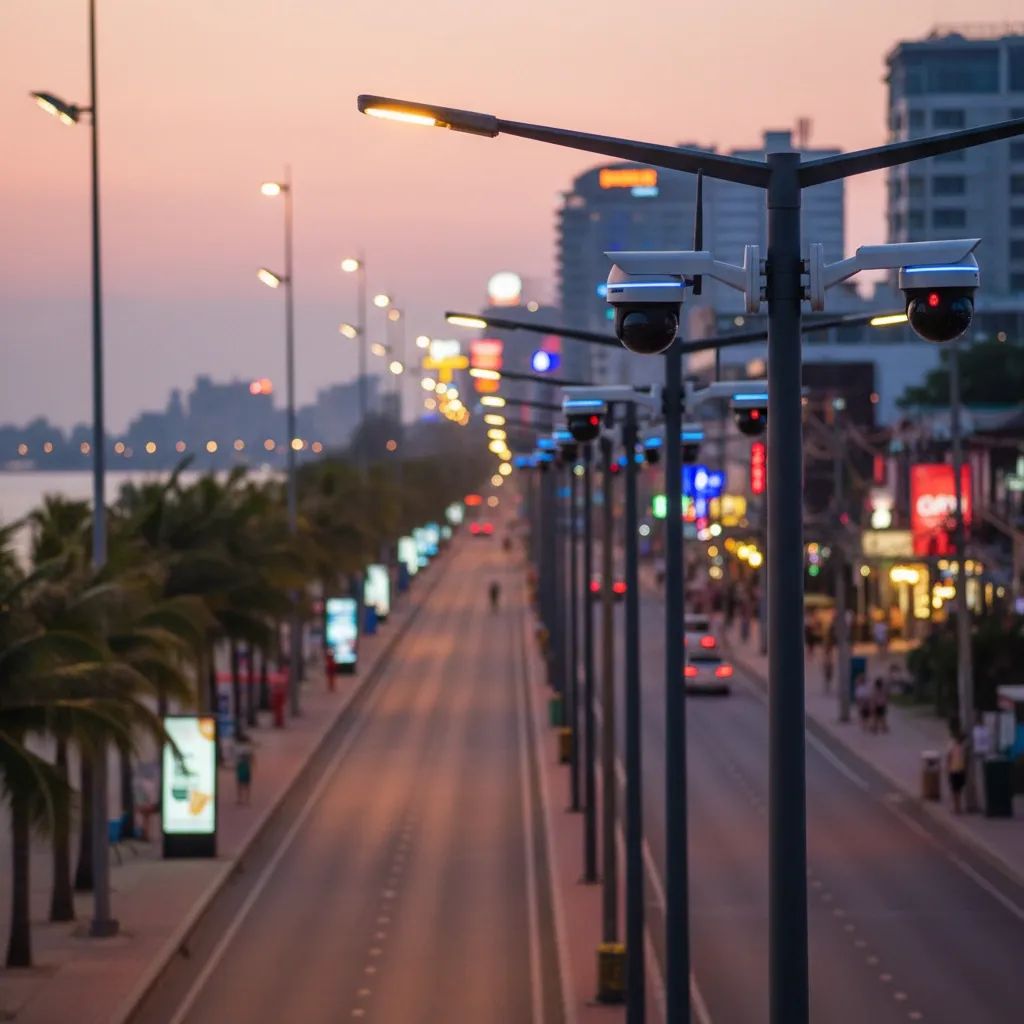
Bangkok is quietly deploying artificial intelligence on one of its deadliest bridges. The Rama VIII Bridge, a cable-stayed cable structure spanning the Chao Phraya River, now monitors pedestrians through machine-learning algorithms designed to spot warning signs before someone reaches the edge. This marks Thailand's first systematic attempt to use cameras and software not for catching criminals, but for identifying people in crisis.
The decision reflects a harder truth: traditional security hasn't worked. The bridge, completed in 2002 and named after Thailand's eighth monarch, has earned a grim reputation among residents who know its history. Its accessibility, 50-meter height, and symbolic prominence have made it a recurring focal point for self-harm. Emergency services respond to incidents there regularly, though exact numbers remain confidential due to family privacy concerns and cultural reluctance to discuss such deaths openly.
Why This Moment Matters for Bangkok
The broader picture behind this technology deployment reveals deepening urgency. According to available data, Thailand logs more than 4,000 confirmed suicide deaths annually—a number epidemiologists believe understates reality due to underreporting and misclassified deaths. The Ministry of Public Health has documented what officials describe as a steady rise over the past decade. Bangkok, for all its modern infrastructure and economic opportunities, faces particular pressure: high housing costs squeeze younger workers; long commutes erode social cohesion; and the psychological toll of urban migration from rural areas compounds isolation. Reports indicate the post-pandemic years especially saw hospital admissions for suicide attempts spike by roughly 25% between 2020 and 2022.
The Thailand Department of Mental Health operates within constraints that make technology seem almost necessary. The country has fewer than 1,000 psychiatrists for a population exceeding 70M. Community mental health services exist unevenly across regions. Access to counseling often depends on wealth or professional networks. In that context, an algorithm monitoring a single high-risk bridge becomes understandable, even if it raises uncomfortable questions about surveillance in public space.
How the System Actually Works
As described in system documentation, the AI setup installed at Rama VIII abandons facial recognition—a choice officials frame as privacy-conscious, though the reasoning matters less than the mechanics. Instead, the system tracks movement patterns, body positioning, and time spent in designated high-risk zones: areas immediately adjacent to railings, edge platforms, and observation points where falls are likeliest.
When the software detects a potential crisis—someone lingering abnormally near barriers, climbing behavior, or physical distress signals—it triggers an automated chain of alerts. According to officials, security personnel stationed on the bridge receive notifications within seconds, complete with live video feeds and spatial coordinates. Nearby police stations get alerted simultaneously. The compression of response time from what might take minutes (when relying on human observers watching dozens of screens) to what officials estimate at roughly 10-15 seconds represents the core promise of this intervention.
The technology does not learn individual identities or build surveillance profiles. Each detection triggers immediate action rather than background tracking. For a person genuinely at risk, that distinction could mean the difference between intervention and tragedy. For civil liberties observers, however, the difference between targeted intervention and pervasive monitoring feels narrow; behavioral analysis deployed at scale against any population can subtly reshape how people move through public space, even if no explicit tracking occurs.
The Practical Reality: Technology Meets Human Judgment
No algorithm completes this work alone. When the system flags a crisis, trained responders—counselors, police officers, security staff—must navigate de-escalation: an inherently human skill involving tone, empathy, presence, and judgment. Thailand's emergency response capacity has expanded in Bangkok, but remains uneven nationally. The mental health professionals available for crisis intervention sometimes lack specialized training in suicide prevention. Response quality varies dramatically depending on which district you're in and which personnel arrive.
Early data from other countries deploying similar systems shows that detection accuracy improves rapidly with experience, though false positives remain common initially. Someone sitting still near a railing while thinking about a personal problem looks behaviorally similar to someone experiencing suicidal crisis. The algorithms learn to distinguish—or misinterpret. This is where human responders become critical: they must quickly assess whether intervention is needed or whether the technology misfired.
What Residents Should Know
For people who use Rama VIII Bridge regularly—joggers, commuters, photographers, or those seeking river views—the changes will be subtle but present. Camera visibility has increased. Security personnel maintain more visible presence, particularly during hours when the bridge sees foot traffic. If you pause near railings for photos or exercise, don't be surprised by brief check-ins from staff. The intent is protective; the friction is real.
The system's success will hinge on outcomes the Bangkok Metropolitan Administration may not publicly release in full. Intervention counts, response times, and lives saved—if any—typically remain confidential due to privacy laws and sensitivity around mental health data. The public may learn that the program was "successful" or "expanded," but granular transparency about individual cases or near-misses is unlikely.
Residents should also recognize this system as a signal, not a solution. Prevention infrastructure in public space addresses the final moments before crisis becomes tragedy. It doesn't address the economic stress, family isolation, healthcare access gaps, or cultural stigma that drive people toward bridges in the first place. Thailand's mental health advocates have long argued for expanded community counseling services, workplace mental health programs, and public education campaigns that reduce shame around seeking help. A camera system complements this; it cannot replace it.
What Happens Next
If Rama VIII proves effective by internal metrics, officials have indicated plans for expansion to other vulnerable sites, potentially including the Taksin Bridge, Krungthep Bridge, and elevated sections of BTS Skytrain stations. Installation costs are estimated to range between ฿5M and ฿15M depending on camera density, software licensing, and integration with existing security infrastructure. The full rollout could run tens of millions of baht, though the government has not published official budget figures.
The program represents a particular philosophy: that technology can substitute for institutional capacity. Rather than fund more mental health professionals, community support networks, or affordable housing that alleviates root-cause stress, authorities deploy cameras and algorithms. This works at the margin—it may save some lives. But it sidesteps harder questions about why so many Bangkok residents reach crisis in the first place. Those answers live in questions about work, belonging, healthcare, and dignity. A bridge with good cameras and fast responders addresses the tragic moment. Fixing Thailand's mental health crisis requires more.


