
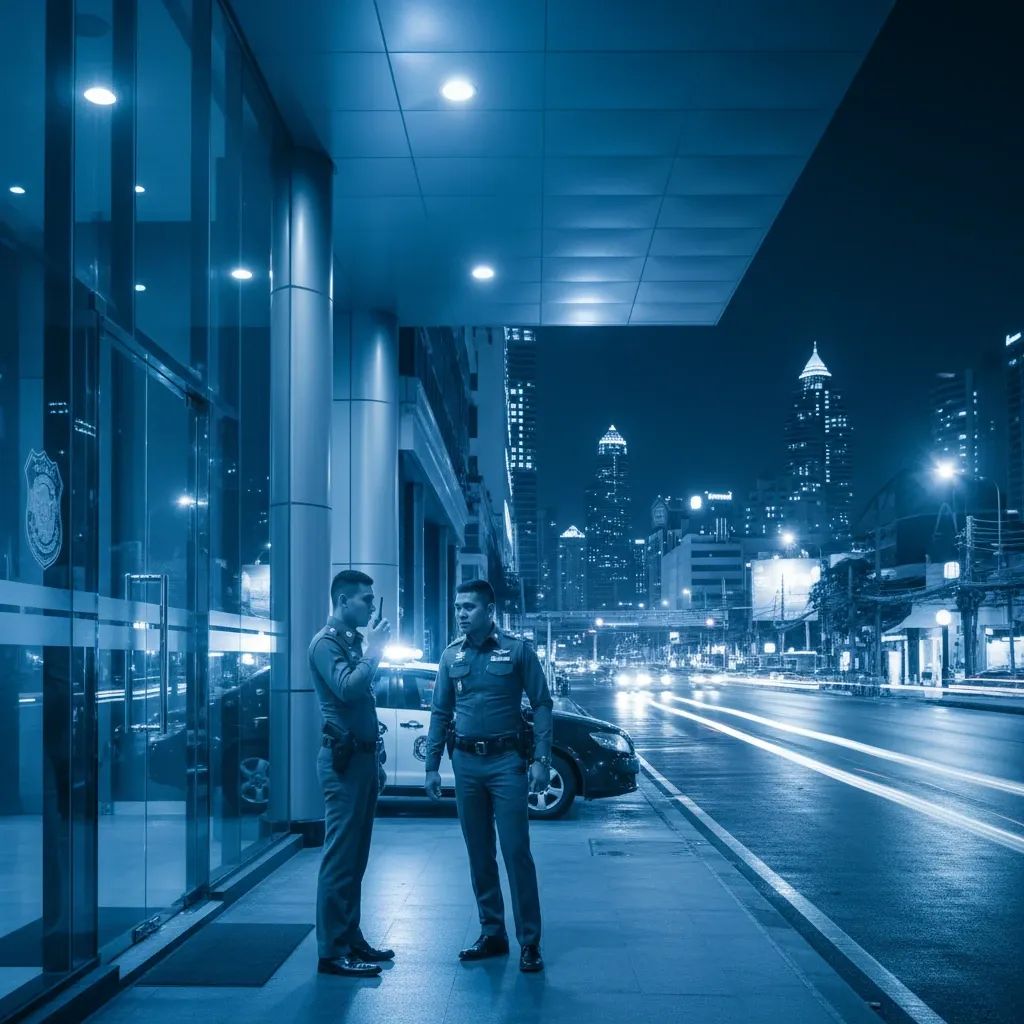
Local elections in Bangkok and Pattaya are officially underway, with ballots opening on June 28, 2026 across both cities for what shapes up to be a consequential month of campaigning. The Thailand Election Commission has confirmed that candidate registration runs through June 1, establishing a compressed four-week sprint where infrastructure, public health, and economic development will dominate the conversation.
Why This Matters
• Registration window closes June 1 — Over 14 Bangkok gubernatorial contenders and a closely contested Pattaya mayoral field are finalizing paperwork
• Practical impact: Bangkok's ฿110 billion annual municipal budget (approximately $3.1 billion) influences permit processing procedures, public park maintenance schedules, and neighborhood quality of life. While much of this budget consists of nationally allocated funds, the governor's priorities shape discretionary spending on infrastructure improvements and services.
• For families: Both cities promise expanded childcare services and healthcare expansion—tangible changes to daily logistics if implemented
• Concurrent city council elections determine whether winners inherit legislative support or face immediate gridlock in pushing policy initiatives
The Bangkok Showdown: Incumbent's Comfort Zone
The capital's governor race centers on an uncomfortable reality: Chadchart Sittipunt, the sitting governor running as an independent, possesses a commanding polling advantage that distances him substantially from other contenders. Pre-election surveys indicate strong support for his candidacy, a lead so pronounced that challengers must articulate why stability differs from stagnation.
Chadchart's campaign emphasizes skills training, expanded business vending zones, and what he characterizes as steady economic stimulus. His first-in-line registration was carefully choreographed symbolism—projecting control and institutional backing to bureaucrats and established voters alike.
But the opposition isn't surrendering the conversation entirely. The People's Party nominated Chaiwat Sathapornvijit, whose "Hackable Bangkok 2026" framing attempts to reposition environmental governance as a tech-forward agenda. His platform explicitly targets air quality deterioration and reclamation of vacant urban land for green spaces—issues that resonate painfully in a metropolis where air pollution readings spike dangerously during dry season months and force vulnerable populations indoors.
The Democrat Party fielded Anucha Burapachaisri, while a crowded field of independent candidates—including M.L. Korakot Kasemsan, Pisal Kittiyawongwanit, and Phasawong Chaiwiriyawanich representing the "Flying Bangkok" faction—fragment the anti-incumbent vote. Police Lieutenant General Chanthep Sesawech carries the Setthakij Party colors, and Mallika Boonmeetrakul Mahasuk rounds out the slate with her "Friends of Mallika" grassroots organization.
Where Bangkok Voters Actually Focus
The capital's approximately 4.3 million eligible voters consistently signal three priority clusters across pre-campaign surveys and candidate policy announcements. Understanding these priorities separates genuine governance debates from mere electoral theater.
Flood response and transportation dominate first-place conversations. Bangkok has suffered through repeated monsoon seasons where drainage infrastructure fails, waterlogging extends far beyond low-lying districts, and traffic gridlock becomes nearly total. Multiple candidates have proposed consolidating public transport licensing authority under unified Bangkok City Hall control, arguing that the current fragmented system—where both municipal and national agencies claim jurisdiction—creates accountability gaps that paralyze decision-making when crises arrive.
Healthcare expansion ranks as the second persistent concern, particularly acute for the city's rapidly aging population. Existing 50 district health centers function as primary care bottlenecks, with overcrowding pushing patients toward expensive private clinics or provincial hospitals outside their districts. Campaign commitments to expand telemedicine services, community health screening programs, and "Smart Senior" home visit initiatives address a genuine infrastructure gap in a city where life expectancy has risen substantially but geriatric infrastructure hasn't kept pace.
Economic participation and opportunity constitutes the third pillar. Proposals range from expanding street vending zones for informal sector workers to positioning Bangkok as a regional artificial intelligence and technology hub—though most candidates gloss over implementation specifics beyond aspirational framing.
Pattaya's Tighter Contest: Four Camps, No Consensus
If Bangkok resembles an incumbent protection exercise, Pattaya's mayoral race presents genuine competitive uncertainty. The coastal resort city's four leading contenders bring distinct constituencies and conflicting visions of municipal development.
Ittipat Wathanasatsathorn, nominated by the People's Party and carrying ballot number 1, unveiled his "37 Policies for Every Pattaya Resident" package with unusual specificity. His standout commitment—a 24-hour childcare facility operated by the municipal government—targets a historically neglected demographic: parents working night shifts in hospitality, entertainment, and service sectors. The promise acknowledges Pattaya's nighttime economy bluntly, framing childcare access as economic infrastructure rather than social charity.
His platform also pledges utility access standardization across all neighborhoods, explicitly naming Koh Larn island communities as areas historically underserved by government water and electrical distribution—a recognition that Pattaya's geographic fragmentation has created two-tier service delivery.
Poramet Ngampichet, the former mayor leading the "We Love Pattaya" faction under ballot number 2, campaigns on continuity rebranded as achievement. His tagline—"Better Pattaya: Done Right, Done Already, Done Next"—attempts to claim credit for past flood mitigation (reducing problematic intersections from 24 to 9) while promising forward momentum through technological intervention. His commitment to deploy a Water Crisis Center powered by AI-driven real-time drainage monitoring represents a tangible infrastructure upgrade for a city that endures predictable monsoon-season paralysis annually.
Campaign ground games matter in Pattaya's fragmented geography. Poramet's May 26 community visit to Baan Mankong on Sukhumvit-Pattaya Soi 27—a residential cluster containing 304 households and approximately 730 voters—exemplifies this granular approach. While the neighborhood represents barely one percent of Pattaya's electorate, its dense concentration and demonstrated civic engagement signal where working-class sentiment crystallizes.
Sakdchai Tangho, flying the "Pattaya 2030" banner as ballot number 3, explicitly positions himself as the anti-corruption candidate. His diagnosis: "dark money influence" and organized vice corruption have captured municipal decision-making, requiring a "24-hour mayor" model of intensive oversight. His platform targets waste management overhaul and administrative reorganization—concrete attacks on institutional dysfunction rather than policy innovation.
Suainee Charoensuk, an independent candidate numbered 4, grounds her pitch in infrastructure gaps and regulatory streamlining to facilitate business operations and tourism development.
What Residents Actually Need to Know
For foreign residents, property investors, and long-term expats, these elections carry consequences beyond political personality contests. Bangkok's next governor influences Bangkok's ฿110 billion annual municipal budget allocation through discretionary spending priorities—shaping building permit processing procedures, public park maintenance schedules, and neighborhood livability metrics. The degree of actual fiscal flexibility depends on national budget allocations and statutory obligations, but leadership choices on infrastructure sequencing directly translate to service delivery consistency across the city's sprawling districts.
Pattaya's electoral outcome reshapes tourism infrastructure planning, business licensing procedures, and flood mitigation project sequencing—factors directly influencing real estate valuations, expatriate quality of life, and the city's attractiveness to both permanent residents and capital-deploying investors.
The simultaneous city council elections compound these consequences. A governor or mayor whose party controls council seats can execute initiatives rapidly; divided government historically produces paralysis where municipal administration and legislative oversight clash. Bangkok's historical pattern shows that council fragmentation leads to repeated delays in infrastructure contracts, permit approvals, and budget execution.
Healthcare expansion pledges deserve careful scrutiny from retirees. Proposed community health center enhancements in Bangkok and telemedicine infrastructure in Pattaya could genuinely reduce reliance on overcrowded public hospitals and expensive private clinics—tangible quality-of-life improvements. Conversely, if election promises become post-election afterthoughts, existing bottlenecks persist indefinitely.
The 24-hour childcare commitment in Pattaya, if funded and operationalized, represents groundbreaking social infrastructure for non-traditional work schedules. Many families currently cannot access affordable childcare outside standard business hours, forcing painful compromises between employment and parenting logistics.
Campaign Momentum and Forecast
Bangkok's race unfolds as a predictable incumbent-advantage scenario. Chadchart's challenger coalition struggles to articulate differentiation beyond generic calls for "better management." His commanding polling lead and first-in-line registration project such overwhelming confidence that competing energies appear almost theatrical.
Pattaya's four-way split generates genuine electoral suspense. Establishment figures (the People's Party nominee and the former mayor) carry organizational machinery and name recognition; anti-corruption and independent candidates represent protest-vote alternatives. Turnout dynamics will prove decisive—high-participation elections historically favor establishment figures, while voter apathy enables surprise outcomes.
The Thailand Election Commission has stationed observers in both jurisdictions, pointedly emphasizing transparency commitments after previous local elections drew criticism over procedural irregularities. Early voting opens June 21, 2026 for registered voters unable to participate on election day itself.
The Next Month and Beyond
Candidate registration closes June 1. The commission will publish finalized candidate lists and official ballot configurations by June 3, offering voters 25 days for informed deliberation before polls open at 8 a.m. on June 28, 2026.
Winners assume office mid-July, inheriting administrations already committed to existing budget cycles, limiting flexibility for immediate policy reversals. First-year governance typically emphasizes personnel appointments and bureaucratic reorganization; campaign promises targeting 2027 implementation timelines prove more realistic than pledges of instant transformation.
The practical test for residents arrives in measurable form: Does new leadership—or incumbency—actually improve flood response times, traffic flow, air quality readings, and public service delivery? Previous local elections have produced both reformist breakthroughs and administrative stagnation. June 28, 2026 will determine which trajectory Bangkok and Pattaya follow for the next administrative term.


