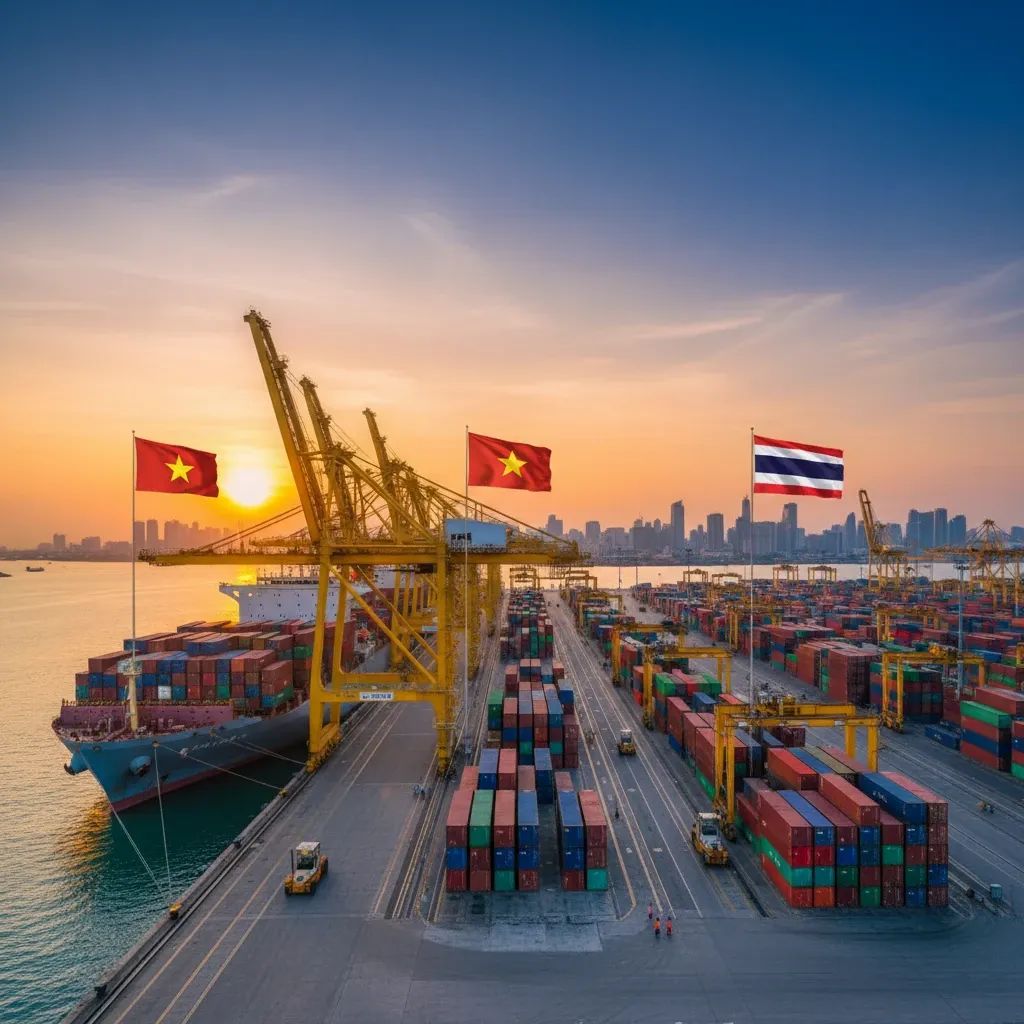
Thailand is banking on a generational shift in Chinese travel patterns to unlock nearly 300 billion baht in tourism revenue this year, but the country faces a stubborn arithmetic problem: there simply aren't enough airplane seats to get all those young travelers here. The Tourism Authority of Thailand has struck partnership agreements with five major Chinese firms and one Thai conglomerate to tap into a newly dominant demographic—the post-90s and post-00s generations who now drive outbound travel from mainland China—yet success hinges entirely on whether airlines can add 2.7 million one-way seats to close the gap between ambition and physical reality.
Why This Matters
• The seat shortage is real: Thailand requires 10.6 million one-way flight seats to accommodate 5.3 million round-trip Chinese tourists, but current capacity totals only 7.9 million, leaving a 2.7 million-seat deficit that no marketing campaign can overcome.
• Younger travelers spend more: The 18-29 age group now represents 63% of Q2 2024 outbound travelers from China and prefers independent exploration over package tours, which means higher per-person spending (56,000 baht average) despite lower overall visitor volumes compared to pre-pandemic baselines.
• Digital discovery replaces guidebooks: Platforms like Xiaohongshu and Douyin have become the primary inspiration source for travelers under 35, making partnerships with Amap and Meituan strategically essential rather than supplementary marketing moves.
• Regional distribution is shifting: Economic benefits are being deliberately channeled away from Bangkok and Phuket toward emerging destinations like Rayong, Chanthaburi, and Trat, which will receive infrastructure investment and direct air routes from western Chinese cities.
The Corporate Ecosystem Taking Shape
Over the past year, TAT has formalized relationships with a carefully curated roster of partners, each filling a distinct function in the overall tourism machine. China Tourism Group operates one of mainland China's most extensive travel networks and will focus on steering affluent tourists toward wellness retreats, luxury cultural experiences, and destinations beyond the usual suspects. Utour Group brings digital amplification through its own booking infrastructure, with specialization in honeymoon packages, educational tours, and festival-linked itineraries. China Comfort Travel Group owns the ground-level logistics—group travel coordination, safety protocols, and business-event management—that keeps tour operations running smoothly.
The technology layer represents TAT's more innovative bet. Amap, which functions as China's leading navigation and mapping service, is deploying what it calls "Street Discovery Ranking" across Thai cities and towns. The tool essentially recommends off-the-radar neighborhoods, local eateries, and cultural pockets to independent travelers, algorithmically steering 71% of 18-24-year-olds away from shopping malls and toward authentic experiences. Meituan, the lifestyle super-app that dominates everything from restaurant reservations to local services in China, is expanding its "Black Pearl Restaurant Guide"—positioned as Thailand's equivalent to Michelin stars—while simultaneously running a "Two-Way Tourism" campaign that uses anonymized dining data to refine targeted promotions.
Sichuan Airlines represents the connectivity piece. Discussions center on resuming direct flights between Chengdu and Chiang Mai, a route suspended during the pandemic, plus launching new service to U-tapao (serving Bangkok's southern suburbs and Pattaya) and Hua Hin, the seaside resort town roughly two hours south of the capital. These secondary routes will open pathways for affluent western Chinese travelers—regions like Sichuan, Yunnan, and Tibet—who represent a distinct, high-spending demographic historically underserved by Thailand's aviation infrastructure.
TCP Group, the Thai-origin maker of Red Bull, leverages its substantial China business operations to sponsor youth-oriented events and lifestyle experiences under an "Energetic Thailand" umbrella, targeting the 25-40 age bracket with sports festivals, music events, and wellness activities. The collaboration aims to reach a global brand that already resonates with independent, experience-seeking travelers.
What These Partnerships Mean for Daily Life in Thailand
For restaurant owners, tour operators, and hospitality workers, the implications are direct and commercial. Inclusion in Meituan's Black Pearl Guide doesn't just bring visibility—it will trigger algorithm-driven reservations from mainland diners with spending power. Wellness centers, boutique hotels, and adventure-tourism operators positioned in secondary cities should prepare for a potential surge in reservations as Amap's recommendations redirect traffic away from congested tourist enclaves.
Expatriate property investors and short-term rental operators face more nuanced consequences. Independent travelers—the demographic TAT is aggressively pursuing—tend to book Airbnb-style accommodations rather than traditional resort packages, favoring flexibility and neighborhood immersion. This trend is expected to favor mid-range residential conversions over large hotel developments, particularly in emerging destinations like Chiang Mai's suburbs, Koh Samet, and Chiang Rai. Landlords who currently rent to long-term expat tenants may find their properties appreciating toward short-term tourism rentals, especially in walkable, culturally interesting neighborhoods that Amap would highlight.
Infrastructure strain is expected to be significant. Rayong, Chanthaburi, and Trat—provincial towns that currently process modest international traffic—are earmarked for tourism acceleration. This means airport upgrades, improved road signage, and expanded hospitality capacity will likely follow. For residents in these areas, the transition will bring both economic opportunity and crowding pressure.
How Demographics Are Reshaping Everything
The composition of Chinese tourists visiting Thailand has undergone a quiet but profound reversal. In recent quarters, mainland China reclaimed its position as Thailand's largest source market, accounting for 30% of all international arrivals. The February 2025 Lunar New Year period delivered significant numbers, with projections suggesting similar or stronger performance for the 2026 celebration period—when many tourist-dependent businesses run on skeleton crews and infrastructure faces heavy demand concentration.
Yet raw visitor numbers only tell part of the story. The travelers themselves have changed. The "post-80s" generation (those born in the 1980s) previously led outbound travel but is now being overtaken by "post-90s" and "post-00s" cohorts, who collectively account for 40% of China's outbound travel market and show markedly different preferences. Rather than following itineraries in guidebooks or joining fixed-date group tours, 71% of 18-24-year-old Chinese travelers now insist on independent or small-group itineraries. They prioritize personal discovery over checklist completion.
These younger travelers don't consult traditional online travel agencies. Xiaohongshu, a social media platform that functions as a hybrid between Pinterest and Instagram, is now their primary inspiration source, outranking established agencies like Ctrip for travelers under 35. Douyin—the Chinese version of TikTok—drives spontaneous booking decisions through livestream commerce and short-form destination videos. This is why TAT's marketing budget increasingly flows toward digital platforms and content creators rather than print advertising or tour operator incentives.
The Arithmetic Doesn't Add Up—Yet
TAT's target is explicit: attract 5.3 million Chinese visitors and generate 297 billion baht in revenue by the end of fiscal year 2027. At an average spending rate of 56,000 baht per person, that math works cleanly. The problem is logistics.
Each tourist requires two flights—one inbound, one outbound—meaning 5.3 million visitors demand 10.6 million one-way flight seats. Currently, Thailand and China have a combined capacity of approximately 7.9 million seats. That represents a shortfall of 2.7 million seats, equivalent to roughly 1.35 million round-trip travelers who cannot be accommodated under current operations.
Before the pandemic, Thailand and China operated approximately 13.1 million combined seats annually. The industry has recovered less than 60% of that capacity, a lag driven by aircraft availability, crew scheduling constraints, and profitability uncertainties. Chinese carriers are expected to boost capacity by significant percentages in 2026, a meaningful shift that will help narrow the gap. Thai Airways has announced plans to double frequencies on select China routes. Yet the overall ramp-up remains incremental and faces uncertainties.
The practical consequence is that pricing power will likely favor airlines, hotels, and restaurant operators throughout 2026. Capacity-constrained markets breed scarcity premiums. For travelers and businesses dependent on affordable transport, this period is expected to present pricing challenges.
Distribution Beyond the Golden Triangle
TAT's geographic diversification is not aspirational rhetoric—it's an operational priority. The partnership agreements explicitly emphasize promoting "destinations beyond traditional attractions." Amap's Street Discovery Ranking is designed to surface provincial festivals, neighborhood restaurants, and cultural experiences outside Bangkok and Phuket's familiar circuits.
Thematic tourism is the operational mechanism for this distribution. Health and wellness travel, sports tourism, MICE (corporate meetings and events), medical procedures, heritage journeys, and "screen tourism" (visits inspired by films or TV shows shot in Thailand) each receive dedicated marketing resources and corporate partnerships. This specialization allows TAT to funnel different traveler segments to different regions. Wellness tourists might concentrate in areas with spa infrastructure. Festival enthusiasts will be directed to Songkran celebrations in Chiang Mai. Sports travelers will connect with Red Bull-sponsored events across multiple provinces.
The cultural branding campaign—"Zhong Tai Yi Jia Qin" (China and Thailand Are One Family)—provides narrative coherence across all these initiatives. It's framed as reinforcing historical and people-to-people ties rather than raw tourism mechanics, which gives it resilience if political or economic headwinds emerge.
Looking Ahead to 2026 and Beyond
TAT projects that Chinese arrivals will continue climbing through 2026, with forward bookings suggesting the agency will maintain confidence in achieving its annual targets, now ranging from 6 million to 6.7 million Chinese arrivals—a 40% increase over 2025. The "Thailand Summer Blast" airline-incentive program, which subsidizes carriers that add routes and frequencies, is scheduled to run through the high season.
What comes next depends on three variables sitting partially outside TAT's control. First: whether airlines commit to the aircraft and crew investments necessary to add those 2.7 million missing seats. Second: whether Chinese macroeconomic conditions remain resilient enough to sustain outbound travel spending. Third: whether competitors in Southeast Asia—Vietnam, Cambodia, Indonesia—can absorb would-be Thai visitors if capacity constraints bite. For now, Thailand's partnerships look strategically sound, demographically aligned, and operationally ambitious. But planes are the ultimate constraint, and no corporate partnership can manufacture a Boeing 787.