
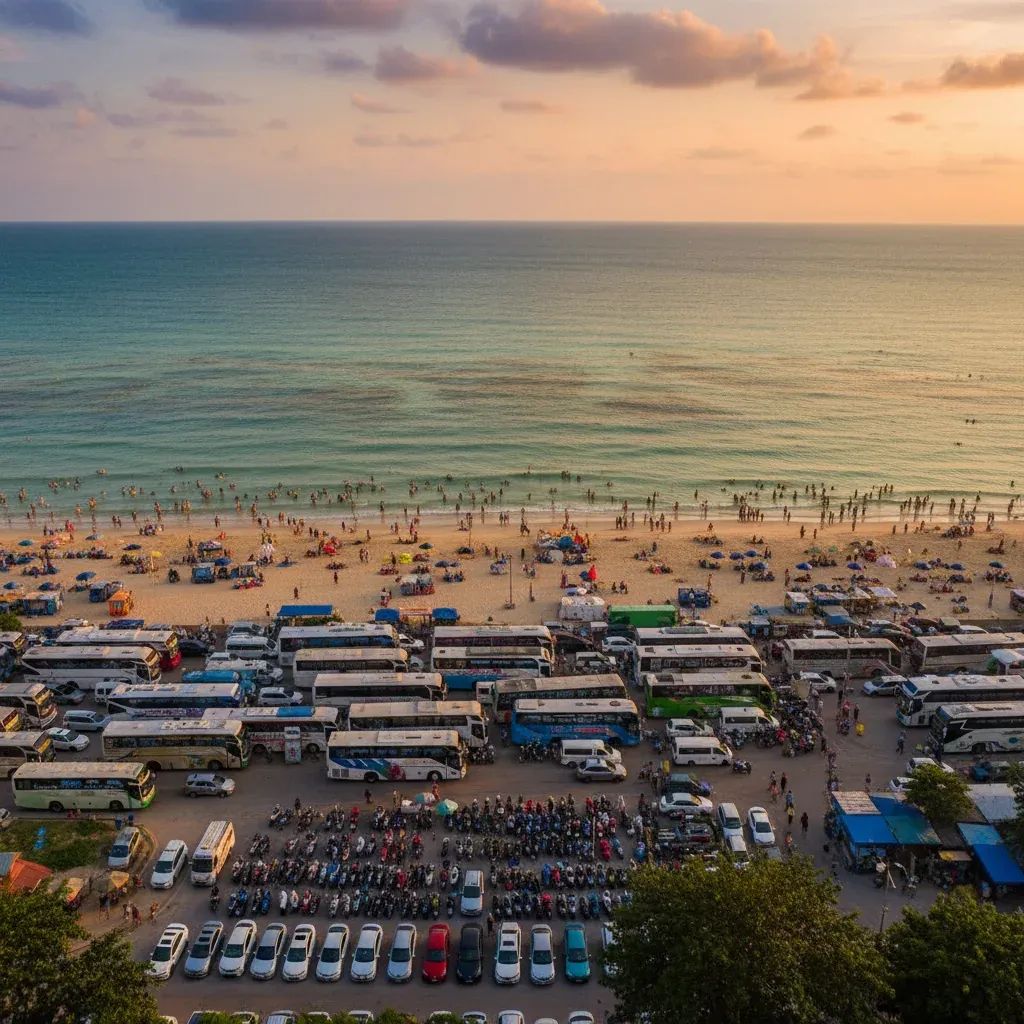
Thailand's Wong Amat Beach has gone from quiet refuge to viral destination, bringing an influx of visitors that has triggered municipal patrols, resident complaints about overtourism, and an urgent debate over whether the North Pattaya coastline can sustain its newfound fame without sacrificing the tranquility that made it popular in the first place.
Why This Matters
• Public space access: Footpaths are clogged with motorcycles and unauthorized beachfront platforms; locals report being priced out or blocked from areas once freely available.
• Environmental pressure: Plankton blooms, discolored water, and suspected illegal discharge pipes have all surfaced near Wong Amat in the past year—monitoring continues.
• Infrastructure gaps: Commenters cite poor waste bins, inadequate restrooms, and unregulated vendor setups as the beach's visitor count climbs beyond its carrying capacity.
Background: Environmental and Infrastructure Challenges (2024–2025)
Before Wong Amat's viral surge, the beach faced several environmental incidents that revealed underlying infrastructure vulnerabilities. In February 2024, officials attributed murky water patches to accumulated rainwater carrying suspended sediment, not direct discharge from hotels, yet acknowledged that clogged drainage contributed to the problem. In June 2025, a plankton bloom turned the water dark green and emitted a sulfur-like odor; officials said the water began to clear, but monitoring continued. Three months earlier, a mysterious pipe protruding from the sea near Wong Amat sparked local suspicion of an illegal wastewater discharge, prompting an investigation by Pattaya City Hall that has yet to report findings.
These incidents underscored the limitations of Pattaya's aging wastewater network—including a 65,000-cubic-meter treatment plant in the Nongyai area—and highlighted the city's broader need for upgraded drainage systems to reduce sand infiltration and leakage.
How a "Hidden Gem" Went Mainstream
Social-media platforms lit up in recent weeks with photographs of Wong Amat's clear waters, relaxed atmosphere, and sunset views—attributes that long-time Pattaya residents already knew but which had largely escaped the Instagram algorithms that drive modern tourism. The beach lies north of the city's main hotel strip, far enough from Walking Street and Jomtien to retain a village feel, yet close enough to draw day-trippers once word spread online.
That word spread fast. Within days, visitor counts spiked, prompting the Thailand Municipal Enforcement Office and local police to increase foot patrols along the sand and adjacent access lanes. Officers now conduct regular sweeps to ensure crowd safety, assist first-time visitors, and maintain a visible presence as commercial activity—deck-chair rentals, food stalls, motorcycle taxis—expands to meet demand.
Current Infrastructure Developments and Waste Management (2026)
In response to growing pressure on the area, Pattaya has accelerated infrastructure improvements. In April 2026, authorities launched a 50-ton-per-day incineration facility on nearby Koh Larn, part of the "Better Pattaya" vision—an initiative designed to balance coastal development with environmental stewardship. A Thailand–Japan technical workshop in February 2026 focused on plastic circularity and waste sorting protocols, aiming to reduce marine debris and establish advanced upcycling systems.
Yet Wong Amat Beach itself remains a work in progress: parts of the northern stretch are littered and rocky, and residents have appealed for more regularly serviced public garbage containers along the shoreline. The city is expediting construction of an enhanced drainage system to address long-standing water quality concerns.
What This Means for Residents
Long-term locals are voicing frustration over how quickly public space has become commercialized. Public footpaths have turned into motorcycle parking lots, and unauthorized vendors have erected beachfront platforms that block pedestrian passage, forcing walkers to detour around obstacles. Deck chairs and umbrellas, once sparse, now crowd stretches of sand that residents recall as open commons.
Property values in the Wong Amat corridor have climbed, driven partly by luxury condominium projects—The Riviera Palm Beach Wongamat and Once Wongamat among them—and by Central Group's 2022 launch of Wongamat Beach Village, a natural-beach-park-meets-lifestyle-mall concept. For renters and middle-income families, rising costs mean the neighborhood that offered affordable coastal living a decade ago is pricing out its original community.
Fishing families, who historically worked these waters, have given feedback to municipal planners about preserving access and protecting marine ecosystems from the runoff and waste associated with rapid visitor growth. The Pullman Pattaya Hotel G runs monthly "Beach Lover Campaigns" and clean-up drives, but community organizers argue that voluntary efforts cannot substitute for systematic municipal waste management and enforcement.
The Broader Pattaya Strategy
Wong Amat's viral moment arrives as Thailand's Tourism Authority pivots to a "Value is the New Volume" strategy, prioritizing higher-spending travelers over sheer headcount. Research in 2026 estimated Pattaya Beach's effective carrying capacity at roughly 200,000 visitors—a threshold that officials acknowledge can be breached during peak weekends and holidays.
To relieve pressure on central zones, the city is promoting "slow travel" alternatives in Jomtien and Bang Saray, expanding community-based tourism through the "Village to the World" project, and hosting international waste-management conferences to adopt advanced sorting and upcycling protocols. Flood mitigation remains another priority: chronic inundation has plagued Pattaya for years, and the city is investing in comprehensive drainage overhauls, one-way traffic trials in congested districts, and upgraded signage and restrooms to meet international standards. The "THE NEXT PATTAYA" roadmap frames these moves as part of a shift toward a sustainable "city of opportunity," though residents question whether implementation can keep pace with the rate at which destinations like Wong Amat go viral.
Mixed Voices Online and On the Ground
Social-media commentary reflects the tension. Some users celebrate Wong Amat's natural beauty and tranquil vibe, ranking it among Pattaya's most relaxing coastal spots. Others note sardonically that a "hidden beach" loses its charm the moment it trends, and call out the lack of sanitation, unregulated vendor activity, and waste accumulation in access lanes.
A cohort of commenters has demanded clearer public-facility organization, warning signs against littering, and enforcement of no-platform rules to keep the shoreline open. The presence of homeless individuals camping on the sand has also drawn attention, with both residents and tourists citing safety and image concerns.
Municipal authorities say they will continue monitoring the area to strike a balance among tourism revenue, environmental protection, and public order. Whether that balance can hold as Wong Amat's online profile continues to climb remains an open question—and one that will test whether Pattaya's pivot to "value over volume" is policy or aspiration.
What Comes Next
For expatriates and long-term residents, the lesson is clear: a beach that goes viral on social media can transform within weeks, bringing both opportunity and friction. If you have frequented Wong Amat for its quiet charm, expect larger crowds, more vendors, and a heightened police presence. If you are considering property in the area, understand that values are rising alongside concerns about infrastructure capacity and environmental sustainability.
Authorities have committed to ongoing patrols and infrastructure investment, but the speed of change—and the intensity of online attention—may outpace municipal timelines. In the meantime, locals and visitors alike are learning that in the age of instant virality, no beach stays hidden for long.


