
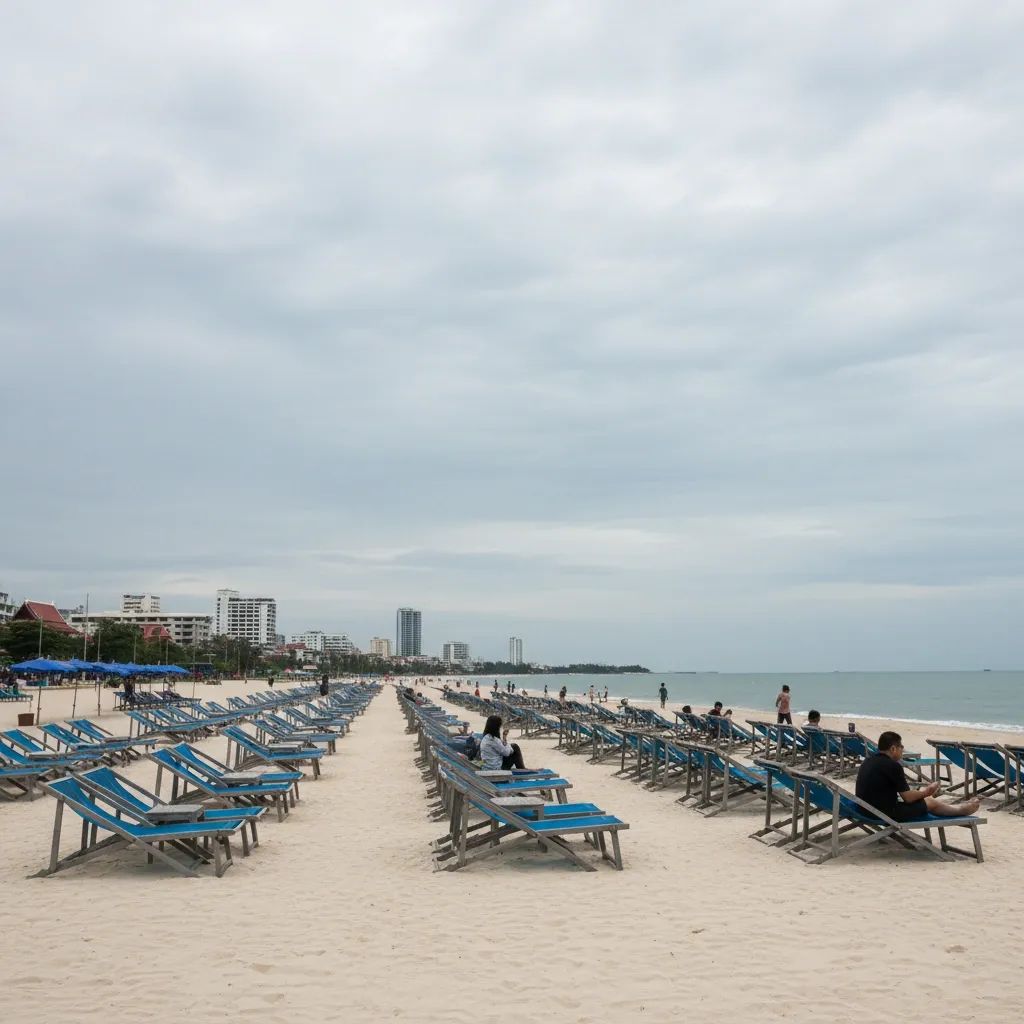
The Thailand Tourism Authority projects a modest 6% uptick in nationwide Songkran revenues this year, yet beach chair operators along Pattaya's three main coastlines are cautiously watching how the April holidays will unfold—an outcome that will test whether the resort city can strengthen its appeal before tougher competition erodes its market share.
Why This Matters
• Occupancy concerns: Despite national optimism, local vendors report variable weekday activity, even as hotel rates adapt to market conditions.
• Songkran as a gauge: The April 11–19 festival traditionally accounts for 15–20% of Q2 income; performance this season will help vendors assess the market outlook.
• Regional competition: Vietnam, Malaysia, and the Philippines are attracting tourists with competitive pricing on flights and accommodation, while the baht's strength affects how foreign visitors perceive value in Thailand.
• Infrastructure matters: Ongoing maintenance and improvement projects in Pattaya reflect efforts to enhance visitor experience, though some areas still need attention.
Competing Coastlines, Divergent Fortunes
Central Pattaya Beach: Volume Without Margins
The stretch between Beach Road and Walking Street remains the city's public face—active, busy, and undergoing improvements. Beach-chair vendors here compete in a crowded market, with attention split between traditional offerings and modern services. Water-sports operators, jet-ski rentals, and beach facilities all draw attention. Operators acknowledge that while foot traffic persists—especially from domestic tourists on three-day weekends—the market dynamics are shifting. Tourist arrivals show mixed patterns, with some source markets growing while others fluctuate, reflecting broader regional trends.
Jomtien: Family-Friendly but Evolving
Four kilometers south, Jomtien Beach has long marketed itself as a quieter alternative. New development along the shoreline caters to diverse visitor profiles—long-stay residents, families, and tourists seeking varied experiences. Beach-service providers here serve a mix of customers—windsurfing schools, seafood restaurants, and beach amenities appeal to different visitor segments. Yet the market remains competitive: vendors report variable occupancy depending on the season and day of the week, reflecting typical patterns in beach tourism.
Naklua and Na Jomtien: Niche Appeal
North of the main bay, Naklua retains local character—small guesthouses, family-run seafood restaurants, and a shoreline that feels genuinely community-oriented. South of Jomtien, Na Jomtien appeals to resort-goers seeking dedicated facilities and family amenities. Both zones attract specific visitor segments—retirees, long-stay professionals, honeymooners—and report more stable activity in their respective niches. Their smaller scale makes them less subject to day-trip volatility but also means they rely on consistent connectivity and targeted marketing to maintain visitor flows.
The Infrastructure Story
Pattaya's ongoing development reflects the city's commitment to improving visitor experience. Drainage systems, sidewalk maintenance, and road projects are part of long-term infrastructure planning. The Eastern Economic Corridor (EEC) initiatives—including high-speed rail connections and expanded airport facilities—represent major investments in the city's future. These improvements take time to implement and show results in visitor satisfaction and retention.
Hotel operators and business leaders acknowledge that quality facilities and reliable services are essential for attracting and retaining visitors. Both established properties and newer developments focus on maintenance and guest experience. For beach-chair vendors, visitor satisfaction and repeat traffic depend on the overall quality of the Pattaya experience.
What Songkran 2026 Will Show
Between April 11 and 19, Thailand celebrates its most exuberant holiday—water fights, temple celebrations, and family gatherings that drive domestic and international travel. Pattaya participates fully, with festivals and events planned to extend celebrations through Wan Lai festivals on April 18 (Naklua) and April 19 (Jomtien), drawing local visitors who contribute significantly to the seasonal economy. The Tourism Authority of Thailand expects strong participation nationwide during this window, reflecting Thailand's ongoing appeal as a destination.
Market conditions remain dynamic. Global fuel prices, airline capacity, currency movements, and geopolitical factors all influence travel patterns and visitor spending. Stakeholders across Pattaya—hoteliers, business operators, vendors—are monitoring these conditions carefully as they prepare for the Songkran season.
Regional Dynamics and Market Position
Thailand maintains strong competitive advantages as a tropical destination. Vietnam's Da Nang and Nha Trang, Malaysia's Langkawi, and the Philippines all offer attractive options for regional travelers, creating a diverse competitive landscape. This competition drives innovation and improvement across Thailand's beach destinations. Pattaya is responding by enhancing amenities, improving infrastructure, and developing new attractions beyond traditional offerings.
Local business leaders recognize the importance of positioning Pattaya strategically—wellness retreats, business tourism, cultural festivals, and family-friendly experiences complement traditional strengths. This diversification reflects evolving market demands and visitor interests.
Ongoing Improvements and Future Direction
The Pattaya City government and private operators are investing in upgrades—enhanced security systems, improved utilities, and expanded facilities. Festival programming includes family-friendly events—kite competitions, cultural weekends, and entertainment offerings—designed to broaden appeal. The Tomorrowland Thailand festival and other events demonstrate commitment to attracting varied visitor segments.
These efforts reflect a measured, strategic approach to strengthening Pattaya's market position. Infrastructure improvements proceed alongside marketing initiatives and service enhancements, creating a foundation for sustainable tourism growth.
Perspectives from Residents and Operators
For expatriates and long-term residents who chose Pattaya for its affordability and established infrastructure, tourism trends affect daily life—from dining options to service availability. Long-stay visa holders operating guesthouses, restaurants, or tour businesses actively engage with market trends and plan accordingly.
Beach-chair operators represent the frontline of Pattaya's tourism economy. These family-run businesses navigate municipal requirements, seasonal fluctuations, and competitive pressures. Success requires adaptation—improved service quality, competitive positioning, and strategic marketing—alongside careful financial management.
Market Outlook and Strategic Direction
The approach of balancing growth with quality reflects Thailand's evolving tourism strategy. Attracting visitors who engage deeply with destinations and contribute meaningfully to local economies represents a sustainable long-term model. This requires clean beaches, welcoming communities, transparent business practices, and diverse cultural and recreational offerings—all elements Pattaya is actively developing.
Whether local government, national tourism bodies, and private operators can align their efforts effectively will significantly influence outcomes in the coming seasons. The infrastructure investments, festival programming, and service improvements underway across Pattaya—from Naklua through Jomtien—reflect serious commitment to strengthening the destination. How these efforts translate into visitor experience and economic results will become clearer as the busy season progresses and market data accumulates.
For Thailand's most visited beach city, the coming months represent both challenge and opportunity—a time when strategic investments and community engagement can meaningfully strengthen the destination's competitive position.


