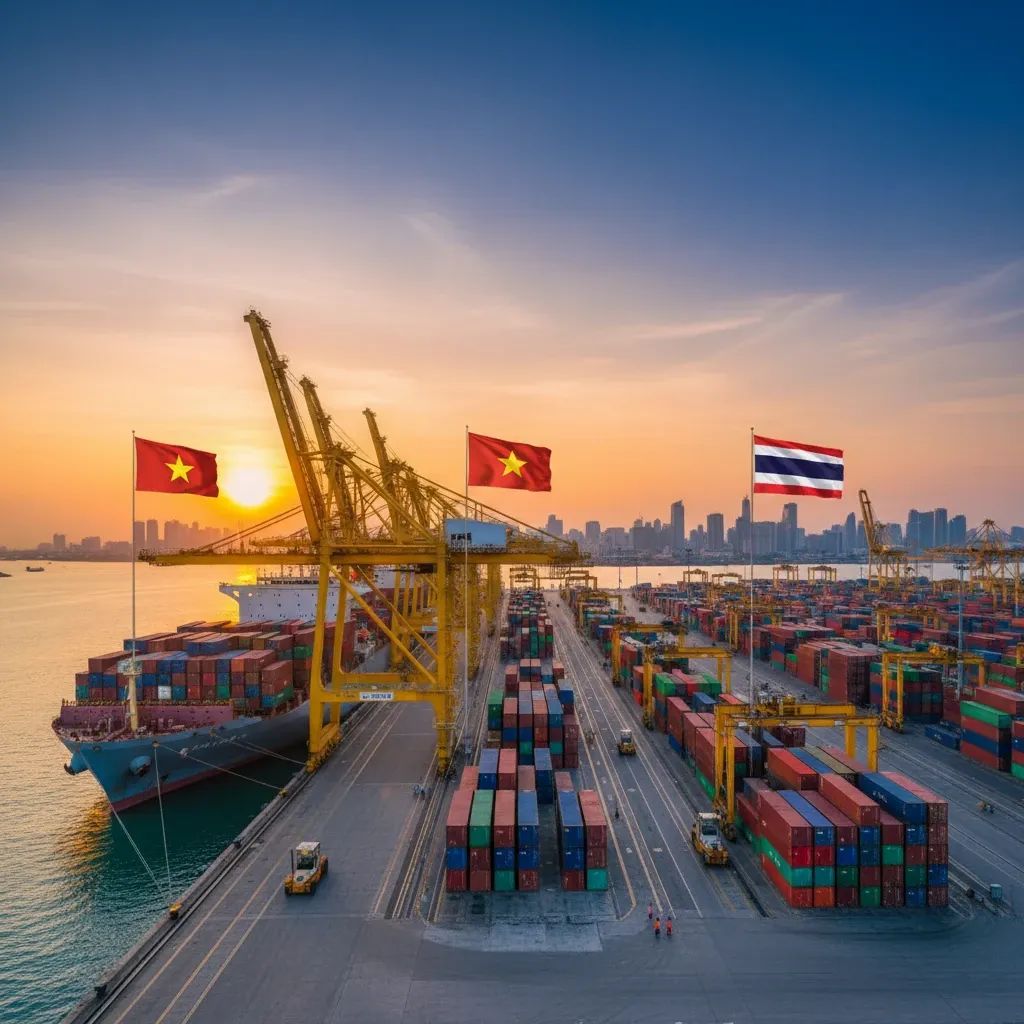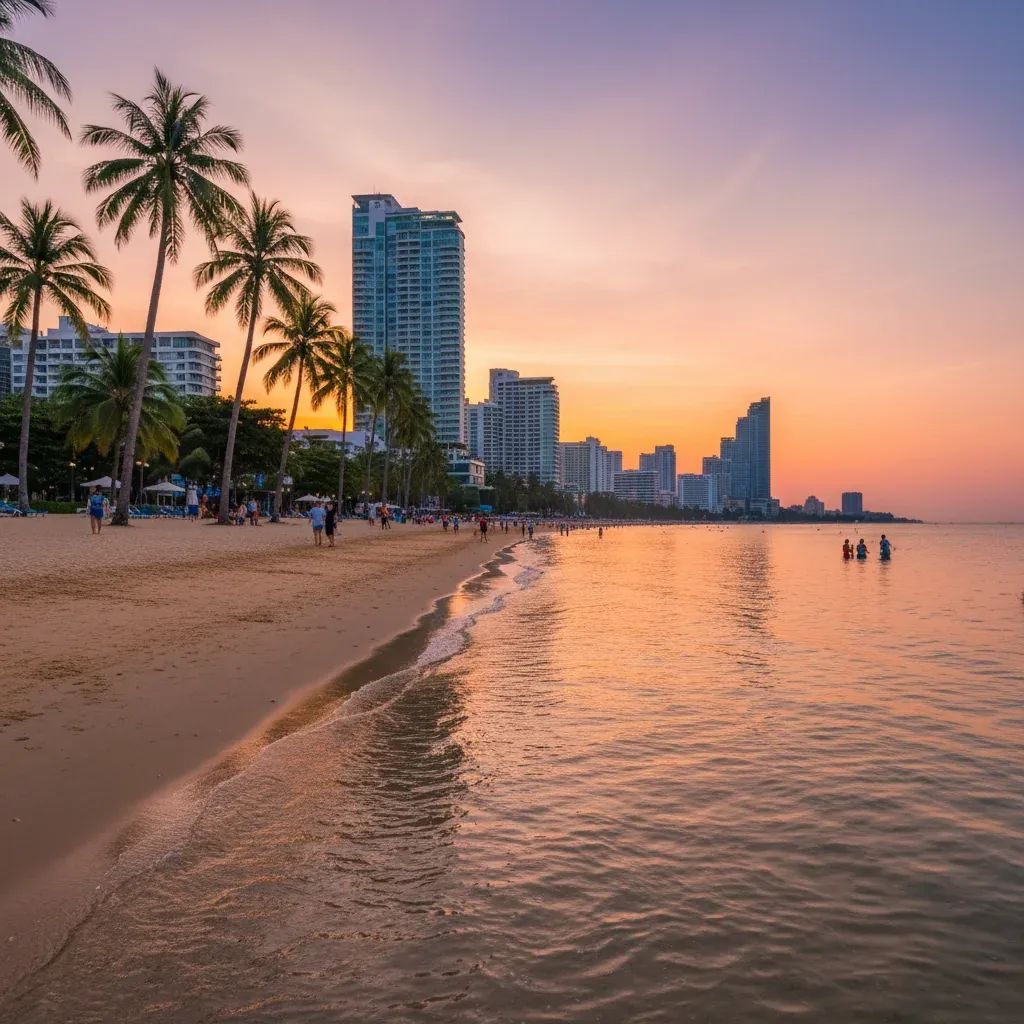
Halfway through 2026, Thailand has welcomed 17.36 million international visitors—a volume that looks solid on paper but reflects a shift in strategy: arrival numbers have declined 3% compared to the same period last year. For anyone dependent on tourism revenue, whether you manage a guesthouse in Phuket or operate retail in Bangkok, the key indicator is total spending rather than visitor count alone. International tourists have channeled ฿838.73 billion into Thailand's economy by mid-July, suggesting the government's strategy to attract higher-value travelers is taking effect.
Why This Matters
• Financial performance despite visitor decline: International tourists have generated ฿838.73 billion in cumulative expenditure through July 18, maintained by a focus on premium-tier travelers from Europe and North America, offsetting volume loss from short-haul markets.
• Geographic concentration reveals market dependency: China and Malaysia together account for roughly 31% of all arrivals. Malaysia's weekly arrivals dropped 17.82%, signaling potential economic or preference shifts that warrant monitoring.
• Infrastructure and policy support are reshaping the sector: New airline routes, aircraft maintenance facilities, and domestic stimulus schemes are being deployed to channel visitors toward secondary cities and higher-value experiences rather than mass-market beachfront tourism.
The Spending Story Behind Changing Arrival Numbers
The Thailand Tourism and Sports Ministry reported ฿838.73 billion in cumulative foreign-visitor expenditure through July 18. This figure reflects the government's repositioning of Thailand's tourism brand toward higher-value travelers. Minister Surasak Phancharoenworakul has publicly described this as a "value over volume" framework, prioritizing revenue stability and sustainable tourism density over raw visitor counts.
The strategy explicitly targets quality-leisure, family, and incentive-travel segments from long-haul markets, trading lower overall arrival numbers for increased per-capita economic output. For a government increasingly concerned with sustainable tourism and infrastructure strain, this approach addresses both economic and capacity concerns.
The Five-Market Concentration Problem
Year-to-date rankings through July 18 reveal both opportunity and dependency:
China leads with 2.86 million arrivals, though recent weekly data suggests mainland visitors may face economic constraints; Malaysia contributed 2.25 million, but a 17.82% weekly decline signals potential challenges in maintaining traditional short-haul traffic flows. India delivered 1.31 million travelers, Russia supplied 1.06 million, and South Korea added 631,777.
A notable development involves Taiwan, which surged 50.74% week-over-week following Typhoon Bavi's dissipation, rising in weekly rankings with 25,201 arrivals. The rebound underscores that external factors—weather patterns and flight schedules—significantly influence tourism demand. When disruptions clear quickly, markets can recover rapidly.
Weekly Momentum: Data Trends
During July 12–18, Thailand logged 585,189 international arrivals—a 4.04% increase from the prior week and an 83,598 daily average. Short-haul markets climbed 6% to 382,072 arrivals, while long-haul increased 0.56% to 203,117.
China anchored this growth with 107,875 arrivals (+8.27%). Malaysia totaled 63,181 arrivals (-17.82%). The United States market registered 20,461 arrivals. These figures reflect the ongoing composition shift in Thailand's visitor profile.
Impact on Residents and Business Operators
The government's shift toward higher-value tourism carries implications for people living in Thailand:
Hotel and hospitality operators catering to upmarket travelers may see improved margins compared to high-volume, budget-focused models. Secondary-city hotels benefit as policy directs tourism development beyond major centers.
Retail and dining businesses in tourist zones experience mixed effects. Mass-volume tourism generated predictable foot traffic; quality-focused tourism concentrates spending in premium venues. Foot traffic may change, but transaction values could shift accordingly.
Tour operators and guides increasingly serve curated experiences. The government links tourism to community-based experiences, meaning operators who structure locally-grounded itineraries may capture greater spending share.
Transport operators benefit from infrastructure investment in aviation connectivity and regional airport development.
Policy Direction: Quality-Over-Volume Framework
The government's pivot materializes through concrete initiatives: expanding airline connectivity, developing secondary tourism infrastructure, and targeting premium market segments. These efforts signal a sustained directional shift rather than temporary promotion.
Thailand anticipates further arrival trends through August as seasonal factors and carrier schedules evolve. However, sustaining growth may require policy adjustments such as visa expansion or targeted promotional campaigns.
For residents working in tourism or adjacent sectors, the operational reality is this: The focus on visitor spending capacity and operational margins reflects a structural reorientation of how tourism revenue flows. Businesses aligning operations toward higher-value service delivery and premium positioning may outperform those relying on mass-market volume models.
The policy direction—regional airport development, secondary-city infrastructure, and premium market targeting—is designed to persist across multiple budget cycles. For people living in Thailand, this represents a meaningful shift in how tourism revenue distributes geographically and sectorally across the country.