
The Thailand Maritime Security Center reports that over 145,000 cruise passengers disembarked in the kingdom during the first two months of 2026 alone—but residents of Pattaya might not realize how little of that traffic actually flows into local pockets. The arrival of German-flagged luxury liner Mein Schiff 6 off Pattaya's coast this weekend offers a vivid case study in the gap between spectacle and substance in Thailand's cruise tourism economy.
Why This Matters
• Infrastructure freeze: Pattaya's dedicated cruise terminal remains stuck in regulatory review with construction not expected before 2032, forcing ships to use the industrial freight port of Laem Chabang 30 km away.
• Limited local benefit: Despite 76 cruise ship calls bringing 145,110 passengers to Thailand in January–February 2026, Pattaya businesses report irregular foot traffic and uneven income distribution.
• Peak season timing: The Mein Schiff 6 is docked at Laem Chabang from March 8 at 8 AM until March 9 at 2 AM, part of a Singapore-to-Hong Kong voyage that also stops at Koh Samui.
Anatomy of a Cruise Call
Mein Schiff 6—a 295-meter, 99,000-ton vessel operated by TUI Cruises, a joint venture of TUI Group and Royal Caribbean—can carry 2,500 passengers and 1,000 crew. The ship, commissioned in 2017, is marketed under a "premium all-inclusive" model popular with German-speaking travelers, meaning most dining, drinks, and entertainment are prepaid onboard. For Thailand's street vendors and independent restaurants, this translates to a narrower spending window: passengers typically join organized shore excursions with fixed itineraries, leaving little room for spontaneous purchases.
Pre-pandemic data from the Thailand Tourism Authority showed cruise passengers spent an average of 7,000 baht per day in the Bangkok-Pattaya corridor—a figure that highlights the sector's potential. Yet without a purpose-built terminal in Pattaya itself, most visitors never set foot in the city's core commercial zones. Instead, tour buses shuttle groups to curated stops: cultural sites, franchise restaurants, and shopping centers with revenue-sharing agreements, bypassing the independent stalls and cafes that define Pattaya's street economy.
Infrastructure Lag and the 2032 Horizon
Plans for a dedicated cruise terminal at Bali Hai Cape in Pattaya were kicked back by Thailand's Public-Private Partnership Policy Committee in August 2025, with regulators demanding new environmental and health impact assessments. The revised EHIA for Pattaya won't even begin until after the Koh Samui report is completed in early 2027. Under the current timeline, a 30-year concession tender is penciled in for 2029, with construction starting around 2032—effectively a six-year wait from today.
Meanwhile, Laem Chabang Port, Thailand's largest deep-water facility and the gateway for Bangkok-bound cruises, prioritizes container freight, which accounts for over 80% of its traffic. The port's Phase 3 expansion—a 114 billion baht project aimed at boosting capacity from 11M to 18M TEU annually—is advancing but won't deliver new berths F1 and F2 until at least 2030, with some estimates pushed to 2032 due to technical disputes over land reclamation. The expansion includes remote-controlled crane systems, electric truck fleets with battery-swap tech, and a goal to raise rail freight from 7% to 30%, positioning Laem Chabang as a "green port" and multimodal hub linking Thailand to the CLMV bloc (Cambodia, Laos, Myanmar, Vietnam), China, and India. Yet none of these upgrades directly address the passenger experience or streamline access to Pattaya's tourism belt.
Impact on Residents and Small Operators
For expatriates and long-term residents in Pattaya, the cruise season brings a paradox: visible activity without sustained economic lift. Local business owners interviewed in early 2026 described a pattern of "short bursts and long lulls," with arrival statistics failing to capture purchasing power or length of stay. Large tour groups on fixed schedules often spend as little as three to four hours in the area, much of it on air-conditioned buses.
The disconnect is clearest in Pattaya's retail and hospitality sectors. While national tourism figures for January–February 2026 showed nearly 6M international arrivals generating 293.1 billion baht in revenue—with China, Malaysia, Russia, India, and South Korea as top source markets—Pattaya's independent operators report that bulk arrivals don't guarantee bulk spending. Cruise passengers, already sated by onboard buffets and prepaid bar packages, tend to browse rather than buy.
Pattaya's tourism economy has historically relied on extended stays—guests who book hotels, eat out nightly, and frequent entertainment venues. Cruise calls, by contrast, inject a one-time spike of foot traffic that favors tour operators, transport contractors, and large retailers with established commission structures. Street vendors, boutique cafes, and freelance guides see minimal spillover.
Regional Context and the Broader Cruise Network
Mein Schiff 6's current itinerary illustrates Southeast Asia's emerging role as a cruise corridor. Departing Singapore on March 4, the vessel called at Koh Samui on March 7 (7 AM–6 PM) before arriving in Laem Chabang for an overnight stay. From Thailand, the route continues to Vietnam—Phu My Port (gateway to Ho Chi Minh City) and Da Nang in the central coast—before reaching Hong Kong on March 18. These multi-country loops allow passengers to sample the region in a single voyage, but they also mean each port competes for a slice of limited shore time.
Thailand recorded 76 cruise calls across all ports in January and February 2026, with Patong Bay (Phuket), Koh Samui, and Laem Chabang leading the count. Phuket's deep-water pier and Koh Samui's island appeal offer distinct advantages over Laem Chabang's industrial setting, underscoring Pattaya's competitive disadvantage in the absence of dedicated passenger infrastructure.
What This Means for Expats and Investors
For foreign residents and property owners in Pattaya, the cruise sector's slow-burn trajectory carries both caution and opportunity. The six-year lag until a dedicated terminal means no near-term surge in foot traffic or property values tied to cruise tourism. Investors banking on waterfront development linked to passenger arrivals should recalibrate timelines accordingly.
Conversely, the government's commitment to EEC (Eastern Economic Corridor) development and Laem Chabang's green-port ambitions signal long-term confidence in the region's logistics and trade backbone. While cruise tourism remains a secondary revenue stream, the port's expansion into a multimodal hub could drive indirect benefits—improved rail links, upgraded highways, and better connectivity to Suvarnabhumi Airport—that enhance quality of life and ease of travel for residents.
For small business owners, the lesson is pragmatic: diversify income sources and avoid over-reliance on cruise-day spikes. Operators who cultivate repeat customers—expats, long-stay tourists, and domestic visitors—will weather the irregular pulse of cruise traffic more effectively than those chasing transient passengers with limited budgets and tight schedules.
Daily Life Impact
For expats and long-term residents, cruise ship arrivals typically mean brief periods of increased traffic on the highway between Laem Chabang and Pattaya (particularly Highway 7), but minimal impact on dining, entertainment, or service availability in central Pattaya. Unlike the crowds from air arrivals who stay in hotels and frequent local establishments, cruise passengers remain largely invisible to the daily rhythm of resident life. The 2032 terminal timeline means this pattern will persist for at least six more years.
The View from the Water
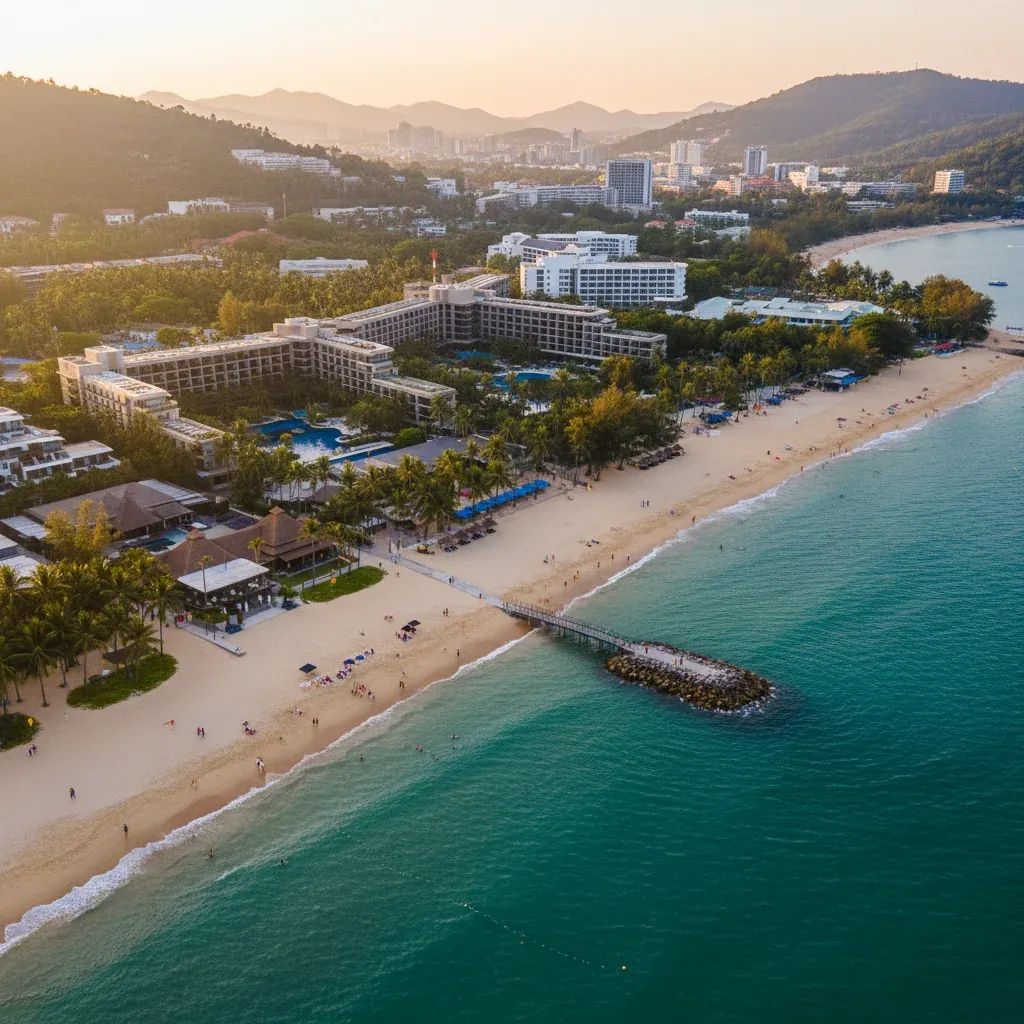
As Mein Schiff 6 rides at anchor in the Gulf of Thailand, its dark-blue hull and white superstructure draw smartphone cameras from beachgoers along Pattaya's shoreline. For a few hours, the ship is a floating billboard for the city's tourism ambitions. But by 2 AM on March 9, the liner will weigh anchor and steam north toward its next port of call, leaving behind a modest economic ripple and a reminder that Thailand's cruise future remains, for now, more promise than payday.


