
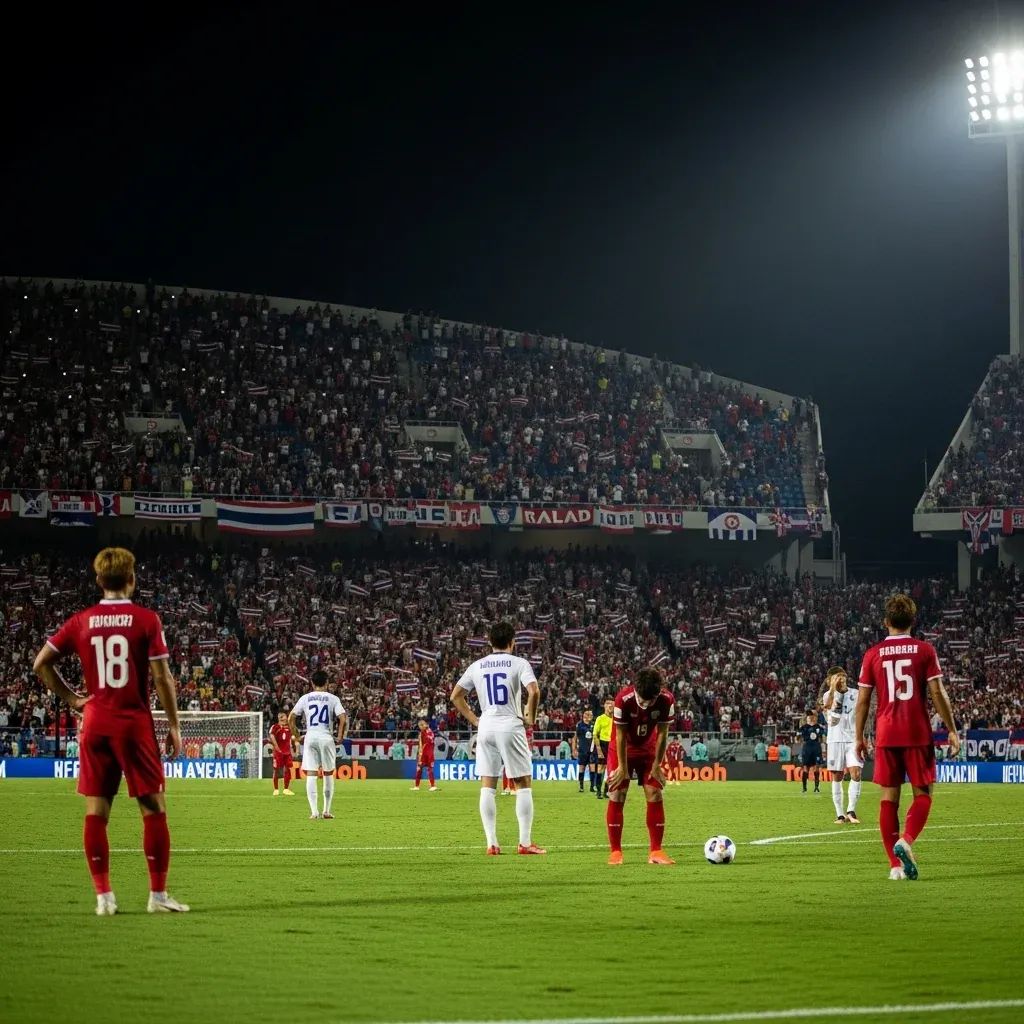
Thailand’s push for a record-extending football title at the biennial SEA Games ended in painful déjà vu, as Vietnam overturned a 2-0 deficit and snatched gold in extra time on Thai soil. The defeat exposed familiar weaknesses—fitness, mental resilience and structural gaps—that now dominate conversations from coffee shops to the corridors of the Football Association of Thailand (FAT).
Quick snapshot
• 2-0 lead squandered before the hour mark
• Record-extending 17th gold still elusive for the hosts
• Vietnam’s 4th triumph since 2019 confirms a changing regional order
• First home final lost in 50 years, reviving old scars
• Coach “Wang” Thawatchai vows to reset ahead of next month’s U-23 Asian Cup
Heartbreak at Rajamangala
The 56,000 supporters who created a red-white-blue wall of noise in east Bangkok erupted when Yotsakorn Burapha’s curling free-kick and Seksan Rattree’s left-foot volley put Thailand two goals clear by minute 31. Yet that early roar evaporated after the break. Nguyen Dinh Bac converted from the spot barely four minutes into the second half, and a towering header by Pham Le Duc brought Vietnam level on 60. As Thai legs grew heavy, Vietnam’s front line smelled blood—clipping the upright once and forcing Sorawat Phosaman into multiple reflex saves before Nguyen Tan Nan pounced on a rebound in minute 96 to complete the heist.
The final whistle was met with stunned silence from local fans, while a pocket of travelling Vietnamese supporters celebrated a victory they increasingly expect. For Thailand, it was the third consecutive SEA Games silver and the first time since 1975 that a men’s football final at home ended in defeat.
When momentum flipped
Observers point to five moments that altered the script:
Early injury to centre-back Chanapach Buaphan on 29, disrupting defensive chemistry.
Soft penalty conceded by Sorawat moments after halftime, handing Vietnam belief.
Psychological wobble once the lead was halved; passes suddenly went astray.
Late substitutions by coach Thawatchai, who waited until minute 82 to refresh tired wingers.
Superior conditioning of the Vietnamese midfield, whose pressing never dipped.
Each factor on its own might be survivable. Together they produced the familiar storyline Thai fans have endured in recent tournaments: a bright start followed by a punishing turnaround once opponents raise intensity.
Patterns that refuse to fade
Over the last decade, Thailand’s record against Vietnam in the SEA Games reads 2 wins, 2 draws, 2 defeats. Crucially, the last victory dates back to 2017. In the broader U-23 category, Thailand have now gone 10 matches without a win versus their northern rivals. Analysts argue that Vietnam’s domestic league has prioritized youth investment and sport science, while Thailand’s club-versus-association turf wars have stalled coherent development.
Veteran commentator Anurak “Mac” Chantasopon notes that “Thailand still relies on individual flair, but Vietnam arrive with a well-rehearsed press, evident in their 94 successful recoveries last night compared with Thailand’s 68.” That gap widens when stamina becomes decisive in extra time.
What must change before the U-23 Asian Cup
FAT officials meet next week to dissect the loss and approve a recovery plan ahead of January’s continental championship in Saudi Arabia. Early proposals include:
• Centralised high-altitude camp in Chiang Mai for endurance work.
• Hiring a full-time sports psychologist to address late-game composure.
• Collaborating with Thai League clubs to enforce a 3-week release window, ensuring integration time.
• Launching a task force to draft a 10-year youth blueprint, echoing Japan’s 1990s revolution.
Thawatchai, whose contract runs through the Asian Cup, insists he will not resign. “We owe supporters a rebound,” he said, “and that starts with fortifying the spine—centre-back, holding midfielder, centre-forward—positions where Vietnam punished us.”
Numbers that tell the story
– 7 goals in the tournament for Yotsakorn, still joint-top scorer– 4 gold medals for Vietnam since 2019, the region’s dominant run– 50 years since Thailand last lost a SEA Games final at home– 3 consecutive silvers for Thailand (2021, 2023, 2025)– 2-0 leads overturned twice by Thailand sides in 2025 alone (U-23 Dubai Cup, SEA Games)
Outlook for Thai supporters
Despite the sting, the road to regional redemption is short. Bangkok will host the AFF Championship in July. If FAT executes its promised reforms—sharper fitness regimes, mental coaching and united club cooperation—Thailand can still reclaim its place atop ASEAN football. If not, last night’s collapse may mark the moment Vietnam’s ascendancy became permanent.
For now, the roar inside Rajamangala has quieted. But in Thailand, football hope rarely stays silent for long.


