
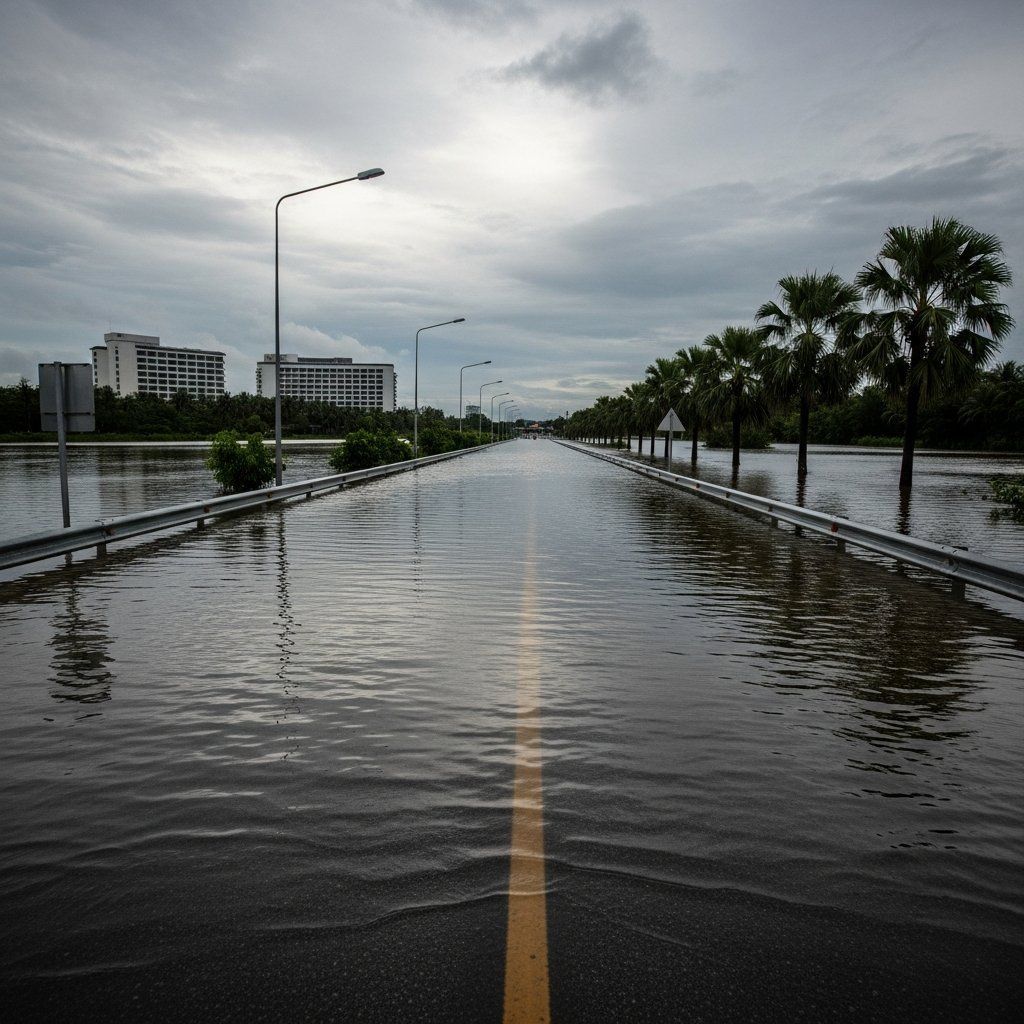
A torrent of floodwater, not pandemic fears or global inflation, has delivered Thailand’s latest tourism setback. The deluge that swamped four southern provinces in late November has already sliced deep into the country’s single most important short-haul market—Malaysia—at the very moment hoteliers were counting on year-end spending. Below is a closer look at what that means for jobs, revenues and recovery plans.
Snapshot of the Sudden Slowdown
• Southern floods triggered a 42% plunge in Malaysian arrivals within one week.
• Year-to-date numbers still top 29.6 M visitors, but overall arrivals are 7.25% below last year.
• Tourism revenue has slipped to ฿1.37 T, down 4.72% year-on-year.
• Average daily inflow dropped to 90,745 travellers during the worst week of flooding.
Why the Malaysian Market Matters
Thailand’s tourism drivers differ by region: in the South, Malaysian holiday-makers, cross-border shoppers and road-trip families are the lifeline.
They contributed 4.7 M trips in 2024, worth roughly ฿120 B.
Direct land access via Sadao and Betong checkpoints makes them an indispensable buffer when long-haul markets soften.
A single long weekend can see Hat Yai hotels post occupancy north of 95%, almost entirely on Malaysian demand.
When that tap closed, cash registers across Songkhla, Yala and Pattani fell silent overnight.
Economic Bruising in the Deep South
Business lobbies paint a grim picture:
• 5,000 M baht in lost tourism income for Songkhla alone, according to the Tourism Council of Thailand.
• Up to 20,000 M baht in broader economic damage to Hat Yai’s retail and MICE sector.
• More than 300 hotels shuttered temporarily; about 8,000 guests—90% Malaysian—were stranded before airlifts began.
• The floods forced organisers to move the SEA Games volleyball qualifier out of Songkhla, erasing another peak-season event.
Government’s Rapid-Fire Response
Thai officials are keenly aware that perception can wound longer than water. Their multi-agency playbook now includes:
• A Crisis Tourism Operations Centre coordinated by TAT for real-time multilingual updates.
• Big-Cleaning campaigns, bridge repairs and road resurfacing to reopen key corridors within 45 days.
• A debt-holiday package—0% interest for 12 months—targeted at SME hotels and tour buses.
• Cross-border diplomacy: the Thai and Malaysian foreign ministries jointly evacuated 1,812 tourists and kept media briefings upbeat.
Race Against the Calendar
Industry insiders say the real deadline is not the next quarterly report but Chinese New Year 2025 (early February).
• If roads, night markets and airport runways are fully functional by mid-January, TAT believes Malaysian arrivals could still exceed 4.6 M for 2025—only a 7% setback.
• Miss that window and the loss widens to 8-18%, dragging annual arrivals closer to 4.55 M.
• Chinese, Indian and Russian tourists helped cushion the blow last month, but none spend as freely in the deep South as Malaysians buying halal cuisine, electronics and wedding gold.
What Industry Voices Are Saying
"Our phones rang nonstop with cancellations, but the same Malaysian guests also ask when they can come back," says Thitirat Jirote, president of the Southern Hotel Association. AirAsia Thailand reports a "short-term dip in bookings" yet plans to restore the full Kuala Lumpur-Hat Yai schedule by Christmas if runways remain dry. Travel agents in Penang tell the Thai embassy that shoppers are "waiting for green lights, not looking elsewhere"—a sign pent-up demand is intact.
Practical Advice for Would-Be Visitors
Travellers eyeing a December or January trip should note:
• All major highways from the Sadao checkpoint to Hat Yai are open, though diversions remain in low-lying sections.
• Hat Yai International Airport (HDY) is operating normally after a 36-hour closure.
• Hotel rates are discounted 15-25% to lure quick returnees; flexible re-booking is standard.
• The Consulate-General of Malaysia in Songkhla continues to post safety advisories on its Facebook page—monitor for updates.
The Road to Normalcy
Thailand’s tourism machine has survived coups, pandemics and tsunamis. Analysts at Kasikorn Research expect southern receipts to rebound to pre-flood levels by Q2 2026, assuming no new climatic shocks. For households in Hat Yai that rely on cross-border baht, the next eight weeks will feel like a year—but the consensus is clear: once water drains and debit cards swipe again, Malaysians will be back in droves, restoring the hum that has long powered Thailand’s most bustling border city.


