
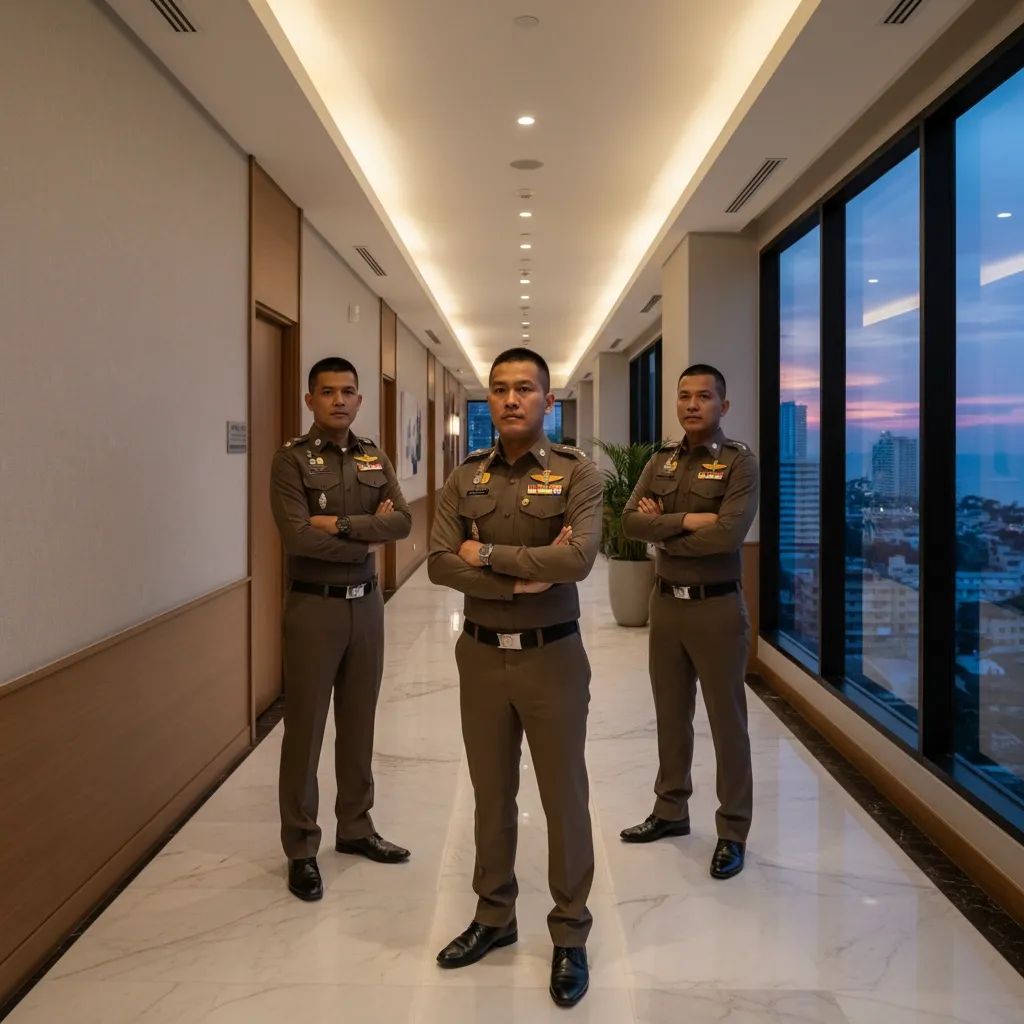
Thailand Customs seized 12 kg of cocaine at Suvarnabhumi Airport last week, arresting a Turkish national who attempted to enter the country with the drug concealed inside commercial coffee and chocolate packaging. The street value of the intercepted shipment: approximately ฿36 M, or roughly the cost of a luxury condominium in central Bangkok.
Why This Matters
• Enforcement is intensifying: The Airport Interdiction Task Force (AITF) is expanding intelligence-led operations targeting South American trafficking routes.
• Legal exposure: Category 2 narcotics importation carries a maximum 15-year sentence and fines up to ฿1.5 M under Thai law.
• Transit vulnerability: The Brazil–Thailand air corridor remains a persistent smuggling pathway, with authorities flagging Suvarnabhumi as a high-risk entry point for cocaine from São Paulo.
The Arrest
The suspect arrived June 25 from São Paulo-Guarulhos International Airport in Brazil aboard a commercial flight. Customs inspectors, working alongside the Department of Narcotics Suppression and AITF, flagged the passenger's luggage during routine screening. Inside, officers discovered 12.2 kg of cocaine buried within sealed coffee and chocolate bags—packaging sophisticated enough to pass casual inspection but insufficient against X-ray profiling and canine detection units.
Thailand Customs described the operation as part of government efforts to disrupt transnational drug flows at border checkpoints. The suspect was transferred to Thailand Royal Police narcotics investigators for formal charging and network tracing.
The Brazil–Thailand Route
The São Paulo–Bangkok route has operated consistently since at least 2022. In February of that year, Thailand Customs arrested 3 Brazilian nationals at Suvarnabhumi carrying 15.5 kg of cocaine in luggage. Cocaine production in Brazil has surged as manufacturing bases diversify. São Paulo's Guarulhos Airport connects directly to Bangkok via Gulf carriers (Qatar, Emirates) and Asian airlines, offering 1-stop itineraries of roughly 24 hours.
Thai Customs data shows cocaine interdictions remain comparatively rare at Suvarnabhumi compared to methamphetamine seizures. However, the drug's high per-gram value makes even modest shipments financially significant. The arrested Turkish national's 12 kg haul would retail for approximately ฿36 M domestically—equivalent to roughly $1 M USD at current exchange rates.
Legal Framework for Residents
Category 2 narcotics—including cocaine—carry severe penalties under Thai law. Importation for commercial purposes invokes 1–15 years imprisonment plus fines up to ฿1.5 M. Possession for personal use still risks 1–5 years and fines up to ฿500,000.
Thai courts rarely accept ignorance as a defense. Passengers who accept luggage from strangers or fail to inspect checked bags assume full liability for contents. Foreign nationals convicted of narcotics offenses face deportation after serving sentences, with lifetime entry bans.
For legitimate residents traveling from South America, anticipate heightened customs questioning and secondary baggage inspections. Business travelers should carry documentation proving the purpose of their trip—corporate emails, hotel confirmations, meeting schedules—to expedite customs clearance.
Enforcement Trends
Cocaine seizures at Suvarnabhumi remain statistically modest compared to synthetic drug interdictions, but trend data suggests gradual increases. The Turkish suspect's nationality highlights an enforcement pattern: traffickers increasingly recruit couriers from neutral nations, believing non-Latin American passports reduce scrutiny. Thai authorities have responded by expanding risk profiling beyond nationality, incorporating travel history, ticket purchase patterns, and luggage anomalies.
Government Response
The June 25 arrest aligns with Thailand's broader campaign to tighten border security amid rising regional narcotics flows. Since 2023, the Airport Interdiction Task Force has coordinated with counterparts in Brazil, Colombia, and Peru through Interpol channels, sharing passenger manifests and travel pattern intelligence.
Thailand's legal framework permits investigators to hold suspects for extended questioning periods while building cases. Under the Narcotics Code (2021), prosecutors may seek asset seizures and travel bans for individuals under investigation, even before formal charges.


