
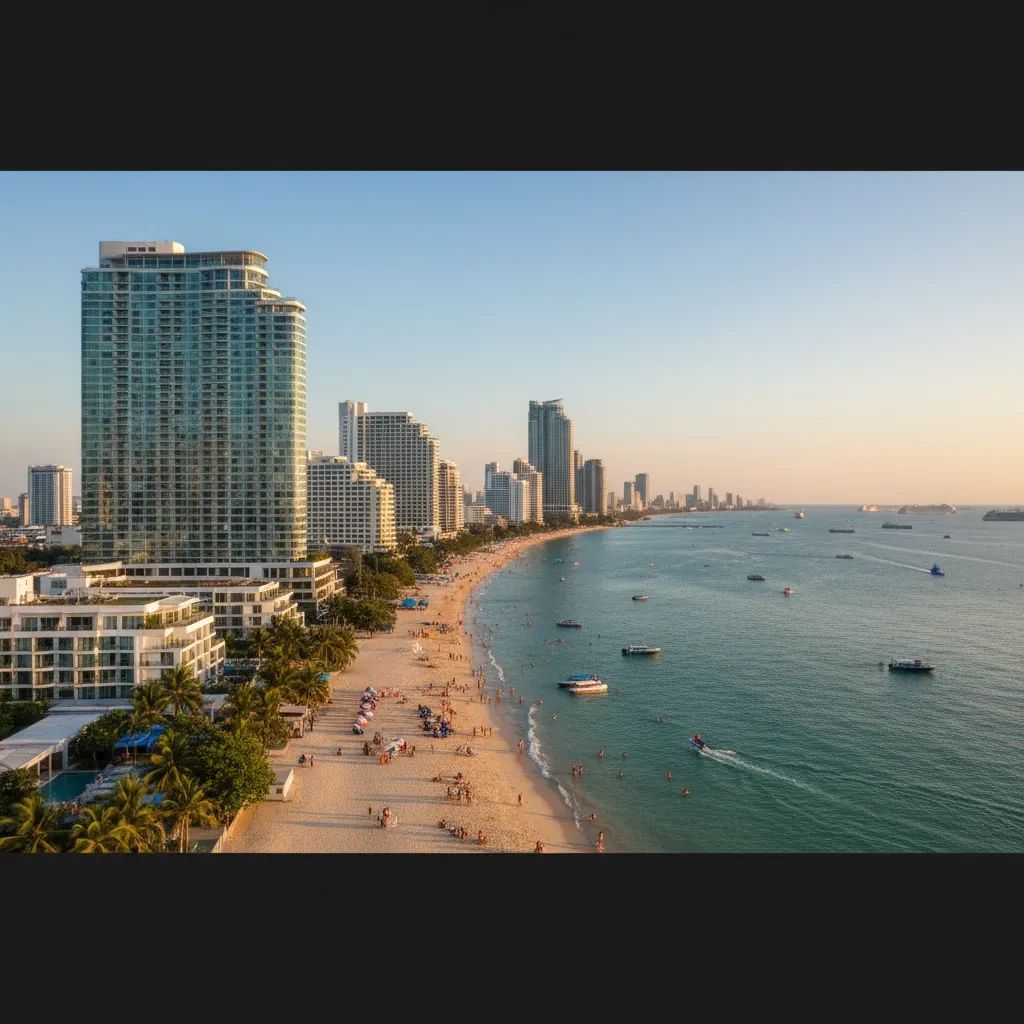
Thailand's health and wellness tourism sector has surged into the global spotlight with revenue climbing past ฿419 billion last year and growth accelerating at 36.4% annually—the third-fastest expansion rate worldwide. The kingdom now ranks 15th globally for wellness travel, and authorities in Bangkok are targeting a spot in the top 5 by 2027, a goal underpinned by aggressive infrastructure investment, regulatory reform, and a push to reposition the country as Asia's premier longevity and preventive-health destination.
The Thailand Tourism Authority (TAT) has branded this pivot "Healing is the New Luxury," a campaign anchored in the belief that international visitors increasingly value integrated wellness experiences over conventional leisure. According to the Global Wellness Institute (GWI), the worldwide wellness economy is forecast to hit $7.9 trillion in 2026, climbing to $9.8 trillion by 2029. Thailand's slice of that pie—currently 1.08%—is expanding faster than almost any competitor, with the local wellness economy valued at $40.54 billion in 2023 and projected to reach ฿1.5 trillion by 2027.
Why This Matters
• Spending power: Wellness tourists drop an average of $1,886 per trip, compared to $1,275 for general travelers—a premium that benefits hotels, clinics, and ancillary services.
• Visa liberalization: Thailand has relaxed visa rules for medical tourists, with existing medical visa categories allowing extended stays for those enrolled in recognized wellness programs, making it easier for retirees, remote workers, and medical tourists seeking multi-month programs.
• Investment wave: Major hospital groups and international hotel brands are committing billions to purpose-built wellness resorts, medical spas, and "longevity villages" across Bangkok, Phuket, Chonburi, and Koh Samui.
• Credential boost: Thailand now holds more JCI-accredited hospitals than any Southeast Asian neighbor, cementing its reputation for clinical safety alongside traditional therapies.
From Beach Massages to Biohacking Labs
The transformation is structural. A decade ago, wellness in Thailand meant foot reflexology and herbal compresses. Today, medical spas account for a 22% segment of the industry, offering intravenous nutrient infusions, genetic testing, hormone optimization, and personalized longevity protocols. Clinics such as BDMS Wellness Clinic, VitalLife Scientific Wellness Center, and Miskawaan Health Group Bangkok now compete on the same tier as facilities in Switzerland and California, blending traditional Thai medicine—inscribed on UNESCO's intangible heritage list—with cutting-edge biohacking.
Mövenpick BDMS Wellness Resort Bangkok, which opened earlier this year, exemplifies the new model: it integrates diagnostic laboratories, functional-medicine consultations, therapeutic spa circuits, and lifestyle coaching under one roof in partnership with BDMS, the country's largest private hospital network. According to developer announcements, the group has committed ฿29 billion to WellEra, a mixed-use wellness complex in central Bangkok that will combine residential towers, outpatient clinics, recovery suites, and retail spaces.
In Phuket, Tri Vananda has partnered with Clinique La Prairie to deliver Swiss longevity programs adapted to tropical conditions, while RXV Wellness Village near Sampran offers immersive detox and yoga retreats surrounded by organic farms. On Koh Phangan, the upcoming KAIA resort—reportedly scheduled to open in the second half of 2026—will feature luxury tented suites, infinity pools, and holistic programming designed for extended stays.
Who Is Coming—and What They Want
The top five source markets for health tourists are Saudi Arabia, the United Arab Emirates, China, Oman, and Singapore. Chinese visitors gravitate toward onsen-style hot springs, traditional Thai medicine, and anti-aging treatments. Japanese travelers favor herbal therapies and forest bathing. Scandinavian guests seek yoga, meditation, and nature immersion. Middle Eastern clients, historically the largest spenders, increasingly opt for multi-week preventive packages that include cardiac screening, metabolic profiling, and physiotherapy.
April's "Amazing Thailand Health & Wellness Trade Meet 2026" brought together 74 international operators and 68 Thai suppliers, signaling sustained B2B momentum. Meanwhile, consumer-facing events such as "Global Wellness Day at Anantara Riverside" and "Samui Jump for Wellness"—held 12–14 June—underscore the sector's tilt toward experiential programming that blends local culture, natural settings, and science-backed interventions.
What This Means for Residents
For expatriates and long-term residents, the wellness boom translates into tangible improvements in healthcare access, though at a premium. Clinics that once catered exclusively to medical tourists now offer membership models, corporate wellness packages, and annual preventive-health screenings at prices below those in Western capitals but above neighborhood public hospitals. BDMS Wellness Clinic, Samitivej Wellness, and Panacee Medical Center have introduced foreigner-friendly concierge services, multi-lingual staff, and insurance-linked billing to smooth administrative friction. Wellness membership packages at leading private clinics typically range from ฿20,000 to ฿100,000 annually, offering significant savings compared to equivalent packages in Singapore or Bangkok's public system.
On the regulatory side, Thailand has relaxed visa rules for individuals seeking extended health stays, making it easier for retirees and digital nomads to combine remote work with structured wellness programs. Existing medical visa categories permit stays up to 12 months with minimal renewal hassle, provided applicants can document enrollment in a recognized clinic or resort.
Property developers are responding too. Wellness Real Estate, a term encompassing condominiums, co-living spaces, and office buildings designed around air quality, circadian lighting, soundproofing, and green space, is the fastest-growing segment of the local market. Projects in Sukhumvit, Sathorn, and Phuket now advertise WELL Building Standard certification, on-site fitness centers, and meditation studios as core amenities.
Challenges Beneath the Boom
Despite headline-grabbing growth, the sector faces structural headwinds. Physician shortages remain acute: Thailand trains fewer doctors per capita than Singapore or South Korea, and many specialists divide time between public hospitals, private clinics, and overseas consultancies, limiting availability. Licensing rules prohibit many foreign-trained practitioners from working in Thailand without lengthy re-certification, further constraining supply.
Infrastructure strain is visible in popular hubs. Chonburi, home to Pattaya and nearby beach resorts, struggles with airport capacity, traffic congestion, and intermittent power outages during peak season. Northern provinces such as Chiang Mai report oversupply of mid-market hotels, forcing operators into price wars that erode margins. Southern islands face seasonal swings: occupancy plummets outside December–March, leaving high-end resorts half-empty.
Competition from regional rivals is intensifying. Malaysia, Singapore, and South Korea all promote integrated medical-tourism ecosystems backed by government subsidies, tax incentives, and direct air links to key feeder markets. Middle Eastern nations—once Thailand's cash cows—are building domestic health-care cities, reducing outbound demand. Exchange-rate volatility adds another layer of uncertainty: when the baht strengthens against the ringgit, rupee, or renminbi, Thailand's price advantage narrows.
Policy Response: Premium Over Volume
Faced with margin pressure and environmental limits, the Thailand Ministry of Tourism and Sports has pivoted from mass-market volume to "Value over Volume." The strategy targets high-net-worth individuals, corporate wellness groups, and niche demographics willing to pay for bespoke services. Campaigns such as "Amazing 5-Economy" bundle wellness with gastronomy, soft adventure, cultural immersion, and creative industries, positioning Thailand as a multi-dimensional lifestyle destination rather than a transactional stopover.
The TAT has also deepened collaboration with the Ministry of Public Health to synchronize medical-safety standards with tourism-service benchmarks, ensuring clinics, spas, and retreat centers adhere to unified protocols. A shared data platform now tracks visitor flows, spending patterns, and satisfaction scores in real time, enabling dynamic pricing and targeted promotions.
Tax incentives are under review. Proposals include duty-free wellness imports, expedited licensing for international spa brands, and corporate tax holidays for companies investing more than ฿500 million in wellness infrastructure outside Bangkok. Digital-payment integration—PromptPay Economy—aims to streamline transactions for foreign guests unfamiliar with cash-heavy Thai commerce.
Emerging Trends: Sound Baths, AI Coaches, and Sleep Clinics
The 2026 wellness landscape is defined by personalization and technology. Sound healing—using Tibetan bowls, gongs, and binaural frequencies—has moved from fringe workshops into mainstream spa menus. Mental wellness programs, encompassing stress management, sleep optimization, and psychedelic-assisted therapy (where legal), reflect growing recognition that physical health is inseparable from psychological resilience.
Artificial intelligence is arriving as a personal-health assistant: platforms scan wearable-device data, flag risk factors, and generate real-time nutrition and exercise plans. Several Bangkok clinics now offer AI-guided longevity assessments that synthesize genetic panels, metabolic markers, and lifestyle inputs into year-by-year aging forecasts.
Traditional Thai medicine (TTM) remains a differentiator. Herbal compress therapy, tok sen (wooden-hammer massage), and customized herbal prescriptions draw on centuries-old pharmacopeia validated by modern phytochemical research. The kingdom exports more medicinal herbs than any other Southeast Asian nation, and local growers are scaling production to meet international demand.
The Road Ahead
By 2027, Thailand aims to capture ฿1.5 trillion in cumulative wellness revenue—a target that hinges on sustaining double-digit growth, expanding clinic capacity, and maintaining safety credentials. Success will also require balancing tourist influx with resident quality of life: congestion, environmental degradation, and rising living costs are already flashpoints in Phuket, Chiang Mai, and Koh Samui.
For foreign residents, the wellness pivot offers unprecedented access to world-class preventive care at regionally competitive prices. The trade-off is crowding: popular clinics now require appointments weeks in advance during high season, and premium resorts command nightly rates exceeding ฿15,000. Those willing to venture beyond the usual circuits—Prachuap Khiri Khan, Nan, or Trat—will find emerging wellness hubs with lower prices, quieter settings, and equally skilled practitioners eager to build reputation.
Thailand's bet is simple: in an aging, anxious world, the country that best integrates ancient healing wisdom with modern medical science will capture the loyalty—and wallets—of the global affluent. Whether that formula can scale without sacrificing authenticity or affordability remains the central question for the next decade.


