
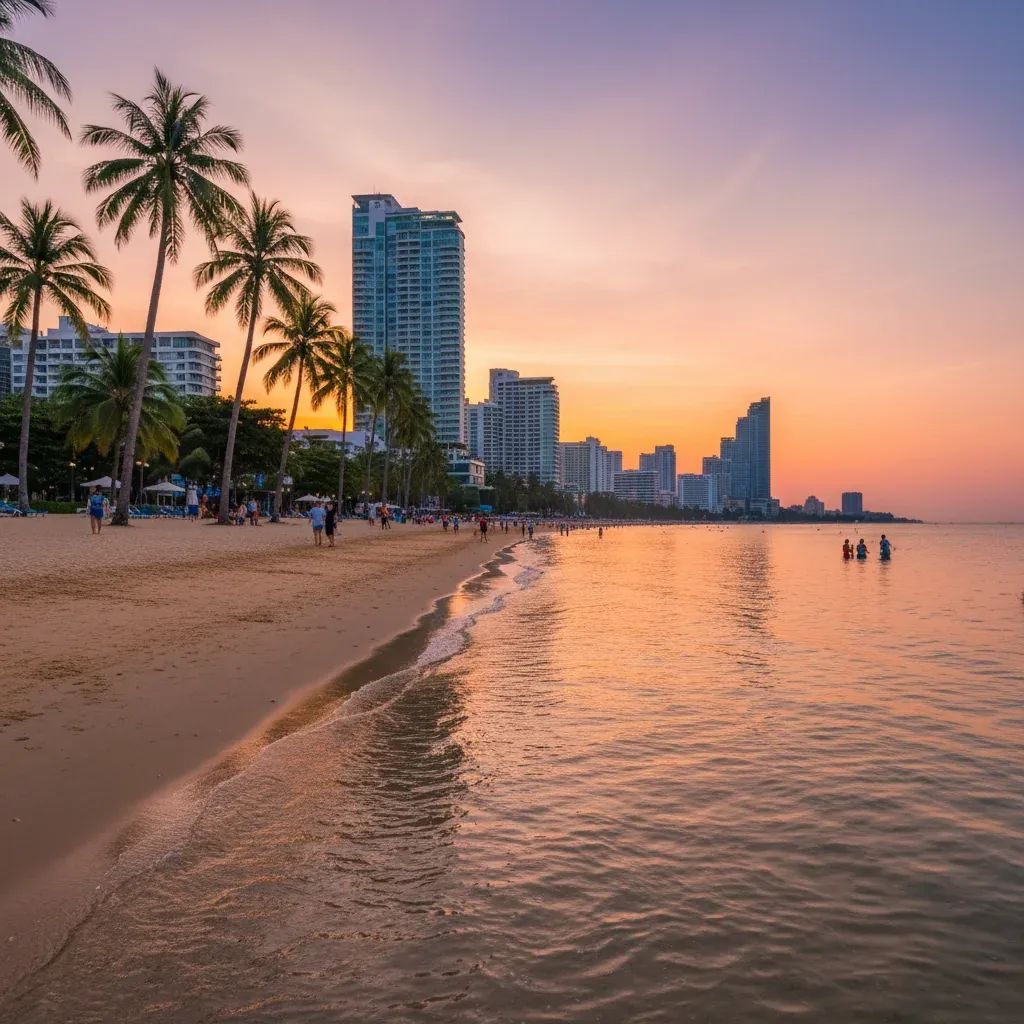
Thailand's tourism sector is preparing for a year of careful recalibration rather than triumphant growth. The Tourism Authority of Thailand is banking on 33 million foreign visitors for 2026—a holdover figure that masks fundamental shifts in how the nation attracts, serves, and extracts revenue from international travelers. For residents who depend on tourism income—whether through employment, business ownership, or property investment—this recalibration carries tangible consequences that extend far beyond headline numbers.
Why This Matters
• Revenue target remains ambitious: Tourism is projected to generate 1.55 trillion baht from international visitors alone, equivalent to roughly half of Thailand's annual budget. Combined with 200.4 million domestic trips worth 1.1 trillion baht, the sector will contribute approximately 2.58 trillion baht to the economy in 2026.
• Jobs hang in the balance: Tourism represents approximately 12% of Thailand's GDP, employing hundreds of thousands across hospitality, transportation, retail, and services. Stalled growth means wage pressure and hiring freezes for workers in provinces like Phuket, Chiang Mai, and Krabi.
• Market segmentation reshapes opportunity: The shift from volume-driven tourism to premium-visitor targeting is rewriting the playbook. Budget accommodation operators and mass-market tour businesses face margin compression, while wellness clinics, boutique hotels, and specialized restaurants gain competitive advantage.
The 2025 Stumble and Its Lessons
Last year delivered an uncomfortable reality check. Thailand recorded approximately 32.9 million international tourists in 2025, a 6% to 7% decline from the 35.55 million who arrived in 2024. That single-year contraction—the first outside the pandemic era—sent ripples through the tourism ecosystem. Hotel operators deferred expansion plans. Tour companies trimmed staff. Regional airports that had gambled on growth capacity suddenly faced underutilized facilities.
The pain was concentrated in proximity markets. Chinese visitors collapsed by 33% compared to 2024, a stunning reversal that reflected both regulatory tightening in Beijing and weakened consumer confidence among Chinese households. Short-haul traffic from neighboring Southeast Asian countries also retracted, a sign that the entire region was experiencing dampened leisure spending. The narrative of unstoppable Asian tourism growth cracked visibly.
Yet the silver lining revealed an important pattern. While total arrivals fell, long-haul markets—particularly Europe, North America, and Australia—reached record levels. Approximately 10.8 million long-haul visitors arrived in 2025, a 10.6% jump from the previous year. These travelers, on average, stayed longer, booked more expensive accommodations, and spent more generously on dining and experiences. The Ministry of Tourism and Sports observed that despite the overall contraction, long-haul segments generated disproportionate revenue. This insight has become the foundation for Thailand's 2026 strategy.
From Ambition to Pragmatism: The Forecast Revision
The Tourism Authority of Thailand had initially drafted an optimistic playbook. Earlier projections penciled in 36.7 million arrivals, with some scenarios imagining 39 to 40 million visitors. The downward revision to 33 million—a 18% markdown—reflects a sober recalibration in the face of three concrete constraints.
Crude oil prices remain elevated, partly due to instability in the Middle East. Rising fuel costs inflate airfare across long-haul routes that feed Thailand's tourism engine. European and North American travelers face hundreds of dollars in additional ticket costs, which reshapes destination choices at the margin. Competing regions—Vietnam, Malaysia, Indonesia—suddenly look more economical for price-conscious travelers. Airlines have responded rationally by trimming frequencies on routes with marginal profitability. A carrier might maintain daily flights to Bangkok but reduce service to secondary cities like Chiang Mai or Phuket, effectively creating a capacity ceiling.
Global economic sluggishness has eroded consumer spending power in core source markets. Middle-class households in Western countries face stagnant wages and elevated living costs at home, making discretionary international travel a less attractive budget item. Geopolitical friction—particularly Middle East tensions that show no signs of abating—has deterred some travelers, particularly from markets that border the affected region.
These headwinds are partially offset by early 2026 signals. In January 2026, Chinese tourist numbers exceeded 100,000 arrivals in a single week for the first time in 15 weeks—a potential inflection point suggesting the catastrophic 2025 decline may have stabilized. KResearch, a Bangkok-based analytical firm, projects 34.1 million arrivals for 2026, a modest 4% increase from 2025, anchored partly on Chinese market recovery and anticipated growth from India, Russia, and South Korea. Whether these forecasts hold depends on factors beyond Thailand's control: crude price movements, geopolitical shifts, and consumer confidence in source markets.
The "Amazing 5 Economy" Framework: Redefining Tourism Value
Rather than accept flat growth passively, the Thailand Tourism Authority engineered a strategic pivot through the "Amazing 5 Economy" framework—a deliberate architecture designed to extract maximum economic value from whoever arrives. The model abandons the mass-tourism playbook and targets specific, high-spending visitor segments.
Life Economy positions Thailand as a global wellness destination. The brand campaign "Healing is the New Luxury" encapsulates the strategy: medical tourists, spa devotees, and holistic-health seekers will pay premium rates for Thai expertise in dental procedures, cosmetic treatments, and alternative medicine. A visitor spending 5,000 baht daily on luxury wellness services generates vastly more revenue per night than a backpacker spending 500 baht on dormitory accommodation and street food.
Sub-Culture Economy targets specialized, high-value segments: international film productions, yacht clubs, sports event organizers, and private aviation clients. The "Amazing Film Location Thailand" campaign actively courts major motion picture shoots, recognizing that a significant production injects capital into local communities while elevating Thailand's cultural profile globally. These ventures are capital-intensive, extended-duration, and politically defensible as economic development projects.
Night Economy extends visitor stays by cultivating after-dark attractions. Longer stays translate directly to additional hotel nights, restaurant meals, and entertainment spending. The framework encourages both established cities and secondary destinations to develop compelling nocturnal offerings, redistributing tourist expenditure beyond Bangkok's conventional circuit.
Circular Economy wraps sustainability messaging around tourism infrastructure. The "reduce-reuse-recycle" framing theoretically disperses income across provincial economies while signaling environmental consciousness. Whether implementation matches the rhetoric remains uncertain, but the positioning attracts environmentally-minded Western travelers willing to pay premium rates for "responsible" experiences.
Platform Economy emphasizes digital infrastructure. Seamless online booking systems, cashless payment platforms, and applications like "Thailand Traveller Voice" aim to reduce friction and capture real-time visitor feedback. Smart Tourist IDs streamline immigration processing and enable personalized marketing outreach.
Supporting these pillars, the National Tourism Strategy (2025–2030) deploys infrastructure investments: help centers in 40 provinces, QR-enabled Emergency Points at popular attractions, a multilingual 1155 hotline, and a "Trusted Thailand" hygiene certification. These measures reassure visitors—particularly medical and wellness tourists—that Thailand meets international safety and service standards.
Oil, Geopolitics, and the Cost of Travel
Crude oil remains the underlying threat to Thailand's tourism recovery. Middle East geopolitical instability shows no signs of dissipating, and energy markets are prone to sudden spikes. For a family in Western Europe or North America, round-trip airfare to Bangkok has surged by hundreds of dollars compared to pre-crisis rates. That mathematical reality reshapes decision-making: potential travelers may postpone trips indefinitely or redirect bookings to competing destinations with lower transportation costs.
The Thai government cannot influence global energy markets or geopolitical flashpoints. However, authorities have adjusted immigration policy in response. In May 2026, visa framework changes were approved aimed at tightening immigration controls while preserving appeal for genuine tourists. Some nationalities experienced reductions in visa-exempt stay duration—a move designed to deter overstay patterns and illicit activity without alienating affluent travelers. Officials contend the net impact on legitimate arrivals will be negligible, though skeptics note that even modest entry friction can deflect marginal bookings to less bureaucratically demanding destinations.
The China Variable: Decline, Stabilization, and Uncertainty
No single nation matters more to Thai tourism than China. Chinese travelers have historically represented Thailand's largest source market, and the 33% collapse in Chinese arrivals during 2025 created psychological disruption throughout the hospitality sector. Hotel suppliers canceled furniture orders. Tour operators furloughed staff. The ripple effects extended from luxury resorts to street-level vendors, illustrating how deeply integrated the Chinese tourist market had become.
Multiple factors contributed to the reversal. Chinese regulatory authorities tightened scrutiny over outbound travel and capital outflows, deterring discretionary international trips. Economic uncertainty at home prompted Chinese households to curtail discretionary spending abroad. Evolving consumer preferences redirected some travelers toward emerging Southeast Asian destinations, particularly Vietnam, rather than repeating Thailand visits.
The January 2026 data provided reason for cautious optimism rather than despair. The 100,000-plus Chinese arrivals in a single week represented the highest weekly volume in 15 weeks. If sustained, this trend signals market stabilization rather than terminal collapse. Chinese consumers respond to price signals; cheaper airfares and favorable currency movements could prompt rapid acceleration in bookings.
The complication: even as Chinese visitor numbers recover incrementally, per-trip spending remains depressed compared to pre-pandemic baseline levels. Visitors are economizing, preferring budget hotels over luxury properties, dining at street stalls rather than upscale restaurants. That reality explains why TAT has abandoned the mass-market recovery playbook and is instead pursuing affluent niche segments. Volume without commensurate spending fails to cover operational costs and leaves the sector structurally weakened.
Impact on Daily Life and Business
Tourism isn't an abstract concept for Thailand's residents. It's wages for hotel housekeeping staff, drivers, tour guides, and restaurant workers. It's revenue for small business owners operating souvenir shops, travel agencies, and guesthouses. It's valuations on property in beachside towns and near major attractions. A stalled tourism forecast translates into tangible pressure on wages, occupancy rates, and commercial property values.
The value-over-volume transition has distinct winners and losers. Upscale spas, private medical clinics, boutique hotels, specialty restaurants, and luxury transportation services benefit from the premium-visitor focus. Budget hostels, mass-market tour operators, street-level food vendors, and budget airlines face compressed margins. Property investors monitoring occupancy patterns in their target markets should recognize that the composition of guests—fewer but wealthier—may stabilize rental rates differently than mass-tourism volumes did.
To partially offset the international tourism gap, Thailand is aggressively promoting domestic travel. Campaigns like "Suk Thun Tee, Tee Tiew Thai" encourage Thai nationals to vacation domestically rather than travel abroad. Projections estimate 200.4 million domestic trips will generate 1.1 trillion baht in 2026. Domestic travelers spend according to different patterns than foreign visitors: lower daily expenditure, shorter stays, concentration around school holidays and long weekends. For provincial businesses, domestic tourism revenue may sustain operations even if international arrivals disappoint.
Looking Ahead: Scenarios and Uncertainties
The 33 million figure is defensible but contingent on factors beyond Thailand's control. If Middle East tensions escalate further or crude prices spike unexpectedly, airlines will cut capacity again, strangling visitor growth. Hesitant travelers confronting airfare inflation could postpone trips indefinitely. Conversely, a sudden geopolitical détente or crude price collapse could unlock pent-up demand and push arrivals well above forecast.
For anyone operating a tourism-dependent business or holding tourism-exposed assets in Thailand, the lesson is unambiguous: passive strategy is obsolete. Monthly arrival statistics now carry meaningful economic weight. Visitor composition—geographic origin, spending behavior, duration of stay—will determine profitability far more precisely than aggregate headcount. The transition from volume hunting to premium clientele cultivation is already underway, and operational survival depends on adaptation to a more selective, discerning, higher-spending demographic. Thailand's tourism trajectory in 2026 depends not on filling hotels but on filling them strategically.


