
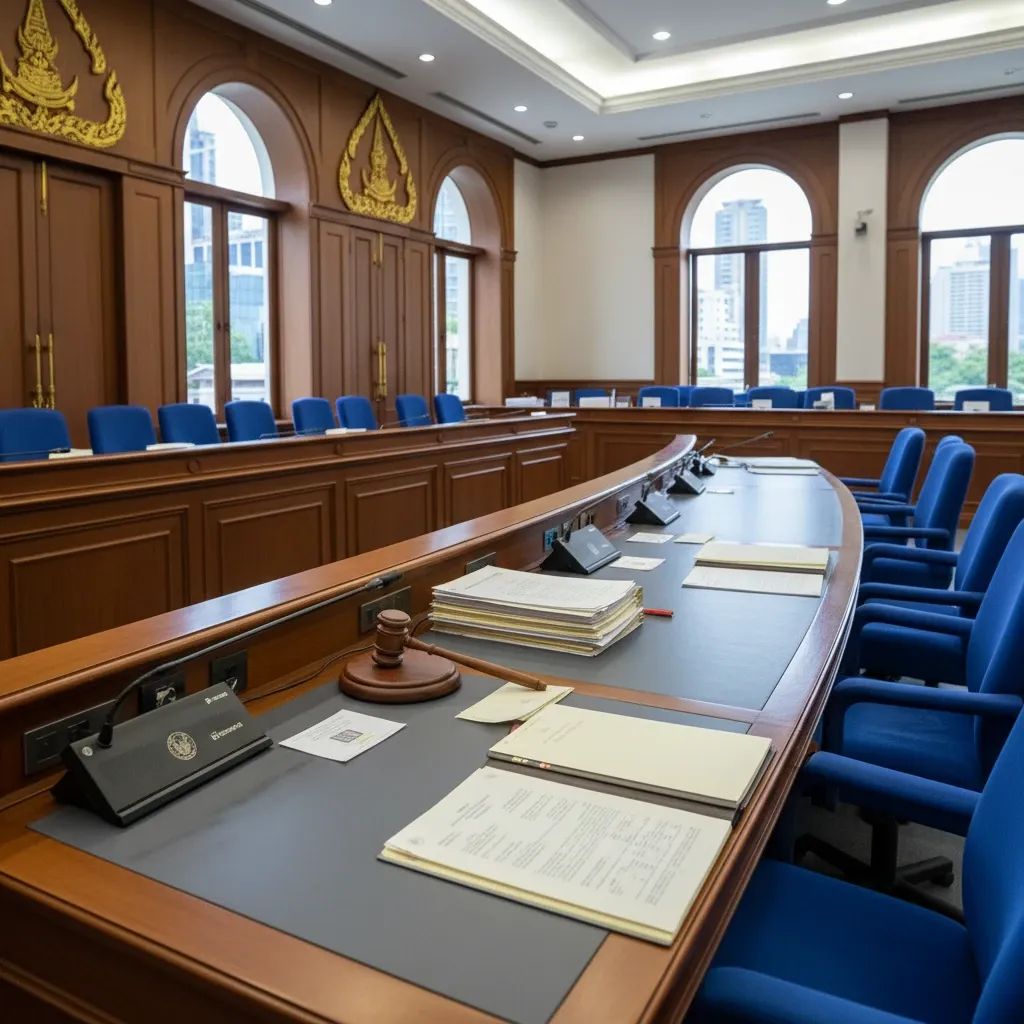
The Thailand Cabinet faces its first major parliamentary test in coming weeks as opposition parties prepare to file a no-confidence motion against Prime Minister Anutin Charnvirakul and key ministers. The motion, scheduled for submission after Parliament reopens on August 25, could reshape Thailand's political landscape—but the administration says it will answer only questions directly related to its recent tenure, not allegations predating its time in office.
Why This Matters:
• Parliamentary showdown imminent: Opposition coalition led by the Prachachon Party plans to file a censure motion targeting PM and multiple cabinet members.
• Senate election scandal resurfaces: Allegations of vote-rigging in the 2024 Senate race remain central to the opposition's concerns, despite government claims the issue is "unrelated" to current administration.
• Strategic boundaries set: Anutin declares his government will focus debate on recent policy performance and governance, effectively limiting discussion of historical allegations.
Government Draws Red Line on Senate Controversy
Speaking at Government House earlier this week, Anutin adopted a firm posture on the parameters of the upcoming debate. His administration will field questions on policy performance and governance—but has indicated it will not engage extensively with allegations surrounding the contentious 2024 Senate selection process.
"We're prepared to discuss our governance record," Anutin told reporters, characterizing the opposition's framing as political maneuvering. "If the opposition wants to discuss our policy performance, we're ready. But they're trying to litigate historical disputes through parliamentary debate."
The stance reflects competing political strategies: by limiting debate scope, the Thailand government hopes to frame discussion around its actual record since taking office. Opposition parties, however, view the 2024 Senate race as central to understanding current power structures—with individuals allegedly involved in that process now holding cabinet positions.
What Opposition Plans to Present
The censure motion centers on allegations the opposition plans to raise, according to coordination between opposition parties:
Senate Selection Controversies: Opposition researchers have compiled evidence regarding the 2024 Senate election process, including allegations of coordination between candidates. According to opposition claims, documentation exists showing patterns suggesting organized voting, though specific details of these allegations remain contested.
The Thailand Election Commission certified all 200 senators in July 2024, but multiple legal scholars and civil society groups have filed complaints regarding the selection process. The opposition plans to argue these unresolved questions reflect systemic governance concerns.
Policy Implementation Concerns: Opposition figures are expected to raise questions about various government initiatives and their implementation timelines, characterizing some as lacking proper oversight or transparency.
Broader Governance Questions: Opposition parties plan to present concerns about administrative practices and institutional accountability, framing these as examples of systemic issues requiring parliamentary attention.
Coalition and Power Structure Allegations: The opposition plans to argue that certain political networks have captured key institutions, a claim they will attempt to demonstrate through their questioning during the debate.
Impact on Residents and Policy Continuity
For people living in Thailand, the no-confidence debate carries practical implications. Any significant government instability could potentially affect:
Policy implementation: Major initiatives may experience delays during periods of political uncertainty.
Budget and fiscal measures: Parliamentary time devoted to political debates could affect the pace of legislative business, including budget-related measures.
Regulatory environment: Changes in ministerial leadership could create uncertainty for businesses and expatriates regarding visa regulations, licensing, and compliance requirements.
Coalition Mathematics and Parliamentary Dynamics
Anutin's coalition holds a parliamentary majority, though opposition parties hope to persuade individual lawmakers to support the no-confidence motion. The outcome depends on coalition cohesion and whether any coalition members choose to support or abstain from the vote on individual ministers.
Several coalition partners have had policy disagreements, creating the possibility of defections during critical votes.
Ministers Signal Readiness
Multiple cabinet members have indicated they will respond to questions during the debate, pledging to provide information about their ministries' recent activities and policy initiatives.
Officials have emphasized they will defend their records in their current positions, focusing on recent policy implementation rather than historical disputes.
The Roadblock Incident
Anutin addressed a widely circulated incident from Buriram Province, where his motorcade was halted at a police checkpoint conducting routine operations. Opposition critics suggested the incident was staged for optics purposes.
The prime minister characterized it as routine law enforcement: "Officials were doing their jobs conducting normal operations."
What Happens Next
Parliament is scheduled to reconvene for sessions in the coming weeks. Opposition parties have indicated they will submit their no-confidence motion, which will trigger a mandated debate under constitutional procedures.
The Thailand Election Commission is expected to address pending complaints and administrative matters separately from the parliamentary process.
For residents navigating daily life in Thailand, the coming political debate will likely shape near-term governance and policy implementation. The extent to which the opposition's concerns gain traction in parliament will determine political and policy outcomes through the remainder of the year.


