
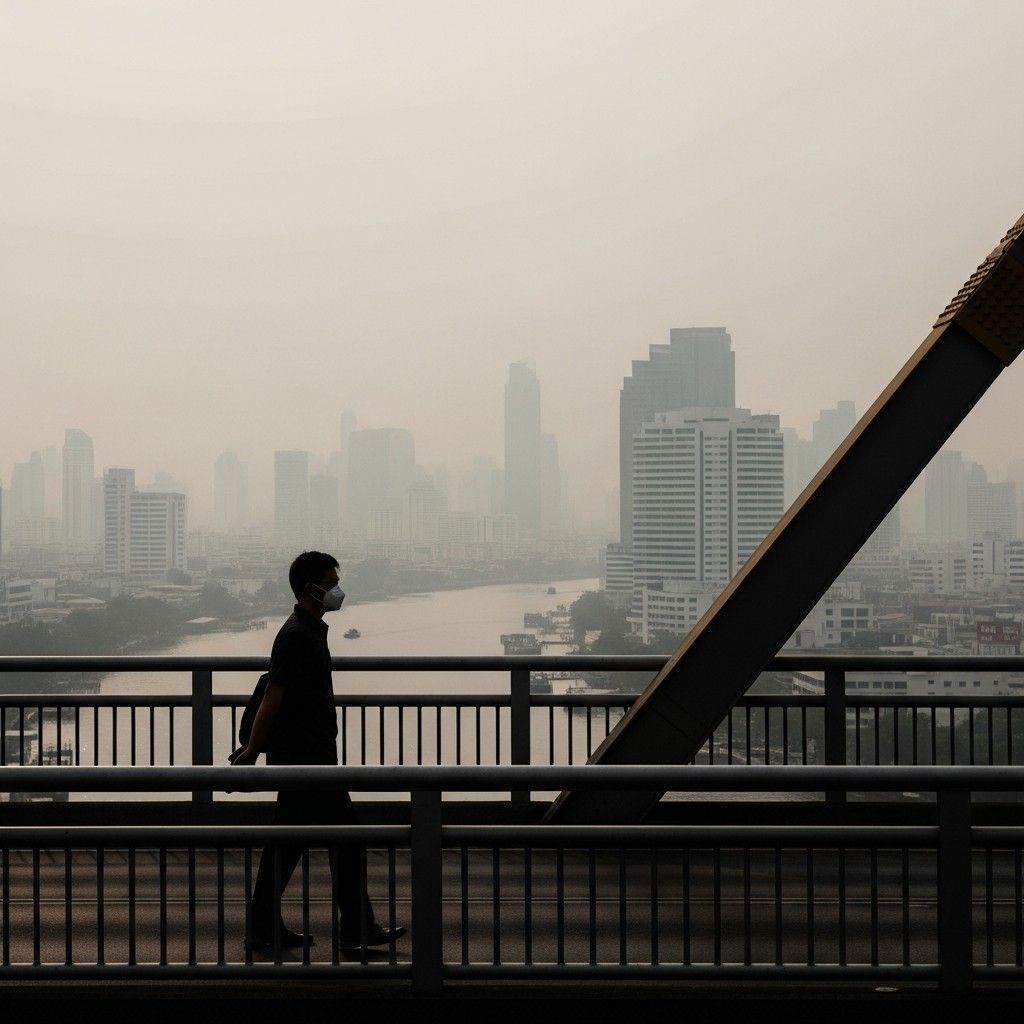
Northern Thailand Air Quality Alert: What You Need to Know
Air pollution has reached hazardous levels in parts of northern and northeastern Thailand, with fine dust concentrations continuing to rise. This is a genuine concern for residents in the region who need practical guidance on protecting themselves during this seasonal period.
Understanding PM2.5 and Health Risks
Fine particulate matter (PM2.5) is small enough to penetrate deep into your lungs and enter the bloodstream. Once there, it can trigger inflammation and worsen existing respiratory and cardiovascular conditions. Children, elderly people, and those with pre-existing health conditions face elevated health risks during periods of poor air quality.
The Thailand Pollution Control Department classifies air quality in tiers, with readings below 25 micrograms per cubic meter considered safe. As pollution levels rise, the risks increase for sensitive groups first, then progressively for the general population.
Practical Protective Measures
During periods of hazardous air quality, residents should take deliberate steps to minimize exposure:
Indoors: Keep windows and doors closed during hours when pollution tends to be worst. If you have air conditioning, use the recirculate setting with clean filters. Many residents consider HEPA-rated air purifiers an investment worth exploring.
When outdoors: N95 or KN95 masks provide meaningful protection against PM2.5 particles when a proper seal is maintained. Surgical masks and cloth coverings offer minimal protection against fine particulates. Masks should fit snugly without gaps.
Activity planning: Outdoor exercise, jogging, and sports increase PM2.5 inhalation due to elevated breathing rates. During hazardous air periods, consider shifting these activities indoors or to alternate locations with better air quality.
Schools and children: Parents should monitor school policies regarding outdoor activities and recess during poor air quality days. Children are particularly vulnerable due to developing respiratory systems and outdoor time patterns.
Seasonal Context and Timeline
Northern Thailand experiences seasonal air quality challenges typically during the dry season. This pattern reflects multiple factors including agricultural burning practices, meteorological conditions that can trap pollutants, and transboundary pollution sources. Air quality generally improves when seasonal wind and weather patterns shift, though timing varies year to year.
Government and Community Response
Thai authorities monitor air quality and issue public advisories. Provincial officials work to address sources within their control, though the challenge remains significant given the region's agricultural practices and seasonal patterns. Regional coordination with neighboring countries continues, though addressing transboundary pollution remains complex.
For residents, the practical approach involves staying informed through official air quality monitoring, adjusting daily activities based on current conditions, and implementing protective measures when needed. This seasonal challenge is manageable through sustained attention rather than one-time adjustments.


