
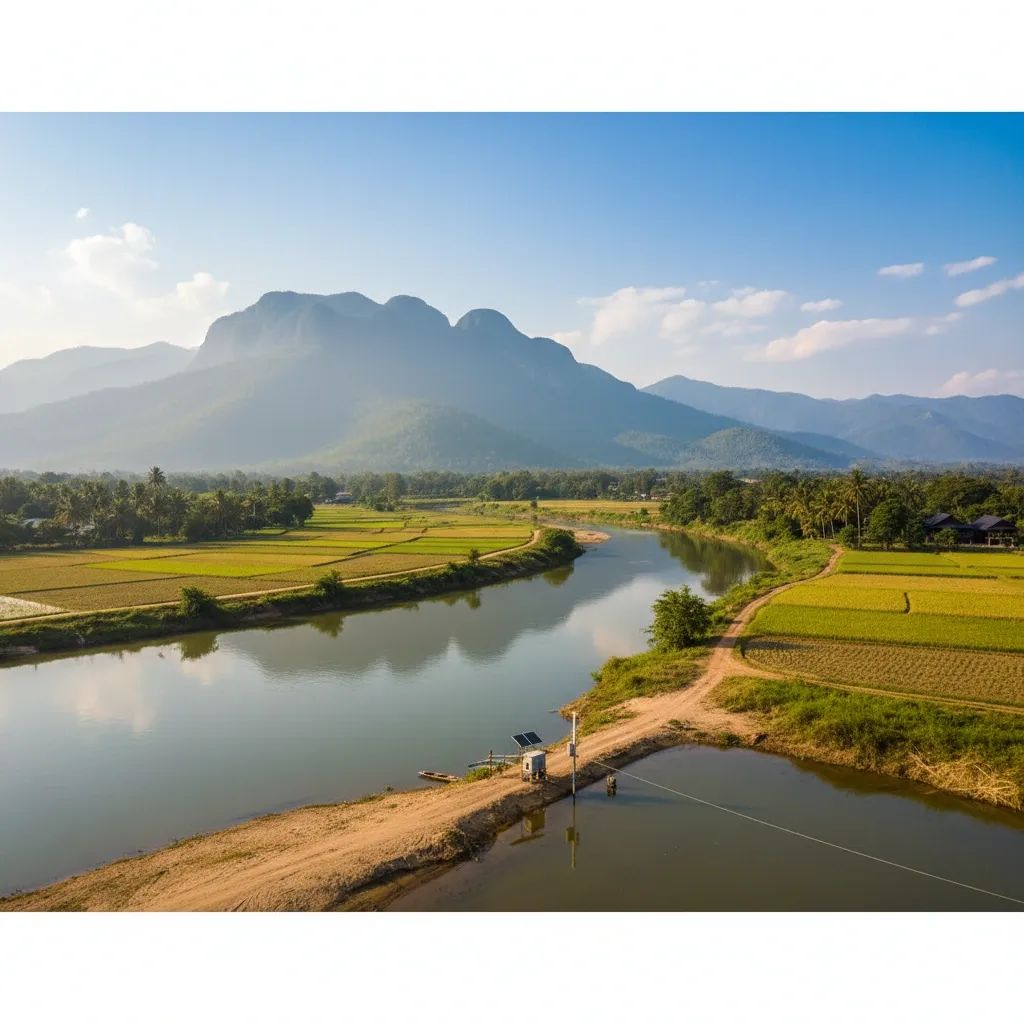
The Thailand Ministry of Foreign Affairs is now locked in technical negotiations with Myanmar's environmental authorities over a cross-border pollution crisis that threatens the water supply, agricultural livelihoods, and public health of residents across northern Thailand. Illegal rare-earth and gold mining operations along the border—concentrated in Myanmar's Shan and Kachin states—continue to discharge arsenic, lead, and other heavy metals into rivers feeding Thai provinces, despite mounting local and diplomatic pressure.
Why This Matters
• Over 40,000 households in Chiang Rai draw drinking water from the Kok River system.
• Health screenings conducted in Chiang Rai identified individuals with elevated arsenic levels, with ongoing monitoring and epidemiological follow-up underway.
• Diplomatic channels between Thailand and Myanmar are now operational, with technical meetings underway on water-quality standards and joint sampling protocols.
• A 5-year monitoring and care plan is in force to track at-risk populations in affected Chiang Rai districts.
The Scale of the Crisis
Four river systems that originate in Myanmar and flow into Thailand—the Kok, Sai, Ruak, and sections of the Mekong—have recorded arsenic and lead concentrations exceeding national safety thresholds at multiple monitoring stations. The contamination stems from unregulated gemstone and gold extraction in Myanmar's eastern Shan State, where armed groups and foreign operators conduct intensive chemical processing with minimal oversight. Rare-earth mining, in particular, relies on concentrated acids and fertilizers that leach directly into tributaries.
Myanmar remains one of the world's largest suppliers of jade and rubies, but the majority of production is now illegal, fueling armed factions in the country's civil conflict. Weakened regulatory enforcement means swaths of mining territory are controlled by ethnic armed organizations that collect fees from operators in exchange for protection. Human-rights monitors report that victims of trafficking are increasingly forced into rare-earth mining labor in these zones.
What This Means for Residents
For farmers, fishers, and urban households across Chiang Rai, the contamination poses ongoing concern. The Thailand Ministry of Public Health has issued advisories warning vulnerable populations to avoid consuming freshwater fish from affected rivers, citing potential health risks. University researchers have documented arsenic accumulation in samples from riverside residents, with some individuals showing clinical symptoms affecting muscles and the nervous system.
Water authorities have increased sampling frequency at dozens of stations. The Thailand Department of Medical Sciences has tested water, vegetables, and fish and declared results within acceptable limits—but emphasized that the threat is cumulative and long-term. Arsenic and heavy metals bioaccumulate in soil and sediment, meaning today's safe readings could mask future toxicity if upstream discharge continues.
The Chiang Rai Provincial Public Health Office has launched a proactive surveillance program covering affected communities across multiple districts, with mandatory health screenings for high-risk groups and regular water-quality checks. Individuals identified as at-risk are receiving epidemiological follow-up through a dedicated 5-year care plan.
Government Response: Diplomatic and Domestic Tracks
Thailand's response now operates on two parallel tracks—cross-border negotiation and internal safeguards.
On the diplomatic front, the Ministry of Foreign Affairs, in coordination with the Ministry of Defense and the National Water Resources Office, is pushing Myanmar to shut down the polluting mines through bilateral mechanisms. Thai negotiators have engaged Myanmar's officials in Chiang Mai to address contamination flowing from mining zones. Myanmar officials have reportedly expressed willingness to cooperate, though past promises have yielded limited concrete action.
Technical meetings between Thailand's Pollution Control Department, the Department of Primary Industries and Mines, and Myanmar's Ministry of Natural Resources and Environmental Conservation have taken place to discuss water-quality standards and to establish joint data-sharing protocols. The Thailand Foreign Ministry is also pressing Myanmar—and by extension, China, as the primary investor—to apply the UN Guiding Principles on Business and Human Rights, which would require remediation, site restoration, and victim compensation.
Domestically, the Thailand Cabinet has endorsed recommendations to strengthen cross-border environmental safeguards. Measures include:
• Increased transparency around ore imports: Thai officials and academics have called for scrutiny of mineral shipments from Myanmar. Imports from undocumented or ecologically harmful sources may face restrictions.
• No-mining zones in agricultural areas, with clear watershed boundaries.
• Public hearings before new mining permits are issued, with full disclosure of boundaries and license holders.
• Anti-corruption protocols covering the mining lifecycle, under review by relevant agencies.
The Cabinet has also designated portions of border provinces as controlled zones to combat transnational crime—a move that may indirectly disrupt illegal mining supply chains.
Local Activism: From Ritual to Roadblock
Grassroots resistance has intensified. Environmental and community organizations have organized rallies calling for action, with participants signing petitions, performing Buddhist purification rites, and marching to submit demands to the governments of Thailand, Myanmar, China, and armed groups involved in mining operations. Activists have called on the Prime Minister to visit affected communities and strengthen enforcement.
Supporting the campaign are the Highland Community Development Foundation, the Mirror Foundation, the Rivers for Life Association, and business groups alarmed by tourism and export impacts.
Civil-society organizations are coordinating with the Chiang Rai Provincial Health Assembly to deploy Health Impact Assessment (HIA) tools, empowering communities to document exposure patterns and advocate for policy change. A dedicated data and media center is under development to centralize monitoring results and disseminate safety guidance.
The Challenge Ahead
Despite the flurry of activity, structural obstacles remain formidable. Myanmar's ongoing civil war means no single authority controls the mining zones; armed factions derive significant revenue from extraction and are unlikely to halt operations without financial alternatives or military pressure. Foreign firms operate with minimal environmental compliance, and geopolitical leverage complicates enforcement.
Thai officials acknowledge that while short-term remediation—such as switching municipal water sources and distributing bottled supplies—can reduce immediate exposure, the crisis will persist as long as upstream mining continues. The National Water Resources Office is evaluating whether affected municipal systems should switch intake points to safer water sources.
For now, the government's messaging emphasizes vigilance over panic. Test results for municipal tap water and commercially sold produce have remained within safety margins, but the Public Health Ministry continues to caution against direct river use for irrigation or bathing in certain stretches. Regular bulletins are posted online, and health screenings remain available in affected districts.
Impact on Agriculture and Trade
Farmers relying on river irrigation face a dilemma: government advisories recommend avoiding contaminated water, but alternative sources are scarce during dry months. Rice paddies and vegetable plots near affected rivers are facing informal restrictions, with buyers increasingly wary of produce from contaminated zones. The tourism sector, a pillar of Chiang Rai's economy, has registered declines in bookings tied to water-safety concerns.
Fishers report declining catches and reluctance from wholesalers, even though contamination levels in fish tissue remain below established danger thresholds. The psychological and economic toll—rooted in uncertainty rather than confirmed toxicity—is tangible.
What Comes Next
Thailand is preparing to escalate the issue within regional forums, including ASEAN environmental ministerial meetings, to secure multilateral pressure on Myanmar. The National Health Assembly will formally adopt recommendations for cross-border pollution response protocols.
Meanwhile, identified at-risk individuals will receive ongoing monitoring, and the 5-year care framework ensures continuity of health surveillance. Lab capacity is expanding to include comprehensive screening for potential exposures related to rare-earth mining operations.
The economic and diplomatic leverage available to Thailand will determine whether mining pollution can be meaningfully reduced—a far more challenging political battle than addressing other transnational issues, given mining's lucrative nature and entrenched interests.


