
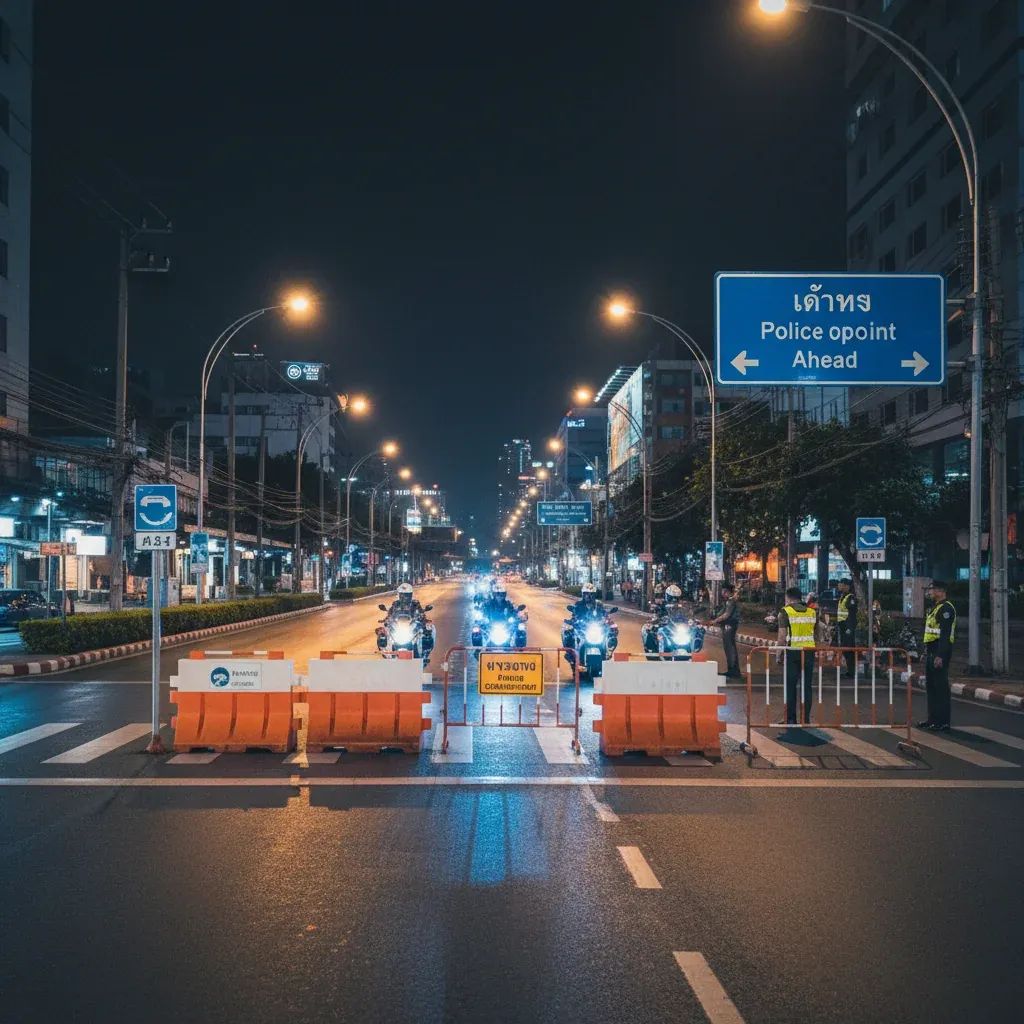
The Thailand Education Ministry has escalated school security to a "national agenda" priority, implementing immediate emergency measures and drafting long-term legislation after a deadly shooting at Nonthaburi's Thepsirin School in August 2026 left 8 dead and triggered copycat threats across the country.
Why This Matters
• Immediate action: All 35,000+ schools nationwide must now operate as "School Safety Zones" with weapon screening and visitor control — effective immediately.
• Legal framework in progress: A draft law on school safety and student device use is under public consultation through September 9, giving officials authority to search and confiscate contraband.
• Mental health priority: Every school must establish counseling centers and conduct regular psychological screenings for both students and staff.
From Reactive to Preventive Security
The Thailand Cabinet approved the Ministry's comprehensive safety overhaul on August 11, 2026, marking a fundamental shift from crisis response to systematic prevention. The decision followed the August 7, 2026 massacre at Thepsirin School, where a 14-year-old student opened fire, and subsequent threats recorded at schools including Pak Kret Secondary School just days later.
Seven core measures now bind all educational institutions, from Bangkok international schools to rural village classrooms. Each must establish a Rights, Freedom, and Safety Protection Center — essentially a one-stop reporting hub for violence, rights violations, mental health concerns, and conflict mediation. The centers connect directly to psychologists and public health networks, bypassing traditional bureaucratic delays.
Security plans must extend beyond campus walls. Schools are required to map and rehearse emergency protocols covering commutes, internships, and field trips, not just classroom lockdowns. Communication systems and hazardous equipment controls fall under the same umbrella, creating what officials describe as a "360-degree safety perimeter."
The School Safety Zone Framework
The "School Safety Zone" designation carries specific enforcement teeth. Weapons, narcotics, and dangerous items are banned outright. All visitors — including parents — face mandatory identification checks, registration, and screening before entry. Schools can refuse access and summon police if cooperation is withheld.
This represents a significant tightening compared to the informal security many Thai schools maintained previously. Previously, visitor policies varied wildly by institution; some international schools required advance appointments while rural schools operated with minimal gatekeeping.
The Ministry has paired physical security with cultural transformation. Schools must actively promote non-violent conflict resolution, emotional regulation training, and respectful communication norms. The goal: make security a daily mindset rather than an emergency protocol.
Mental Health Infrastructure Expansion
Perhaps the most ambitious element involves universal mental health screening and support. The Ministry acknowledged what surveys already revealed: over 65% of Thai youth aged 7-25 reported experiencing bullying in recent surveys, according to the Department of Health Service Support. Nearly 30% of victims contemplated self-harm.
Schools now must identify at-risk students quickly and route them to specialists without delay. Teacher-counselors receive expanded training to spot warning signs. The initiative introduces "Safe Rooms" — quiet spaces where students, teachers, and staff can decompress during emotional distress, similar to Finland's Safe Space model.
The timing reflects broader social anxiety. Beyond the Thepsirin massacre, 2026 saw multiple violent incidents involving students, including a politician's child threatening peers with a gun at a prestigious Bangkok school and a Khon Kaen student enduring prolonged physical abuse and extortion by classmates.
The Legislation Under Consultation
While emergency measures took effect immediately, the draft School Safety and Electronic Device Act remains in public comment phase through early September via Law.go.th. If enacted, the legislation would codify what many principals currently lack: legal authority to conduct searches and confiscate items.
The draft distinguishes between illegal contraband (which schools could destroy) and communication devices (which schools could temporarily seize under institutional rules). For student offenders, the law prioritizes "rehabilitation over punishment", though adults who incite or enable violations face fines.
The device control provisions address both physical threats and cyberbullying — the latter ranking among the most common harassment forms alongside name-calling and body-shaming, per 2026 consumer protection surveys showing 42% of respondents witnessed school violence.
Critics have yet to mount significant opposition, though privacy advocates typically scrutinize search authority language. The consultation period will test whether parents and civil society groups view the measures as proportionate to recent tragedies.
International Comparisons and Implementation Gaps
Thailand's approach borrows from multiple global models. The U.S. has normalized armed security officers in 50% of schools and teaches "Run, Hide, Fight" protocols to kindergarteners. Japan equips elementary students with emergency survival kits in their school bags and coordinates community-wide disaster drills. Finland's KiVa anti-bullying program emphasizes intervention and healing rather than punishment.
What distinguishes Thailand's plan is its comprehensiveness on paper versus execution risk. Requiring every school to coordinate with police, local government, social workers, and health networks sounds transformative — but rural schools with limited staff and budgets may struggle to comply fully.
The Ministry has not yet announced dedicated funding streams for the new infrastructure. Installing screening checkpoints, hiring mental health professionals, and training teachers all carry costs that wealthier urban schools can absorb more easily than provincial institutions already operating on tight margins.
What This Means for Parents and Educators
For families with school-age children, expect visible changes when the new academic term resumes. Casual campus visits will require advance notice and identification. Schools should communicate their specific visitor policies and emergency contact procedures — if they haven't already, parents have grounds to request clarification.
International schools serving expatriate families may find compliance easier given existing security infrastructure, but the mental health screening requirements apply equally. Parents should ask how schools plan to handle screening data privacy and what referral networks exist for students flagged as at-risk.
Teachers and administrators face the heaviest lift. The Rights Protection Center model assumes schools can identify staff with counseling aptitude and free them from other duties to manage the centers full-time. In practice, many teachers already juggle multiple administrative roles beyond classroom instruction.
The parental observation provision — inviting parents to monitor school operations — could either build trust or create friction depending on implementation. Schools accustomed to administrative autonomy may resist what they perceive as micromanagement, while parents welcome transparency.
Enforcement Timeline and Next Steps
The emergency measures carry immediate force as of mid-August 2026, though the Ministry has acknowledged schools need transition time to establish centers and train personnel. Realistically, full compliance across all institutions likely stretches into 2027 or beyond.
The draft legislation, if it survives public consultation without major revisions, would advance to the National Assembly for debate and voting, likely in late 2027. Legislative calendars remain unpredictable, particularly for bills touching sensitive issues like student rights and school autonomy.
Meanwhile, the public comment window closing September 9 represents the best opportunity for stakeholders to shape the final legal framework. Parents concerned about search authority scope, students worried about device confiscation, and educators seeking clearer implementation guidance should submit feedback through the official portal.
Thailand is attempting what few nations have tried: overhauling school security culture nationwide in response to a single crisis event. Whether the ambition translates to sustained safety improvements or dissipates into unfunded mandates will depend largely on resource allocation and bureaucratic follow-through in the months ahead.
For now, the message from the Thailand Cabinet is unambiguous: schools must transform from passive learning environments into actively managed safety zones, with every adult bearing responsibility for student wellbeing beyond academic performance. The harder question — whether Thailand's education system has the capacity to execute that vision equitably — remains unanswered.


