
Why This Matters
The Thailand Cabinet's decision to declare school safety a "national agenda" following a deadly shooting at Debsirin Nonthaburi School on August 7, 2026 signals significant policy changes in how the country approaches violence prevention in educational institutions. For parents, educators, and residents, tangible changes are already underway through a coordinated five-ministry effort to establish unified safety standards within 90 days.
Key Takeaways
• Immediate action: All schools now designated "School Safety Zones" with mandatory bag searches, emergency protocols, and dedicated mental health support centers
• Firearm freeze: Thailand's interior ministry has suspended new gun licenses indefinitely pending comprehensive control legislation
• The 90-day standard: Five government ministries are drafting unified safety guidelines that all schools must implement
• Mental health emphasis: Nationwide hotlines, trained counselors, and trauma follow-up assessments scheduled for survivors at one, three, and six-month intervals
What Happened and Why Context Matters
On Friday, August 7, 2026, Patchata Yimruang, a 14-year-old student, killed his two grandparents at their home in Bang Bua Thong using a 9mm CZ-75 Compact pistol registered to his grandfather. Hours later, he arrived at Debsirin Nonthaburi School in Bang Kruai district and opened fire. Five school employees—four teachers and one vice principal—died on campus. A 12-year-old student perished from her injuries the following day. At least 23 others sustained wounds. When police moved in around 10:30 AM, the perpetrator barricaded himself in the computer laboratory and took his own life.
Nine deaths total. Investigation found that Patchata had watched foreign mass-shooting videos online, spent over a year learning about firearms through social media, and had been caught with an air rifle at school the previous year. He lived with his grandparents for 12 years following his parents' separation—a home environment with documented stress factors.
The weapon wasn't smuggled into Thailand. It was legally registered and stored unsecured in his grandfather's home—a gap in firearms safety standards that the forthcoming gun control legislation will target directly.
How Thais Online Are Framing Solutions
Within days of the August 2026 incident, RealWatch Lab, an AI-powered social research firm, analyzed 12,555 messages across Thai social media platforms discussing the tragedy. The analysis reveals where public concern concentrates.
Weapons control dominated the conversation. Nearly 35% of online recommendations called for stricter enforcement of existing firearms laws and secure storage requirements. Commenters noted that Thailand has weapons-control statutes; the issue is inconsistent application. The grandfather's unsecured pistol represents precisely the scenario new storage rules aim to prevent.
Family responsibility emerged as the second-most discussed theme (25%). This framing emphasizes parental roles in understanding children's emotional and academic pressures. Parents must invest time recognizing warning signs that schools cannot independently detect.
Mental health infrastructure ranked third (17%). Online users called for psychologists on every school campus, stricter anti-bullying enforcement, and teachers addressing harassment as serious rather than normal adolescent friction. This segment viewed earlier psychological intervention as preventable.
Smaller segments pushed for integrated collaboration between families, schools, and community (12%) and systemic education reform (11%) focused on reducing class sizes so teachers could know students well enough to notice warning signs.
The conversation highlighted that legal enforcement alone cannot address violence rooted in family dysfunction and social isolation.
Thailand's Institutional Response: Speed and Scope
The government moved decisively following the August 2026 shooting. Five ministries—Education, Interior, Public Health, Justice, and Social Development—began coordinating on a 90-day national school safety standard. This coordination signals resource allocation and multi-agency accountability.
Physical security tightened immediately. All schools became "School Safety Zones" requiring visitor protocols, enhanced CCTV, and trained on-site security personnel. Teachers now conduct daily bag and pocket checks—a visible security measure that has sparked debate about whether searches appropriately balance protection with campus atmosphere.
Mental health infrastructure expanded rapidly. The Thailand Department of Mental Health launched nationwide hotlines, chat services, and appointment systems for students and staff experiencing distress. "Safe Rooms" are being established for psychological first aid. Affected individuals will receive trauma assessments at one-month, three-month, and six-month intervals.
Firearm licensing froze effective immediately following the August 7, 2026 incident. The interior ministry and police suspended all new firearms licenses until comprehensive gun control legislation is drafted and enacted. This temporarily halts new weapon registration while lawmakers work on secure storage mandates and accountability mechanisms for registered owners.
Debsirin Nonthaburi School coordinated intensive preparation for reopening on August 17, 2026. The institution partnered with Chulalongkorn University's Faculty of Psychology, the Thailand Department of Mental Health's crisis team, and local trauma specialists to provide on-campus counseling. This provided operational recovery support designed to help students and staff process grief in the space where the tragedy occurred.
Where Implementation Gets Complicated
The policy framework is comprehensive. The gap between policy and execution presents practical challenges.
Thailand operates a decentralized education system serving over 10,000 schools with vastly unequal resources. Bangkok's metro schools have access to mental health professionals and adequate funding for CCTV infrastructure. Rural institutions operate on constrained budgets. Private schools face minimal oversight. Many schools lack qualified psychologists—Thailand faces a nationwide shortage of approximately 5,000 trained school psychologists, making the mandate for enhanced mental health support challenging to execute uniformly.
Daily bag searches consume time teachers report they don't have available. Students report feeling criminalized by the procedure. Teachers and administrators debate whether the searches measurably improve safety or create an illusion of control.
Mental health support exists, but stigma and logistics create barriers. Many Thai families view psychiatric care cautiously. Students may avoid using school-based counseling services out of concern that peers will discover they sought help—a cultural reality that affects utilization of newly available resources.
Implementation timeline by school type:
• Government schools: Mandatory standards apply from September 2026
• Private schools: Compliance required by October 31, 2026
• International schools: Required to meet standards by November 30, 2026
Nationwide application: Policies apply across all 77 provinces, though rural schools may receive phased implementation assistance due to resource constraints.
What Neighboring Asian Countries Have Learned
South Korea integrated bullying records into university applications, creating accountability mechanisms that motivate schools and families to take harassment seriously. The country expanded its 2011 School Violence Prevention Act to mandate conflict resolution education from second grade onward.
Japan uses narrative therapy programs where bullying victims and perpetrators collaborate on anti-bullying action plans, fostering empathy through structured dialogue rather than punishment alone.
Nepal's 2015 constitution explicitly guarantees schools as violence-free zones—a constitutional commitment that signals society's non-negotiable stance on safety. India and Pakistan abolished corporal punishment through national legislation, recognizing that adult violence normalizes harm as an acceptable problem-solving approach.
Laos and Malaysia operate national hotlines and community reporting systems for violence survivors, reducing isolation and creating data that helps authorities identify patterns.
Thailand's current approach borrows from these models—mental health support echoes South Korea's early intervention emphasis; hotlines reflect Laos and Malaysia's reporting infrastructure. However, Thailand's sustained funding and implementation consistency will determine whether these measures produce measurable results.
What This Means for Residents and Families
For parents: Your responsibility for your child's safety extends beyond school gates. Know your teenager's emotional state and academic stress. Ask directly about bullying and peer relationships. Schools will screen bags; you must understand your child's mental and social world.
For educators: You're now expected to identify psychological warning signs alongside your teaching responsibilities, potentially without formal training in threat assessment. The government's hotlines and support teams provide resources, but the responsibility concentrates on teachers. Educator organizations have requested mandatory professional development on threat assessment and de-escalation.
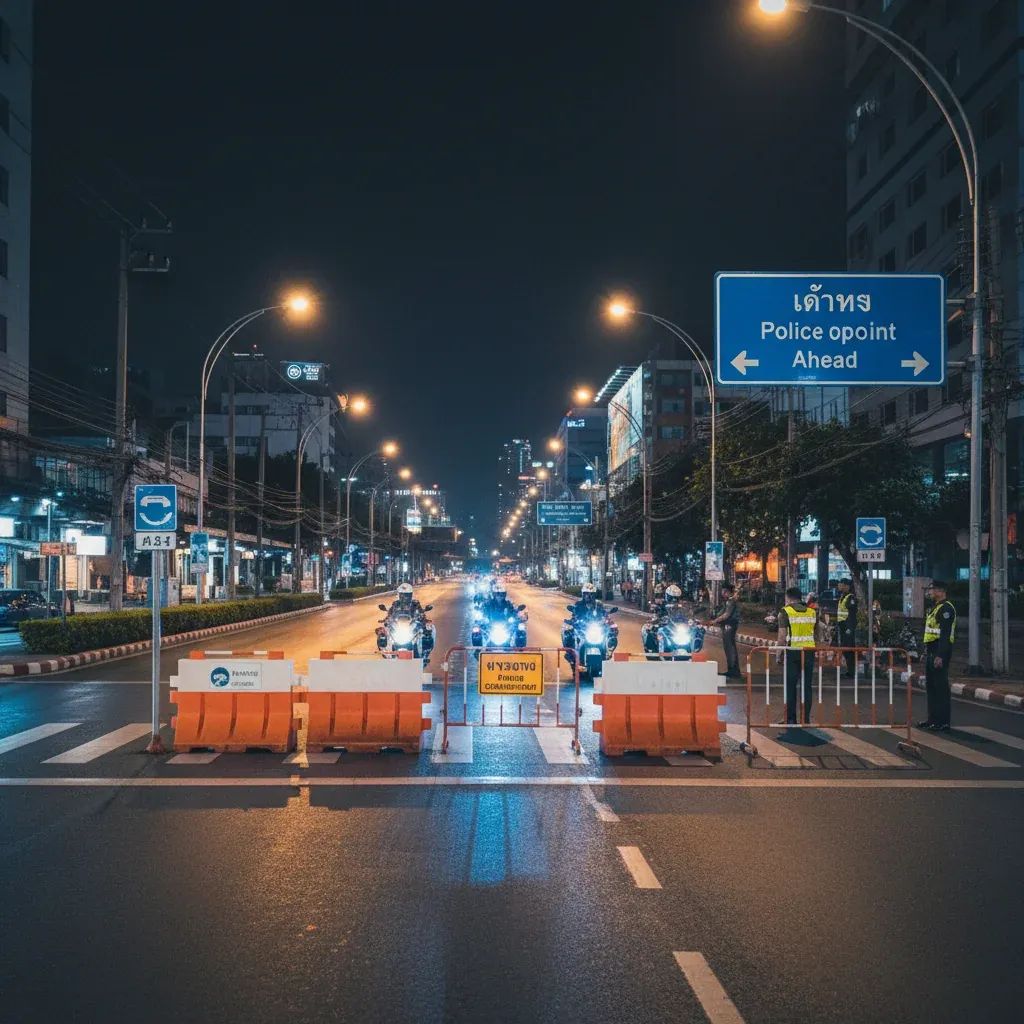
For long-term residents: Thailand's visible security landscape now includes daily bag searches and enhanced police presence at schools. This represents an operational shift in how schools function—one many societies implement after mass violence incidents.
For expat employers: Workplace safety protocols warrant review. Companies insuring expatriate staff are assessing whether current coverage adequately addresses Thailand's evolving safety environment, particularly regarding firearm access in employee households.
For education investors: The 90-day national standard will include compliance costs. Schools will need funding for CCTV infrastructure, staff training, and mental health personnel. Private school sectors may see enrollment increases as parents seek better-resourced facilities.
Mental Health and Reporting Resources
National Mental Health Hotline: 1300 (available 24/7)
Crisis Chat Service: Available through Thailand Department of Mental Health website
School-Based Support: Contact your child's school directly for campus counseling availability and referral procedures
The Critical Questions Remaining
Why was a registered firearm stored unsecured in a home with an adolescent? Thai law permits firearm registration but has historically imposed weak storage requirements. The forthcoming gun control legislation must establish clear storage mandates—or face repeated scenarios where registered weapons become accessible to minors.
How will schools prevent online radicalization toward violence? Internet cafés and social media remain relatively unregulated spaces where Thai youth access foreign mass-shooting content. Schools can screen physical weapons; screening the psychological pipeline to violence requires internet regulation that raises free-expression concerns policymakers are debating.
Can Thailand sustain focus on this issue beyond the immediate response period? International experience shows public urgency around school safety peaks immediately after incidents, then typically fades within 6–12 months as competing political priorities emerge. The national agenda classification signals commitment, but sustained budget and staffing allocations remain uncertain.
The Recovery Ahead
Debsirin Nonthaburi School's reopening on August 17, 2026 represented an operational experiment in whether trauma-informed support can restore safety in a place fundamentally altered by violence. Chulalongkorn University's psychology faculty provided counseling; government mental health teams were deployed; administrators coordinated with trauma specialists.
The national school safety standard being drafted through September 2026 will establish baseline requirements. Implementation across Thailand's diverse school system represents the actual operational test.
Thailand's immediate challenge involves executing policy consistently across a massive, unequal system while maintaining political will as the August 2026 incident gradually recedes from daily headlines. The online conversation revealed clear understanding among residents that preventing future tragedy requires sustained investment in family engagement, mental health infrastructure, and community connection—work requiring resources and political patience beyond what typical crisis response provides.
Residents, parents, and educators now navigate a fundamentally changed school environment shaped by the August 7, 2026 shooting and the policy response it triggered.


