
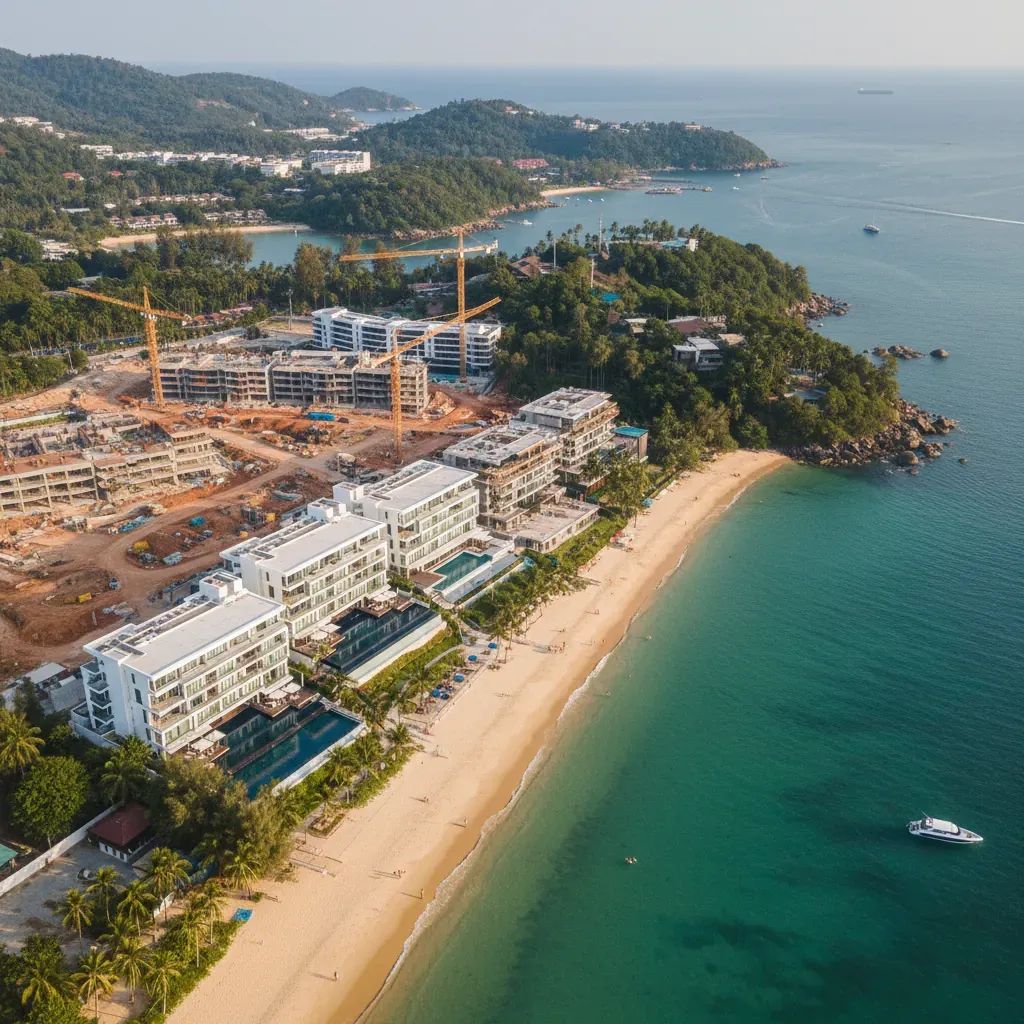
China's sweeping new regulations signed April 7, 2026, are forcing foreign manufacturers to choose between staying trapped in China or relocating operations—and Thailand is emerging as the big winner. For businesses operating in Thailand, investors, expatriate workers, and anyone with exposure to Chinese supply chains, this represents both significant opportunity and urgent risk.
Why This Matters
• Legal trap for manufacturers: Companies reducing China operations could face investigations, asset freezes, or exit bans under regulations signed April 7, 2026.
• Thailand emerges as winner: Foreign direct investment into Thailand's Eastern Economic Corridor surged 32% in Q1 2026 as firms pursue "China+1" strategies to diversify risk.
• Personnel at risk: Managers of foreign subsidiaries in China may face travel bans or visa restrictions for corporate decisions made abroad.
• Jobs and growth for Thailand: Manufacturing relocation means new employment opportunities, rising wages, and increased business activity across the Kingdom.
• Trade compliance crisis: Following U.S. or EU sanctions could now trigger Chinese legal action, creating impossible compliance dilemmas for companies with Thai operations.
Beijing's Regulatory Cage
China's State Council enacted three interconnected legal instruments this spring that collectively redefine the rules for international business. The Industrial and Supply Chain Security Regulation, which took effect immediately upon Premier Li Qiang's signature on April 7, grants Beijing authority to investigate and sanction foreign entities deemed to "undermine" China's industrial stability. Unlike previous reactive measures, this framework allows preemptive action against companies whose strategic decisions—such as relocating production or ending supplier relationships—are interpreted as threats to national security.
The regulation's scope extends beyond government sanctions to encompass ordinary commercial behavior. If a multinational decides to stop purchasing from Chinese suppliers or shifts assembly lines to Vietnam or Thailand, authorities may launch a formal inquiry under Article 15. Penalties include restrictions on cross-border data transfers, import/export bans, and punitive tariffs—measures that can cripple a company's regional operations overnight.
A second decree, the Anti-Foreign Sanctions Regulation, became enforceable April 13 and explicitly targets firms caught between conflicting legal systems. It empowers Chinese courts to issue "prohibition orders" blocking compliance with foreign sanctions, even when those sanctions originate from governments like the United States or the European Union. Companies that obey Washington's tech export controls, for example, risk violating Beijing's counter-mandate, exposing them to dual liability with no clear path to compliance.
The third pillar, an amended Foreign Trade Law effective since March 1, marks the most substantial overhaul since 2004. It shifts China's approach from opening up to prioritizing national security at every stage of cross-border commerce. Authorities now scrutinize technology flows, intellectual property transfers, and supply chain integrity with unprecedented rigor, and the law explicitly authorizes countermeasures to stabilize domestic production networks.
What This Means for Thailand-Based Operators
For businesses in Thailand—whether locally incorporated subsidiaries, regional headquarters, or export-oriented manufacturers—the new Chinese framework creates tangible friction. Companies that source components from China, maintain joint ventures in Shenzhen or Guangdong, or serve Chinese clients must reassess every contractual relationship. The regulations impose fresh constraints on supply chain due diligence, complicating environmental, social, and governance (ESG) audits that require data collection across Chinese facilities.
Thailand's role as a manufacturing hub has grown precisely because of this uncertainty. Sony relocated smartphone production from Beijing to Thai facilities, Sharp shifted printer assembly to Thailand starting in 2019 under pressure from the U.S.-China trade war, and Chinese electric vehicle manufacturers like BYD, MG, and GWM have established Thai plants to serve ASEAN and global markets. Solar panel giant JinkoSolar also chose Thailand as its regional production base, insulating operations from both U.S. tariffs and Beijing's tightening grip.
This inflow accelerated in early 2026. The Thailand Board of Investment reported a 32% year-on-year increase in foreign direct investment applications during the first quarter, with electronics, data centers, and electric vehicle components leading the surge. The Eastern Economic Corridor—spanning Chonburi, Rayong, and Chachoengsao—absorbed the lion's share, offering investors a stable legal environment, established logistics infrastructure, and proximity to both Chinese and Western supply chains.
For Thai workers and job seekers: This investment surge is creating thousands of new employment opportunities across manufacturing, logistics, engineering, and management roles. Companies establishing new Thai operations actively hire local talent and expat managers, driving wage competition and career advancement opportunities. Thailand's cost of living remains attractive relative to developed nations, making it an ideal relocation destination for expats seeking to escape China's regulatory environment.
Yet the risk is not confined to companies exiting China. Those that remain face a new compliance burden. The centralized coordination mechanism established under the supply chain regulation involves more than 15 Chinese government agencies, creating a surveillance network that monitors foreign subsidiaries' procurement, production shifts, and even personnel movements. Managers stationed in China may be personally liable under Article 16, facing travel bans or forced data disclosures if their employers violate Beijing's industrial security standards.
What You Need to Do Now: Action Steps for Thailand-Based Business Owners
If you run a business in Thailand or work for a company with China exposure, here's what requires immediate attention:
First, audit all Chinese contracts for clauses that could trigger liability under the new regulations. Agreements that reference foreign sanctions, specify non-Chinese intellectual property, or contain exit provisions may now expose your firm to enforcement action. Legal counsel familiar with both Chinese law and Thailand's regulatory environment is essential.
Second, accelerate supply chain mapping. Identify single points of failure—components, raw materials, or assembly processes—that depend exclusively on Chinese sources. Establish alternative suppliers in Thailand, Vietnam, or other ASEAN nations, even if initial costs are higher. Resilience justifies the premium.
Third, reassess personnel deployment. Minimize the number of expatriate managers stationed in China, particularly those involved in strategic decisions like supplier changes or production shifts. Consider rotating assignments to limit individual exposure and ensure no single executive becomes a legal hostage.
Fourth, engage Thailand Board of Investment incentives. The Thai government offers tax holidays, import duty exemptions, and infrastructure support for targeted industries. Electric vehicle components, data centers, medical devices, and automation equipment qualify for enhanced packages, effectively subsidizing relocation costs.
Fifth, prepare for bifurcation. The global economy is fragmenting into distinct regulatory spheres. Companies that succeed will operate parallel supply chains—one serving China, another serving the rest of the world—with minimal crossover. Thailand, positioned between these blocs, offers a neutral platform for managing this complexity.
The "China+1" Acceleration
The regulatory tightening coincides with a broader exodus. Apple has moved iPhone production lines to India and is preparing to shift iPad assembly to ASEAN nations. Nike, Adidas, and Samsung already operate extensive Vietnamese manufacturing footprints. Alibaba, ByteDance (TikTok), and Tencent established regional headquarters in Singapore, distancing core operations from mainland oversight. Tesla, Microsoft, Mattel, and ADM are systematically reducing their Chinese footprints, rebalancing supply chains to limit exposure.
Thailand competes directly with Vietnam, Malaysia, Indonesia, and India for this capital. Each country offers distinct advantages: Vietnam attracts garment and electronics assembly due to low labor costs; India positions itself as the next mass-market manufacturing power with a domestic consumer base exceeding 1.4 billion; Malaysia captures semiconductor and tech investment; Indonesia leverages nickel reserves to build electric vehicle battery supply chains; Bangladesh has become the world's second-largest apparel exporter after China.
Thailand's competitive edge lies in its mature industrial ecosystem. Decades of automotive investment mean the Kingdom possesses deep expertise in precision engineering, quality control, and just-in-time logistics. The government's push into electric vehicles, data centers, and renewable energy dovetails with global decarbonization trends, making Thailand attractive for companies seeking regulatory certainty and ESG compliance—qualities increasingly scarce in China.
Economic Reality: China's Growth Masks Structural Challenges
According to China's National Bureau of Statistics, China's GDP expanded 5.0% in Q1 2026, exceeding forecasts and Beijing's official target range of 4.5% to 5%. Yet this headline figure masks profound weaknesses. The real estate sector remains in crisis, eroding household wealth and consumer confidence. Youth unemployment persists at elevated levels, creating social instability risks. Domestic consumption, despite government stimulus, lags behind industrial output and exports, which surged 14.7% year-on-year in dollar terms during the first quarter.
This imbalance reflects Beijing's strategic priority: maintaining export competitiveness while building self-sufficiency in advanced technology. The government channels investment into semiconductors, artificial intelligence, quantum computing, and biotechnology, achieving rapid innovation in high-tech sectors. Computer and office equipment production climbed 28.3% in Q1—a dramatic increase signaling Beijing's commitment to technological independence.
But China's pivot away from global integration carries costs for trading partners. The International Monetary Fund has warned that production-led growth generates excessive surpluses that depress demand among trading partners, fueling protectionist backlash. For Thailand, this dynamic is a double-edged sword. On one hand, China's inward turn creates opportunity as supply chains diversify. On the other, Thailand remains deeply integrated with Chinese commerce—China is Thailand's largest trading partner—and any severe slowdown in the Chinese economy would ripple through ASEAN's export-oriented economies.
Impact on Expats & Investors
Foreign nationals working in China—whether for multinationals, joint ventures, or consultancies—face heightened personal exposure. The new regulations explicitly extend liability to individuals, meaning expatriate managers can be sanctioned for decisions made at corporate headquarters abroad. Exit bans, already used sporadically in commercial disputes, may become routine enforcement tools under the industrial security framework.
Investors must recalibrate portfolio strategies. Equity positions in Chinese firms that depend on Western technology or markets face regulatory risk, while companies pivoting to domestic consumption confront structural headwinds. The Data Security Law, in force since September 2021, already restricts cross-border data flows; the new supply chain rules layer additional constraints, complicating everything from cloud computing to customer relationship management systems.
For Thailand-based investors, the calculus favors regional diversification. Holding exposure across ASEAN markets—Thailand, Vietnam, Indonesia, Malaysia—provides a hedge against both Chinese regulatory turbulence and concentrated country risk. Real estate, logistics, and renewable energy sectors in Thailand benefit directly from manufacturing relocation, offering tangible growth tied to the "China+1" trend.
For expats in Thailand: Investment opportunities abound as manufacturing relocations accelerate. Real estate markets in industrial hubs like Rayong and Chachoengsao face upward pressure. Service providers—accounting, law, logistics, recruitment—can capture market share serving newly arrived multinationals. This creates wealth-building opportunities for expat entrepreneurs and professionals positioned to serve the incoming wave of corporate relocations.
The Long View
China's regulatory offensive reflects a fundamental strategic choice: control over growth. Beijing accepts slower GDP expansion in exchange for reduced vulnerability to foreign pressure, particularly from Washington. This marks a historic inflection point, ending the era of frictionless globalization that defined the post-Cold War order.
For businesses in Thailand, the message is clear. The rules governing cross-border commerce have permanently changed. Companies that adapt—diversifying supply chains, investing in regional capacity, and building compliance systems robust enough to navigate conflicting legal regimes—will thrive. Those that cling to the old model, treating China as an indispensable and stable partner, risk becoming collateral damage in a geopolitical contest they cannot control.
Thailand stands to gain if policymakers maintain the Kingdom's competitive advantages: political stability, transparent regulation, and infrastructure investment. The Eastern Economic Corridor, high-speed rail links, and port expansions position Thailand as Southeast Asia's premier manufacturing destination. Paired with the government's electric vehicle ambitions and renewable energy commitments, the Kingdom offers a compelling alternative to Chinese production.
The exodus from China is not a temporary dislocation. It is a structural realignment that will define the next decade of global commerce. Thailand, more than any ASEAN neighbor, is positioned to capitalize—if businesses, investors, and policymakers move with urgency and strategic clarity. For anyone living or working in Thailand, the time to act is now.


