
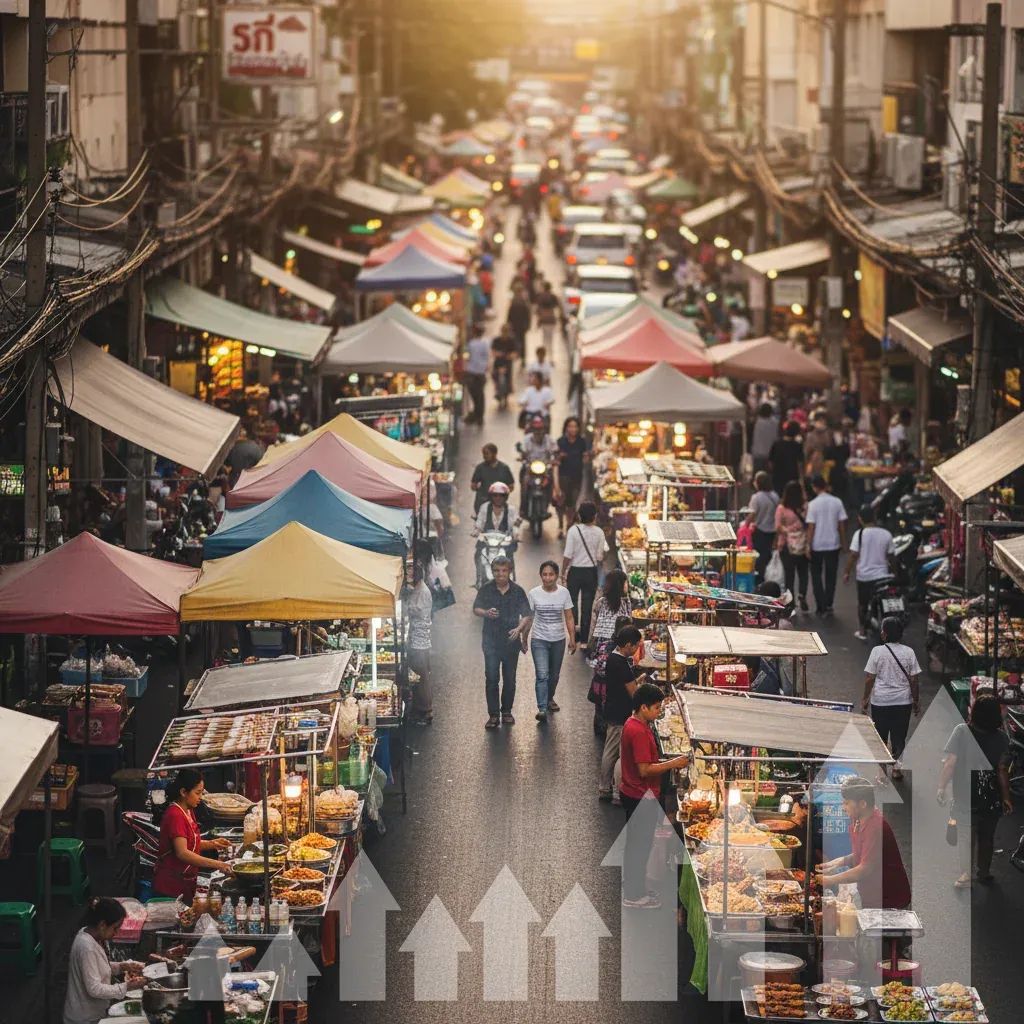
The Thailand Energy Ministry is confronting a diesel and subsidized fuel crisis that has paralyzed nearly half of the nation's fishing fleet and driven up food costs across the board, with fuel prices breaching 44 baht per liter in recent months—a surge linked directly to Middle East supply disruptions and a drained government subsidy fund.
Why This Matters
• 30-40% of fishing boats in Pran Buri and Mae Klong have stopped operating, threatening the livelihoods of 50,000 fishing workers.
• Seafood prices have jumped 15-20%, affecting restaurants, markets, and household budgets in coastal tourist zones like Cha-am and Hua Hin.
• Transport costs rose 12% across logistics networks, pushing up the price of vegetables, fruit, and consumer goods by 10-15%.
• The Oil Fuel Fund deficit has forced the government to cut subsidies, triggering repeated price hikes despite inflation already hitting 4.56%.
For a typical Thai household, this translates into real costs: filling a 50-liter car tank now costs approximately 500-600 baht more than it did six months ago. A family spending 3,000-4,000 baht monthly on fuel has seen their transportation budget climb by roughly 15-20%.
Fishing Communities Face Collapse
In the coastal provinces of Samut Songkhram, Phetchaburi, and Prachuap Khiri Khan, fuel accounts for 60-70% of operating costs for small and medium-sized fishing vessels. When subsidized "green oil"—a diesel blend designated for the fishing sector—climbed past sustainable thresholds in recent months, captains faced a stark choice: operate at a loss or tie up at the dock.
Reports from Trat Province indicate that many fishermen now go out only every other day, and nearly every trip results in a net loss. The Thai Fisheries Association warns that without immediate intervention, 50-70% of Thailand's fishing fleet could cease operations entirely, jeopardizing domestic seafood supplies and export revenue.
Mongkol Sukcharoenkana, honorary adviser to the National Fisheries Association of Thailand, has proposed eight emergency measures, including capping green diesel prices at 30-35 baht per liter, establishing direct fuel subsidies for registered vessels, and launching a government-backed vessel buyback program to reduce overcapacity. Local cooperatives are also calling for low-interest credit lines and enforcement against middlemen who inflate fuel prices at distribution points.
The supply squeeze has already rippled through markets. Fresh seafood prices in tourist hubs and provincial capitals have risen 15-20%, straining restaurant margins and prompting some operators to temporarily remove signature dishes from menus.
Agriculture and Livestock Under Pressure
Inland, the crisis is equally acute. Ratchaburi Province, a major agricultural distribution hub, has seen logistics costs spike, directly impacting the price of vegetables and fruit shipped to Bangkok and other urban centers. Farmers rely on diesel to power irrigation pumps, tractors, and transport vehicles, and persistent shortages at rural petrol stations have left some unable to maintain crops during critical growing periods.
The Thailand Ministry of Agriculture and Cooperatives has flagged additional concerns over looming shortages of chemical fertilizers, many of which are imported from the Middle East. The intersection of fuel and fertilizer disruptions is compounding production costs, which have already risen 10-15% for households across affected provinces.
Livestock producers, particularly pig and poultry farmers, are feeling the squeeze from higher feed transportation costs and energy expenses. Several small-scale operations in Phetchaburi have reportedly shut down, unable to absorb the margin compression.
Transport Sector Scrambles to Adapt
Public and commercial transport operators are grappling with the highest fuel costs in recent years. The Department of Land Transport (DLT) approved fare increases, including a 5 satang per kilometer hike for large buses and 2 satang per kilometer for passenger vans. Despite these adjustments, some operators have cut services by up to 20% to remain solvent.
Freight trucking rates have surged dramatically. Routes from Bangkok to southern provinces that previously cost 12,000 baht per trip now command 17,000 baht, with carriers passing costs downstream to retailers and consumers. The Land Transport Federation of Thailand has urged the government to extend the diesel price cap, reduce excise taxes on refined oil, and temporarily suspend refined oil exports to secure domestic supply.
Government Response: Patchwork Solutions
The Thailand Cabinet has approved a 7.742 billion baht relief package aimed at cushioning the impact on vulnerable households and key sectors. Measures include expanding the State Welfare Card allowance, distributing transport vouchers, and stabilizing fertilizer prices for farmers. However, critics argue these interventions address symptoms rather than structural problems.
The government's long-term energy strategy aims to reduce dependence on fossil fuels and increase renewable energy capacity. The plan includes adopting Small Modular Reactor (SMR) nuclear technology and opening the market to Direct Power Purchase Agreements (PPAs), but implementation timelines extend well beyond the current crisis.
In the near term, officials have shifted from blanket fuel subsidies to targeted assistance, focusing on vulnerable groups through the welfare card system and sector-specific coupons. The Oil Fuel Fund, which previously capped diesel prices, has accumulated significant deficits, forcing the government to raise retail prices multiple times in recent months.
Thailand's Energy Ministry has assessed the risk level at 2.2 out of 3, driven by Middle East tensions. Contingency plans include sourcing crude oil from alternative suppliers, maximizing refinery output, and promoting biofuel usage. If imports from the Middle East are fully disrupted, the ministry is prepared to implement Level 3 measures, including fuel rationing, restricted petrol station hours, and consumption caps for commercial establishments.
Global Context and Alternative Models
Thailand's struggle mirrors challenges faced globally, but international best practices offer potential pathways. China, the world's largest seafood producer, reformed its fishing fuel subsidy program in recent years, shifting funds toward vessel buyback programs and fishery stewardship subsidies that reward sustainable practices rather than fuel consumption.
Norway successfully restructured its fisheries sector after a resource crisis in the 1980s by reducing subsidies, implementing a closed-access licensing system, and adopting market-based management tools. International agreements now prohibit subsidies linked to illegal, unreported, and unregulated (IUU) fishing and overfishing, though fuel subsidies remain largely outside their scope pending further negotiation.
The Thailand Development Research Institute (TDRI) has recommended phasing out universal fuel subsidies in favor of targeted assistance for vulnerable groups, coupled with long-term structural reforms including breaking refinery monopolies, liberalizing the electricity transmission system, and accelerating the transition to electric vehicles.
What This Means for Residents
For anyone living in Thailand, the diesel crisis translates into higher everyday costs and potential service disruptions. Households should anticipate continued upward pressure on food prices, particularly seafood, fresh produce, and meat. Transport fares have already increased and may rise further if fuel prices remain elevated.
Small business owners in hospitality, food service, and retail should factor in higher logistics and ingredient costs when planning budgets. Coastal tourism operators may face supply chain friction as seafood availability tightens and prices climb.
Agricultural workers and small-scale farmers should monitor government announcements for subsidy programs, low-interest credit lines, and fuel allocation schemes. Fishermen should engage with local cooperatives to access collective bargaining power and any direct assistance programs rolled out in the coming months.
The broader trajectory depends on Middle East stability and the government's ability to diversify energy sources. While relief measures provide short-term breathing room, analysts warn that without fundamental reform of the Oil Fuel Fund and energy pricing mechanisms, volatility will persist through the coming years.
Outlook: Structural Reform or Prolonged Instability?
The crisis has exposed the fragility of Thailand's energy subsidy architecture and the vulnerability of key economic sectors to external shocks. Global oil prices remain volatile, with energy analysts projecting that crude prices could spike significantly before moderating in the months ahead.
Local observers emphasize that the fuel crisis has evolved beyond an energy problem into a threat to food security, rural livelihoods, and economic stability. Without decisive action—whether through accelerated subsidy reform, alternative fuel adoption, or international supply diversification—the impact on Thailand's fishing, agriculture, and transport sectors will deepen, with cascading effects on inflation and household welfare.
For now, residents, businesses, and policymakers are navigating a landscape where every baht at the pump reverberates across the economy, from the fishing docks of Mae Klong to the dinner tables of Bangkok.


