
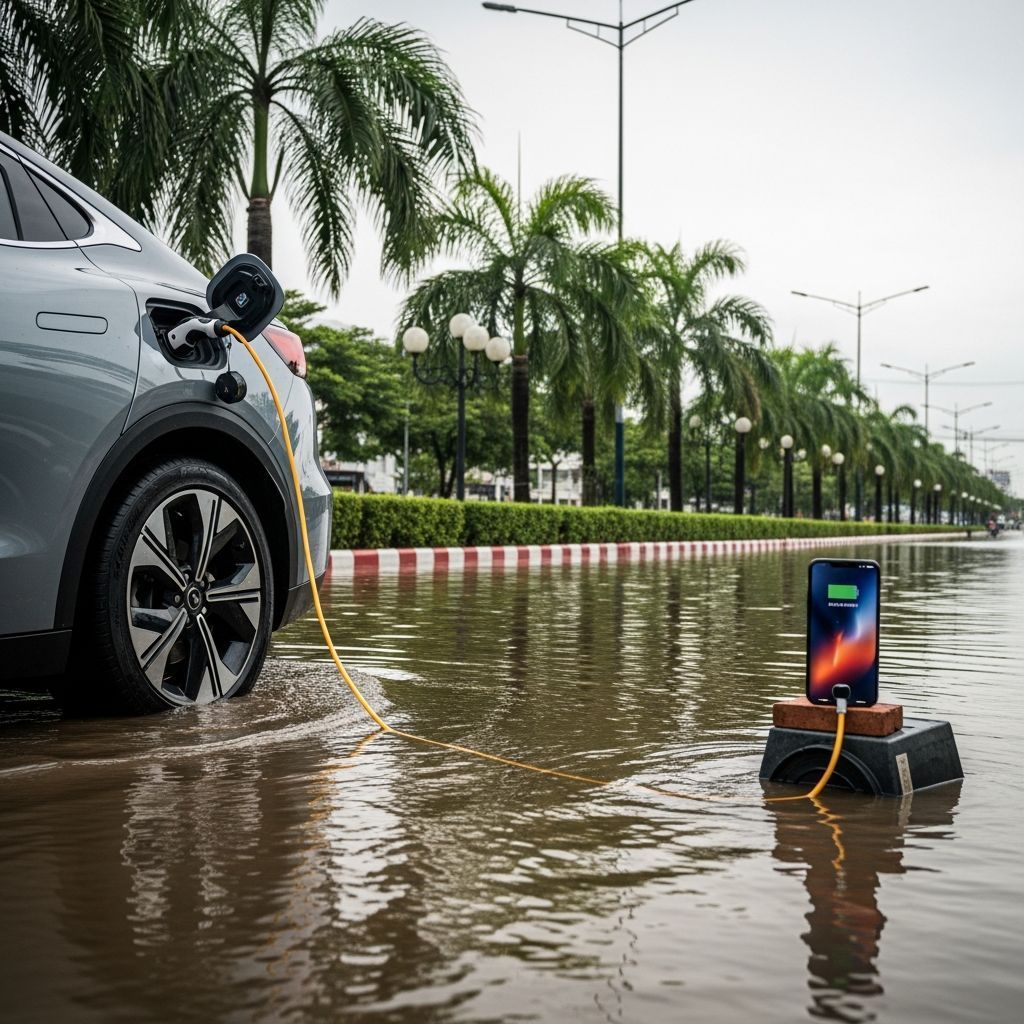
Thailand's electric vehicle charging infrastructure is facing significant capacity challenges. A confrontation at a PTT Station EV Station PluZ in Jomtien on April 11 has exposed the friction emerging as EV adoption outpaces charging capacity. Two drivers disputed who arrived first, escalating into a physical altercation that required bystanders to intervene. The episode circulated widely on Thai EV user forums, signaling that the country's infrastructure crunch is evolving from inconvenience into real-world conflict.
Why This Matters:
• Queue competition is intensifying: With approximately 3.6 EVs per charging head as of March 2026, competition for plugs is increasing, especially during holiday rushes in tourist zones like Pattaya and Jomtien.
• No formal queue protocol: Neither PTT nor other major operators enforce standardized queuing systems, leaving arrival order and priority ambiguous.
• Rising costs narrow incentives: Charging rates are approaching 11 baht per unit, narrowing the cost advantage over petrol and heightening frustration when waits extend long.
• Infrastructure lags adoption: Despite 11,622 charging heads nationwide as of March 31, the network remains concentrated in urban corridors, leaving high-traffic routes chronically underserved.
What You Need to Know: Practical Charging Guidance for Residents
Plan charging stops strategically. Apps such as EV Station PluZ (operated by PTT Oil and Retail Business Public Company) and PEA VOLTA offer real-time availability, but user reviews on PlugShare frequently note discrepancies between app status and ground conditions. Build extra time into your itinerary, especially on routes serving Rayong, Chonburi, and Hua Hin.
Charge to 80% maximum at fast-DC stations. The final 20% consumes disproportionate time, monopolizing a plug and creating tension with waiting drivers. This practice is becoming standard etiquette in Thai EV communities.
Understand booking mechanics. PTT's reservation system grants a 10-minute grace window. If you book a slot but arrive late, or if another driver plugs in ahead of your window, disputes can arise. Review the app's terms before relying on reservations during peak periods.
Expect cost parity with petrol soon. Public charging rates climbing toward 11 baht per kilowatt-hour mean a full charge for a mid-size sedan will approach equivalent petrol costs, changing the financial calculus for EV ownership.
If you encounter a charging dispute: Report it to the operator immediately. Most stations have staff or security on-site. Do not engage directly with other drivers over queue priority.
The Jomtien Incident: Context and Implications
The April 11 clash at the PTT EV Station PluZ near Jomtien intersection in Banglamung district, Chonburi, stemmed from a queue dispute. Eyewitness accounts circulating on Facebook describe escalation from verbal disagreement to physical contact, with onlookers intervening. No serious injuries were reported, but the incident gained traction across Thai EV communities.
The timing reflects growing pressure at coastal charging hubs. Jomtien and Pattaya experience traffic surges during long weekends and school holidays. A single malfunctioning charger or a driver remaining plugged after charging completes can create hour-long waits, transforming a routine stop into a friction point.
The Numbers: Supply Versus Demand
Thailand's charging network has expanded significantly. As of March 31, 2026, the country operated 3,720 charging stations housing 11,622 charge heads, according to official government data. However, the same sources report 42,193 battery electric vehicles (BEVs) on the road as of January 2026, creating a ratio of approximately 3.6 EVs per charge head nationally. This figure understates the crunch during peak periods. During major holidays, coastal highways and provincial tourist destinations see localized ratios double or triple the national average.
Industry data shows the pressure intensifying. Major automakers including BYD, Great Wall Motor, and established brands have committed to local assembly, drawn by government incentives. The Bangkok Motor Show 2026 documented substantial EV interest among buyers, signaling sustained demand growth.
What Operators Could Do But Haven't
International best practices offer solutions Thailand has yet to adopt at scale:
Cross-operator reservation systems. Leading markets employ shared platforms letting users see wait times and book slots across competing networks. Thailand's operators—PTT, PEA VOLTA, EA Anywhere—run separate apps with no data-sharing. A unified standard would distribute demand more evenly.
Temporary mobile charging units during peak periods. Portable DC fast-chargers deployed at tourist bottlenecks during holidays could relieve seasonal pressure.
Idle-fee enforcement. Many jurisdictions charge escalating fees for vehicles occupying chargers after charging completes. Thailand has no such rule, allowing drivers to "squat" on chargers while shopping or eating.
Residential and workplace charging expansion. The current network emphasizes highway rest stops and shopping malls. Residential districts, especially Bangkok's high-rise zones, lack slow chargers that could absorb overnight demand and free fast chargers for road travelers.
Government Targets and Ground Reality
Thailand's government targets 120,000 charging stations by 2030, part of a broader EV manufacturing initiative. Yet rollout remains uneven. Outside Bangkok, charging density drops sharply. Provincial capitals and secondary tourism destinations lag far behind demand, forcing EV owners to plan routes carefully.
Thai EV communities are attempting self-regulation through unofficial codes: charge only to 80% at fast stations, move your vehicle within five minutes of completion, and reserve slots only if you can arrive on time. Compliance remains voluntary and uneven. As one Thai EV forum user noted: "We can ask people to be polite, but when you've waited 90 minutes and your child needs a bathroom, politeness runs out."
The Path Forward
The trajectory is clear. Without significant expansion in charging capacity or smarter demand management, conflicts like the Jomtien incident will likely recur. Thailand's EV transition is measurable in registration data, motor show queues, and now, incidents capturing public attention.
For anyone planning an EV purchase, factor in more than sticker price and running costs. Account for wait times, route planning, and the reality that charging infrastructure in Thailand remains a work in progress. The Thailand Electric Vehicle Association and major operators have yet to issue formal guidance addressing these gaps. Until they do, residents and travelers navigating the network must rely on community knowledge and careful planning.


