
Why This Matters
• Tax-free goods now carry legal risk: The Thailand government has shifted enforcement into high gear, with over 1.3 million seized items and ฿2.3 billion in estimated damages recorded in just six months—nearly double what the entire prior fiscal year produced.
• Foreign investors are watching the meter: Removal from the U.S. Trade Representative's Watch List depends directly on these seizure statistics; continued enforcement shows proof-of-concept that Thailand takes IP seriously.
• Your daily purchases may carry hidden costs: Counterfeit medications, brake pads, and cosmetics bypass safety certification entirely, creating liability for retailers and health risk for end-users with no recourse.
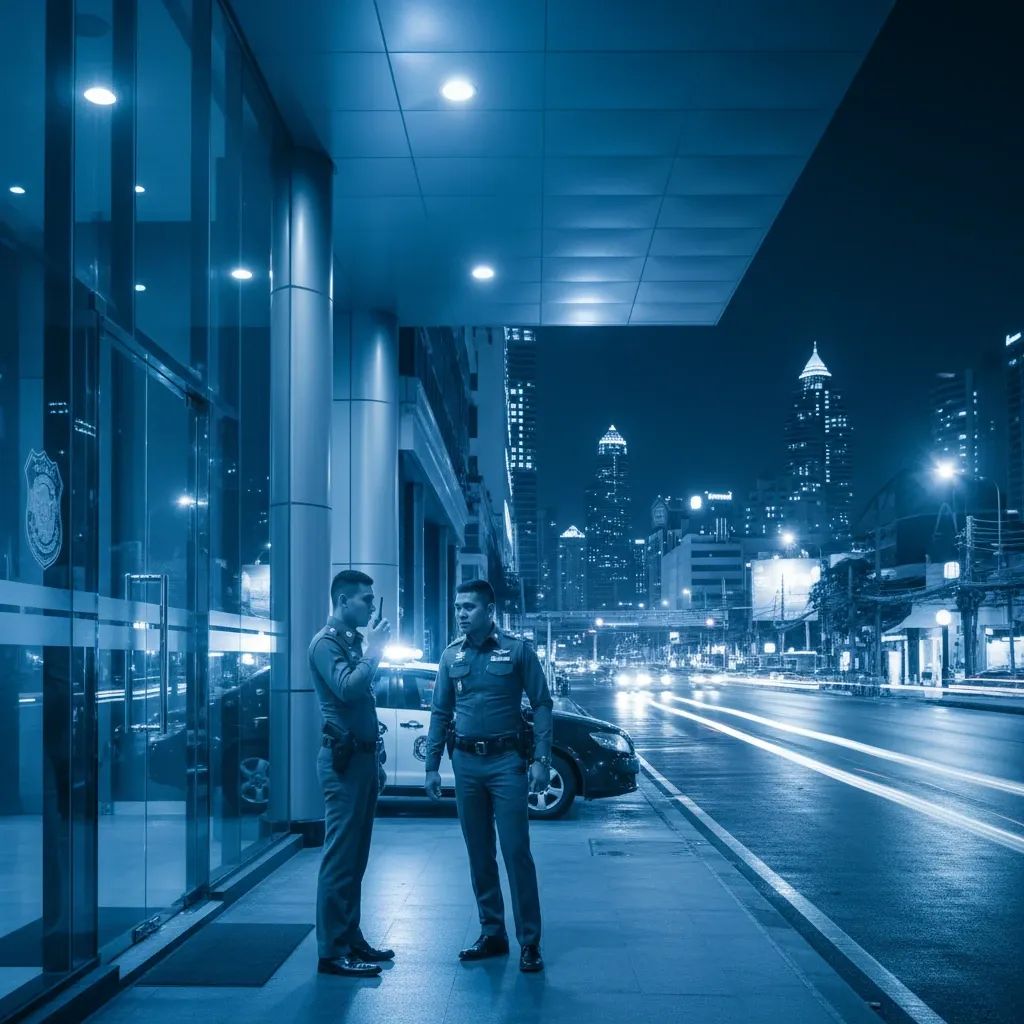
Thailand's crackdown on counterfeit goods has transformed from bureaucratic theater into operational momentum. Between October 2025 and March 2026, a coordinated enforcement coalition spanning the Thailand Ministry of Finance, Thailand Ministry of Commerce, Thailand Ministry of Justice, and the Thailand Royal Police dismantled 332 separate infringement operations. The result: 1.3 million confiscated items and economic losses exceeding ฿2.3 billion—a staggering 78% increase over the entire previous fiscal year.
The government has a clear strategy: show multinational corporations and investors that Thailand now takes intellectual property seriously. Deputy Prime Minister Ekniti Nitithanprapas and Deputy Prime Minister Suphajee Suthumpun framed the campaign as a strategic repositioning that signals to multinationals, venture capital firms, and trade negotiators Thailand's commitment to a credible intellectual property regime. For foreign investors evaluating where to plant regional headquarters or manufacturing operations, that signal matters enormously.
Why Counterfeiting Escaped Control for Decades
Thailand's counterfeit trade expanded unchecked for a simple reason—volume outpaced enforcement capacity. Street vendors could replace confiscated handbags faster than authorities could conduct raids. Online sellers operated across jurisdictions, evading domestic courts. Supply chains originating from neighboring countries and China funneled knock-offs through secondary wholesale networks, obscuring original producers.
The Thailand Department of Intellectual Property has long maintained recordation systems and investigated cases, but without coordinated enforcement across multiple agencies and customs checkpoints, the effort remained siloed and episodic. A raid at one warehouse succeeded; meanwhile, a sister operation ten blocks away continued uninterrupted.
What changed after October 2025 was structural: the government unified command. The Thailand Prime Minister issued a directive to treat counterfeiting as a coordinated national security and economic issue, not a commerce ministry side project. This meant Thai Customs, Thai Police financial crimes units, provincial authorities, and online platforms began sharing intelligence in real-time rather than working in isolation.
The Tangible Goods Problem
Counterfeiting in Thailand has evolved beyond luxury fashion replica trades targeting tourists. Authorities now intercept industrial volumes of everyday goods—products that enter households, vehicles, and workplaces.
The March 9, 2026 warehouse raid in Pathum Thani Province exemplified the shift. Thai police, acting on tips from consumer complaints, descended on a facility run by Chinese nationals and uncovered 95,600 tubes of fake D.dent toothpaste alongside counterfeit Dentiste', Garnier, and Yerpall cosmetic products. Estimated losses exceeded ฿6 million. None bore Thailand Industrial Standards Institute (TIS) or Thailand Food and Drug Administration (FDA) certification marks—meaning they bypassed mandatory testing for harmful contaminants, chemical stability, or allergenic compounds.
In April, authorities dismantled a Bangkok factory manufacturing counterfeit monosodium glutamate (MSG). Between mid-January and early February, joint operations by the Thailand Customs Department, TIS, and the Thailand Department of Intellectual Property seized over 42,000 counterfeit items worth approximately ฿223 million. The inventory included automotive brake pads, suspension shock absorbers, luxury-brand handbags, and apparel.
The pattern indicates deliberate market targeting: counterfeiters have abandoned low-risk boutique operations and moved into high-volume production of goods tied to consumer health and vehicle safety.
The MBK Center Precedent
On March 12, 2026, Thai police executed a coordinated 17-location raid across Bangkok's MBK Center, a nine-story shopping mall long notorious for harboring counterfeit operations. The seizure encompassed over 100,000 fake handbags, shoes, and accessories bearing the trademarks of Louis Vuitton, Chanel, Gucci, and Hermès—property valued at approximately ฿30 million. Shop owners and vendors faced charges ranging from trademark infringement to organized counterfeiting.
The raid's timing was not accidental. The United States Trade Representative (USTR) had explicitly cited MBK Center in its 2025 review of notorious counterfeit markets, a public humiliation that intensified pressure on the Thailand government to demonstrate enforcement capacity. By acting swiftly and visibly at a location flagged by Washington, Thai officials created documentary evidence—photographs, case files, arrest records, property valuations—that they can present in the next USTR trade review. This enforcement serves dual purposes—protecting consumers while demonstrating commitment to international trade partners.
What This Means for Residents
For people living and working in Thailand, the enforcement push carries immediate and practical implications across three dimensions.
Health and safety become personal responsibility. When you purchase counterfeit medications, vitamins, or inhalers from informal vendors or unverified online sellers, you are ingesting substances that have never passed through quality assurance protocols. There is no manufacturer identity, no batch tracking, no clinical testing data—and no legal recourse if the product causes harm. The Thailand FDA cannot track adverse effects. A hospital emergency room cannot identify the source. The same applies to counterfeit brake pads or shock absorbers; structural failure at highway speed occurs without warning and without the legal liability that would attach to a legitimate manufacturer.
Economic competition becomes tilted. A luxury handbag selling for ฿15,000 through an authorized dealer competes against a street-market knockoff priced at ฿1,500. A legitimate pharmaceutical distributor maintaining cold-chain warehouses and paying corporate taxes cannot undercut a counterfeiter stockpiling untaxed dupes. Over time, legitimate businesses reduce inventory, lay off staff, and shift operations to jurisdictions with stronger enforcement. For Thailand-based small and medium enterprises (SMEs), particularly retail operators and manufacturers, counterfeit undercutting represents existential pressure. The formal economy contracts; the informal sector expands.
Investor appetite depends on perception. Multinational corporations and venture capital funds conduct legal-risk audits before committing capital to emerging markets. Pervasive counterfeiting signals one or all of the following: inadequate institutional capacity, corruption, or weak rule of law. Any of these can trigger a decision to relocate manufacturing, downsize a regional office, or redirect investment capital elsewhere. Thailand's development strategy hinges on attracting creative industries, technology firms, and premium manufacturing. That aspiration is incompatible with tolerance for industrial-scale counterfeiting.
The Trade Negotiation Subtext
Thailand remains on the USTR's Special 301 Watch List—a designation that constrains bilateral trade terms and signals to other trading partners that IP protection is substandard. The country was previously on the more punitive Priority Watch List until 2017, when political pressure and enforcement improvements led to downgrade. Removal from the Watch List entirely would unlock trade concessions, including preferential tariff terms and streamlined customs procedures.
The ฿2.3 billion in six-month seizures is quantitative ammunition for a petition: Thailand's officials can argue that sustained, high-impact enforcement demonstrates institutional commitment and capability. The USTR conducts annual reviews; the Thailand government is building a statistical case for the next assessment cycle. This dynamic is not cynical—it is how international trade operates. Enforcement metrics become diplomatic evidence.
How the Legal Architecture Functions
Thailand's IP statutes align with the TRIPS Agreement, the global framework administered by the World Trade Organization. The country maintains copyright law, trademark law, patent law, and trade-secret legislation broadly comparable to international norms. The Thailand Central Intellectual Property and International Trade Court (CIPITC), established as a specialized tribunal, aims to accelerate IP dispute resolution by housing judges with technical expertise in patent prosecution, trademark registration, and enforcement.
In practice, the system operates unevenly. The CIPITC carries a heavy caseload, and civil damages awarded often remain modest by global standards—a ฿50,000 fine for counterfeit production may function as an operational cost rather than a deterrent if the perpetrator generated ฿500,000 in monthly revenue. Criminal prosecution for online piracy lags significantly. The volume of unauthorized streaming applications, torrent sites, and unlicensed software distribution overwhelms investigators, forcing prioritization that favors organized networks and high-profile brands over diffuse, small-scale operators.
To address digital marketplaces, Thailand formalized a "Notice and Takedown" mechanism with e-commerce platforms in 2021. Rights holders can flag suspected counterfeits for removal. Major platforms respond to a substantial percentage of complaints, though monitoring remains resource-intensive for both government agencies and private firms.
The Thailand Customs IPR Recordation System, operational since 2022, permits trademark and patent owners to register intellectual property with customs authorities, who then retain statutory power to seize suspect shipments at borders before goods reach retail distribution. This border interception mechanism has proven operationally effective.
Global Rankings and Thailand's Position
For residents evaluating Thailand's business environment or considering long-term investment, understanding where the country stands globally in IP protection matters for your economic decisions and safety.
Internationally, IP enforcement occupies a clear hierarchy. Singapore, Japan, South Korea, and major European Union members operate elite systems featuring specialized courts, real-time interagency data-sharing, and statutory damages sufficiently high to impose financial ruin on infringers. The United States maintains comparable infrastructure underpinned by consistent case law and robust investigation capacity.
China has modernized urban IP courts and increased damage awards in recent years, yet battles significant backlogs and penalties that remain modest relative to U.S. benchmarks. India contends with prolonged civil litigation, weak trade-secret protections, and procedural bottlenecks. Russia, Indonesia, and Nigeria are frequently cited for inadequate legal frameworks, insufficient administrative resources, and high rates of physical and digital piracy.
Thailand occupies a middle tier—below Singapore and Japan, above India and Indonesia. The trajectory mirrors China's position in the mid-2010s: strong political commitment, integrated agency coordination, and growing recognition that IP protection underpins high-value economic sectors. The Thailand Department of Intellectual Property's 20-Year Roadmap explicitly ties enforcement to the nation's innovation agenda, a structural alignment that distinguishes it from countries treating IP as peripheral.
Public Participation and Reporting Channels
Beyond government enforcement, the Thailand government has mobilized public participation. Citizens and businesses are encouraged to report suspected counterfeiting via established channels: the Thailand Intellectual Property Rights Enforcement Office operates a dedicated telephone line at 02-547-4702 and a national tip line at 1368. The messaging is straightforward—"Do not buy, do not use, do not support counterfeit goods"—a public health and economic ethics appeal.
For businesses holding intellectual property, registration with Thailand Customs enables border seizures of inbound counterfeits. Retailers must verify supplier credentials and request TIS or FDA certifications as documentary proof of compliance. Unwitting distributors of counterfeit goods face legal liability; compliance due diligence is prudent risk management.
The Durability Question
The ฿2.3 billion in seized counterfeits across six months represents roughly 0.01% of Thailand's gross domestic product—a seemingly marginal figure that conceals systemic implications. Each counterfeit item withdrawn from circulation represents a marginal victory. Collectively, they signal either institutional reform or temporary enforcement intensity followed by backsliding.
Whether Thailand ascends to the IP protection tier of Singapore and South Korea depends on sustained political will, consistent resource allocation to the CIPITC and investigative agencies, and penalty structures that genuinely deter rather than merely tax infringement. The next 12 months will clarify whether this crackdown endures or defaults to episodic enforcement cycles interrupted by administrative fatigue and resource constraints. For investors, entrepreneurs, and consumers navigating Thailand's commercial environment, that answer carries immediate consequence.


