
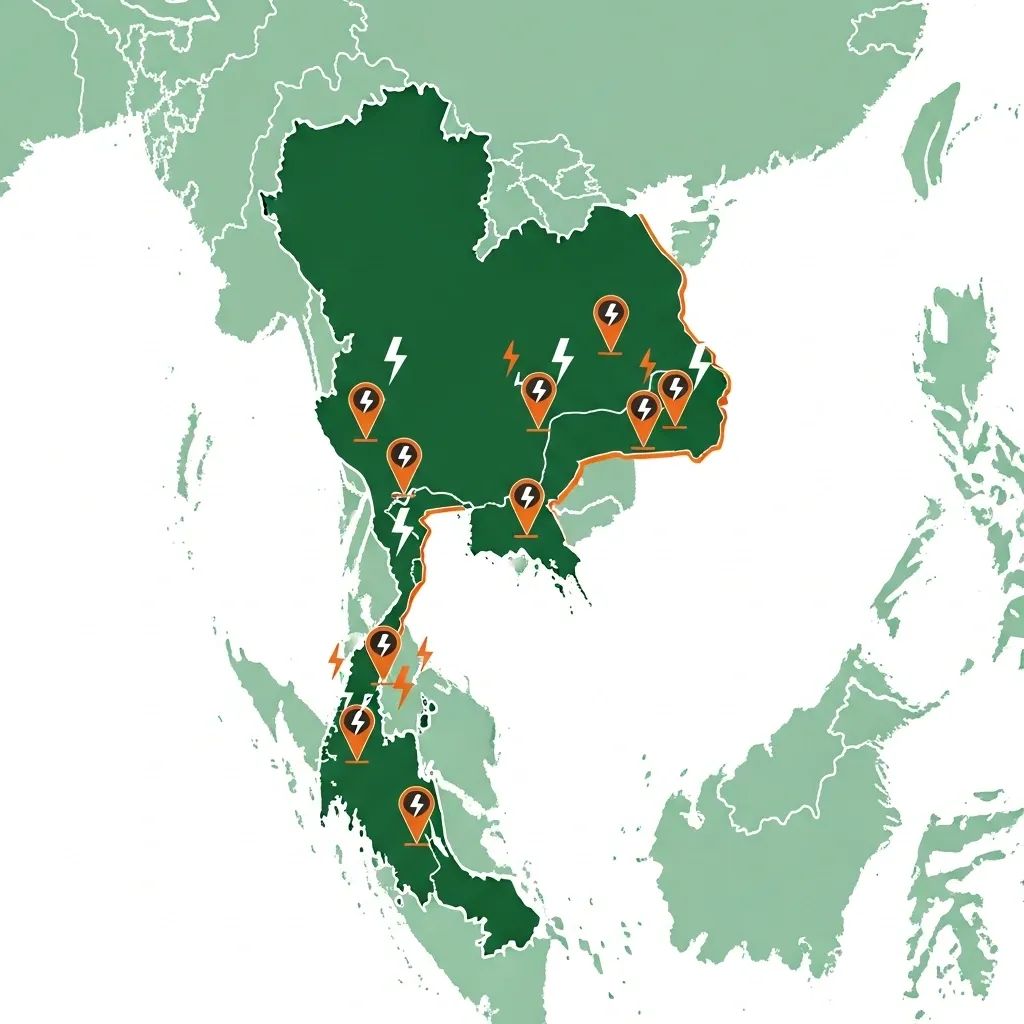
A low-profile party that once scraped for attention now looks poised to shape who governs after February’s ballot. The shift did not happen overnight. It is the product of sharp timing, a nationalist tone that resonated during a renewed Thai–Cambodian flare-up, and an aggressive recruitment drive that vacuumed up heavy-hitters from rival camps.
Quick glance: why the buzz matters
• Bhumjaithai’s seat count could jump to 140-160, turning the party into king-maker territory.
• Prime Minister Anutin Charnvirakul’s border rhetoric vaulted him into second place on most premier preference polls.
• Veteran MPs from Pheu Thai, Palang Pracharath and Move Forward have defected, broadening the party’s map beyond its Isan roots.
• Flagship economic offers – from a Land Bridge to cheaper power bills – aim to soothe wallets strained by inflation.
• Corruption fears and a “party of turncoats” label still threaten to stall the surge.
From outsider to power player
A decade ago, Bhumjaithai was the spare tyre of coalition politics, securing ministries only when the big parties needed extra votes. Today it heads the caretaker government, controls the campaign narrative and claims membership in every province. The party’s leap began the moment Parliament was dissolved on 12 December, an act framed by Mr Anutin as an “exercise in returning power to the people.” The move granted his team a two-month head start to showcase policy and to sign up newcomers before the 8 February poll.
Eight structural forces underpin the momentum:
Perfect election calendar – voting falls during the dry season when rural turnout is high.
Freshly installed constituency boundaries that favour medium-sized parties.
Waning loyalty toward Pheu Thai in lower Isan, where farm incomes fell in 2025.
Power vacuum in the South after Democrat infighting.
A charismatic provincial network led by Newin Chidchob, still influential behind the curtain.
Digital-first canvassing, deploying TikTok and LINE groups more nimbly than older rivals.
Policy continuity – cannabis, welfare co-payments and road links stay on the shelf, signalling reliability.
Absence of coup talk after a calm year in barracks, removing the usual wildcard that kept smaller parties cautious.
Border crisis and the nationalist surge
Shells exploding near Aranyaprathet and renewed arguments over ancient temple land hurled national sovereignty back into dinner-table conversation. Mr Anutin seized the microphone, promising there would be “no third-party mediation” and vowing immediate compensation for the 460,000 households affected by the skirmish.
His tone contrasted with what many voters still recall as “soft diplomacy” under Shinawatra-aligned cabinets. The Cabinet’s rapid release of ฿2.336 B for relief, plus relocation of army engineers, played well in nightly news loops. NIDA Poll’s January snapshot showed border security rising into the top three voter concerns – territory traditionally owned by conservative blocs but now emblazoned with Bhumjaithai’s logo.
A roster built for technocrats and “บ้านใหญ่”
Critics mock Bhumjaithai as a “vacuum cleaner,” yet recruitment has proven strategic rather than haphazard. Key signings include:
• Ekniti Nitithanprapas, former Revenue Department chief, now touted for the finance portfolio.
• Sihasak Phuangketkeow, ex-Foreign Affairs permanent secretary, steering diplomatic messaging.
• Suphajee Suthumpun, hotel group CEO, fronting trade and tourism.
• Forty ex-MPs from power families in Nakhon Ratchasima, Chachoengsao and Trang who command local vote-banks.
Their presence does two things: it lends policy heft in televised debates and injects ready-made canvassing machines into districts the party once ignored. Observers note that even if some recruits fail to secure seats, their ground game drains rivals’ manpower during a tight campaign window.
Economic playbook: Thailand Plus and beyond
Bhumjaithai’s think-tank unveiled a suite of headline promises it says can lift GDP 3% a year without blowing up the deficit:• Tourism revival – aim for 70-80 M visitors by 2030 via a ฿10 B provincial events fund.• Land Bridge Chumphon–Ranong, price-tag ฿1.7 T, pitched as a Malacca detour that cuts shipping time by five hours.• “Half-Half Plus” digital wallets, a relaunch of the co-pay scheme tested in 2021-22.• Electricity below ฿3 per unit for the first 200 units through green-energy PPAs.• Community solar farms and micro-SME credit lines with single-digit rates.
Economists from Thammasat flag funding questions, yet concede that many elements tap existing tourist levies or can be rolled out by tweaking Energy Regulatory Commission rules rather than writing new laws. That administrative ease differentiates the package from rival manifestos heavy on constitutional amendments or new welfare taxes.
Polls, projections, reality checks
In early January, NIDA Poll placed Mr Anutin at 20.84 % support for prime minister, trailing only Paetongtarn Shinawatra. Party-level surveys converge around 140-150 seats, double 2023’s haul of 71. Internal strategists claim the figure “underestimates late-stage swing provinces.”
Yet the very breadth of the coalition could hinder coherence after election day. Three in ten respondents still view Bhumjaithai as a “broker” rather than a “programmatic” party, according to KPI Poll. Anti-corruption NGOs warn that absorbing dozens of defectors raises transaction costs in cabinet bargaining and may erode public trust if familiar scandals resurface.
Can momentum survive election day?
Veteran activist Jatuporn Prompan argues Bhumjaithai’s biggest risk is believing its own hype. “Momentum doesn’t govern; integrity does,” he told this reporter. If the new parliament fails to pass procurement reform or asset-declaration upgrades, foreign investors could keep capital parked on the sidelines, muting any tourism-led bounce.
On the street, however, the message remains simple: cheaper bills, safer borders, faster projects. In Nakhon Sawan last week, crowds greeted Mr Anutin with chants of “พูดแล้วทำ,” underscoring a public mood that prizes execution over ideology.
What to watch in the final stretch
Border incidents: Further clashes could either renew nationalist fervour or expose gaps in readiness.
Cannabis compromise: All major parties now back tighter rules; how Bhumjaithai balances growers’ demands with medical-only limits may sway youth voters.
Policy costings: The Budget Bureau will release updated revenue forecasts next week—numbers campaign teams will spin furiously.
Defections’ downside: Will local rivalries among newcomers fracture grassroots teams?
Anti-corruption pledges: Look for specific draft bills, not slogans, in the final televised debate.
For Thailand’s electorate, the next fortnight will test whether Bhumjaithai’s combination of muscular nationalism and retail economics translates into a durable governing mandate—or merely a well-timed spike on the campaign trail.


