
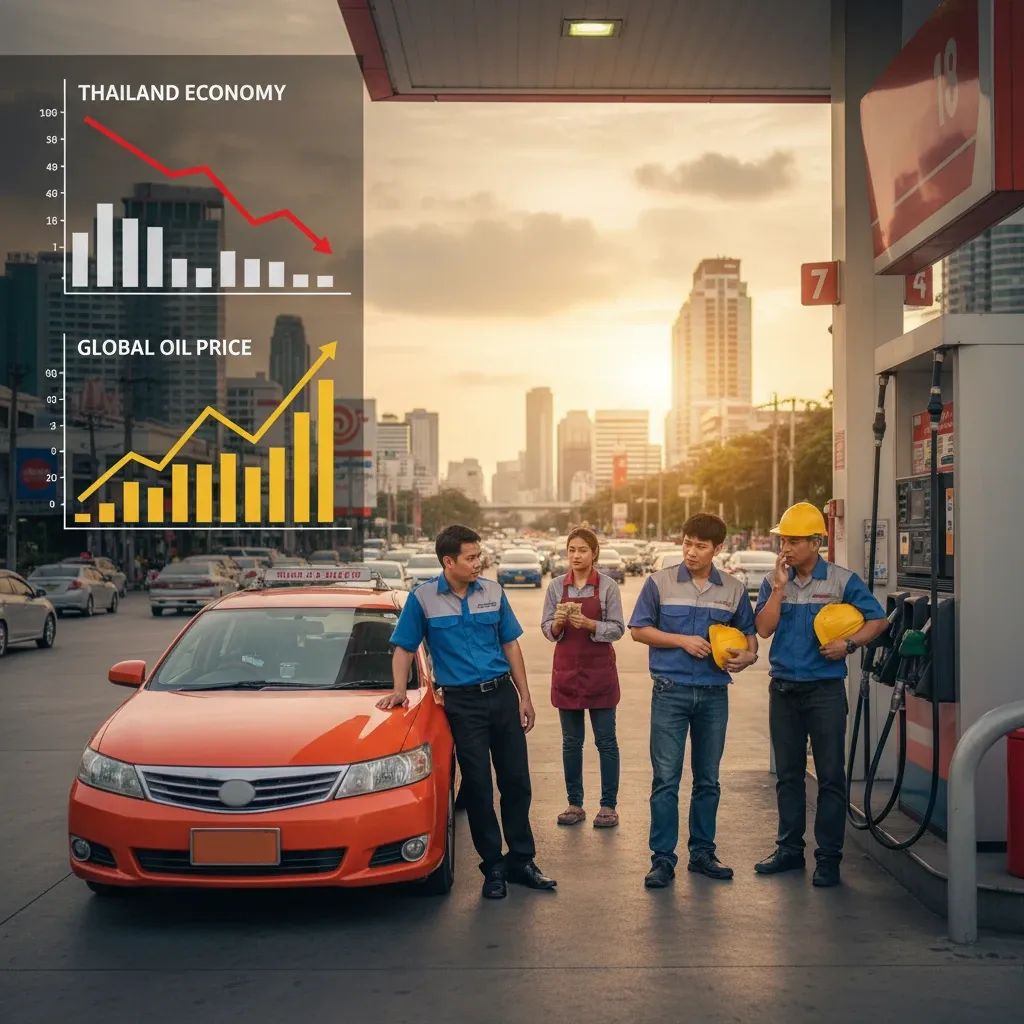
The Thailand government has announced a three-phase contingency plan in response to potential energy supply disruptions linked to escalating Middle East tensions affecting critical shipping routes.
Why This Matters
• According to officials, fuel rationing and petrol station hour restrictions could be imposed if supply routes are disrupted.
• Shopping malls and commercial centers may face mandatory operating-hour reductions during severe phases.
• The plan activates in three escalating phases depending on the severity of disruptions to maritime oil transit.
Thailand imports the majority of its crude oil and refined petroleum products through maritime routes in the region. The contingency framework represents the government's response to vulnerabilities in the country's energy supply chain.
How the Three-Phase Plan Works
According to the Ministry of Energy, the government's strategy is structured around graduated intervention, with restrictions scaling as supply conditions worsen.
Phase 1 activates when disruptions are limited and localized. Authorities would launch public awareness campaigns encouraging voluntary fuel conservation and begin coordination with private-sector energy suppliers to prioritize critical infrastructure.
Phase 2 triggers if supply disruptions intensify. Under this scenario, officials stated the government would enforce fuel rationing for private vehicles, prioritize deliveries to hospitals, public transport, and emergency services, and potentially mandate reduced operating hours for non-essential businesses including shopping malls and retail outlets.
Phase 3 represents the most severe escalation if multiple supply corridors are significantly compromised. At this stage, the government would centralize fuel distribution and potentially implement power rationing measures to stretch available electricity generation capacity.
Strategic Response
Thailand maintains strategic petroleum reserves designed to cushion against short-term supply shocks. The government has indicated it is exploring contingency supply agreements with alternative sources to reduce dependency on currently affected routes.
What This Could Mean for Residents
If activated, the plan would translate into tangible changes for people living in Thailand. Fuel rationing could mean limits on petrol or diesel purchases, with commuters potentially needing to shift to public transit or carpooling to stay within any allocated quotas.
Shopping and commercial activities would also be affected during higher phases. Residents could experience shorter mall hours, reduced air conditioning in commercial spaces, and limited operations at entertainment venues.
Electricity costs may rise as Thailand's power generation adapts to supply constraints. Officials have indicated the government would work to manage the cost impact on essential household electricity.
Regional Considerations
Thailand is among several Southeast Asian nations dependent on Middle Eastern energy supplies. The government is engaged in diplomatic channels to monitor developments and advocate for freedom of navigation.
Official Reassurance
The Thailand Energy Regulatory Commission has stated that current fuel supplies remain stable and that no rationing is under consideration in the near term. Officials have emphasized that the three-phase plan is a precautionary framework intended to provide transparency and preparedness.
For residents, monitoring official announcements from the Ministry of Energy remains advisable as the situation develops.


