
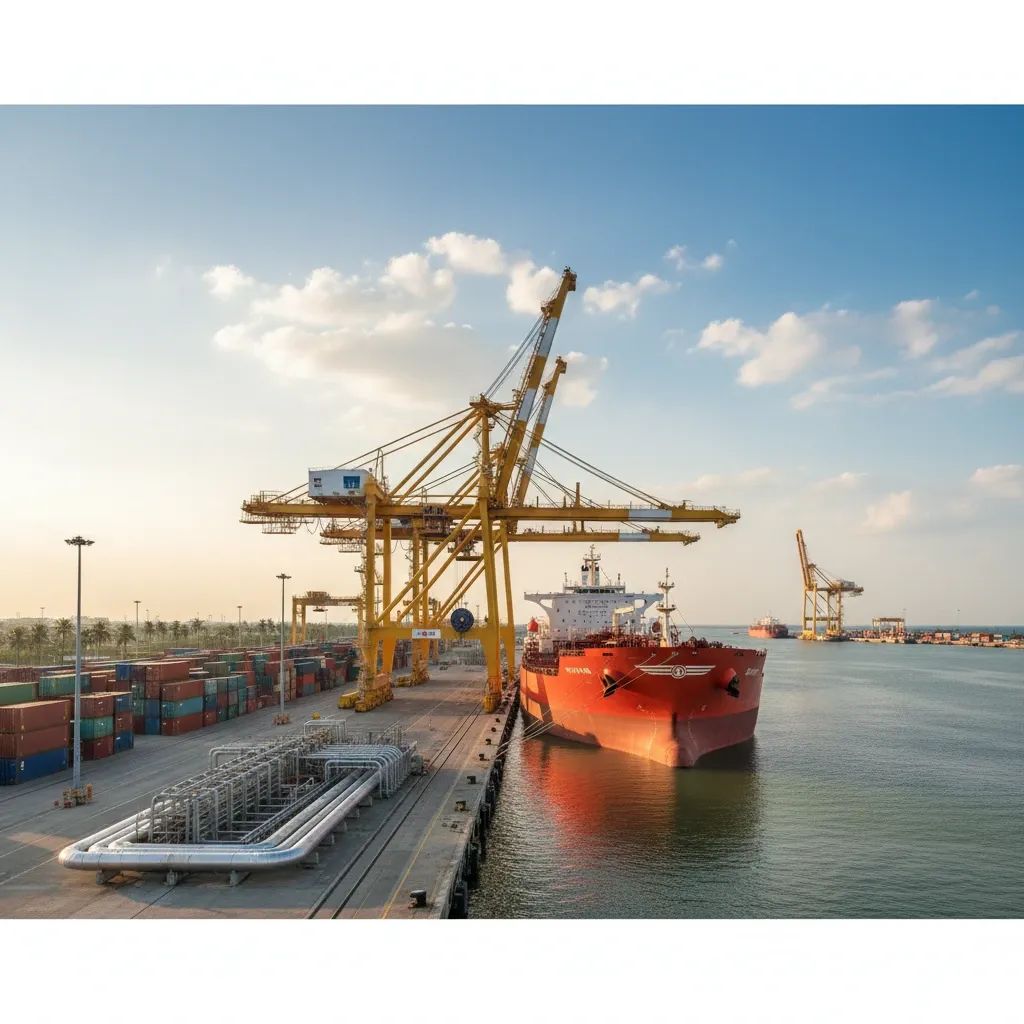
The Thailand Customs Department is bracing for a major enforcement overhaul this year, seizing goods worth more than ฿500M in just five months and preparing penalties up to four times the evaded duty for companies caught falsifying origin labels—a move that could reshape how factories and traders operate across the Kingdom.
Why This Matters
• Seized goods jumped 61% year-on-year: Thai authorities confiscated over ฿503M worth of mislabeled exports between October 2025 and February 2026, nearly all destined for the US market.
• Watchlist expanded to 65 product categories: High-risk items now include solar panels, steel, copper wire, aluminum, and even dog food—224 tariff lines total.
• Higher local content thresholds: Thailand agreed to raise Regional Value Content (RVC) from 40% to around 50% for certain goods, forcing manufacturers to source more components domestically or risk losing tariff benefits.
• Penalties turning punitive: New rules allow immediate seizure and fines comparable to tax evasion—moving beyond token warnings to real financial consequences.
The Transshipment Trap
Thailand ranks 7th among US exporters and 5th globally in anti-dumping cases with 73 active investigations, making it a prime target for Washington's trade enforcement agencies. The surge in bilateral commerce has drawn the attention of US Customs and Border Protection, which now shares intelligence with Thai counterparts to track suspicious shipment patterns.
At the heart of the problem: traders importing Chinese-made goods, slapping on "Made in Thailand" labels with minimal processing, then re-exporting them to the US to dodge anti-dumping duties and secure preferential tariff treatment. One recent seizure involved 50,824 items falsely marked as Thai but imported directly from China—estimated economic damage of ฿11.2M. Another haul netted 85,320 fingernail clippers and mirror cases worth nearly ฿5M.
These are not isolated incidents. The Department of Foreign Trade (DFT) reports that goods linked to anti-dumping evasion accounted for ฿109.92M of the total seizures, while transshipment goods with falsified origin made up ฿393.36M—a 160% spike in the latter category compared to the previous year.
AI, Audits, and Aggressive Enforcement
The Thailand Ministry of Commerce launched the "RVC-Up: Boost Thai Local Content, Expand US Market" program in late 2025, running through the end of this year. The initiative deploys artificial intelligence to verify origin claims, cross-referencing factory licenses, production capacity, and import-export records in real time.
Authorities are zeroing in on high-risk operators: businesses without factory licenses or verifiable manufacturing processes that import and export identical goods—a telltale sign of transshipment. The expanded watchlist now covers 65 product groups across 224 tariff codes, up from 49 categories. Key targets include solar panels, communications equipment, antenna systems, and industrial metals like steel and aluminum.
The US pushed for the higher RVC threshold after flagging solar panels and similar products composed primarily of Chinese components with only final assembly or minimal processing in Thailand. Under the new rule, exporters must prove that at least 50% of a product's value originates domestically to qualify as Thai-made for tariff purposes—up from the previous 40% standard.
Legal Overhaul and Four-Times Penalties
The Customs Department is revising operational procedures to allow immediate confiscation of goods with false origin declarations, a shift from the previous regime where violators often paid modest fines and kept their shipments. Under the revised framework—expected to take full effect within 2026—penalties could reach four times the evaded duty, mirroring enforcement standards for tax-related offenses.
Three statutes underpin the crackdown: the Prohibition to Import Goods with False Marking of Origin Act of 1938, the Trademark Act of 1991, and the Customs Act of 2017. The DFT's Director-General has warned that failure to enforce checks decisively could damage Thailand's trade credibility and prompt the US to view the Kingdom as a conduit for tariff evasion, potentially triggering retroactive duties or broader sanctions.
What This Means for Manufacturers and Exporters
If you manufacture or export goods to the US, the regulatory landscape just shifted beneath your feet. Here's what the new enforcement regime means in practice:
Supply chain audits are now mandatory. Exporters must document the origin of every component, maintain factory licenses, and prove production capacity matches shipment volumes. The AI verification system cross-checks these records automatically.
Higher compliance costs. Meeting the 50% RVC threshold may require sourcing more expensive Thai-made inputs or investing in local manufacturing capacity. The Ministry of Commerce offers financial support for businesses increasing domestic content, but the timeline for approval and disbursement remains unclear.
Risk of retroactive penalties. If US authorities determine that Thailand served as a transshipment hub, they can impose duties retroactively on past shipments—exposing companies to sudden, multi-million-baht liabilities.
Reputational damage. Getting flagged for origin fraud can blacklist a company from future US contracts, freeze existing purchase orders, and trigger audits by other trading partners.
The IP Enforcement Dimension
Beyond transshipment, Thailand is tackling broader intellectual property (IP) concerns raised by the US Trade Representative's 2025 Notorious Markets Report, which singled out online platforms in the Kingdom for widespread trademark and copyright infringement. The Thailand Cabinet approved a new "IP Work Plan" and an "Intellectual Property Development Plan for 2026-2027" in collaboration with Washington, targeting large-scale manufacturers and distributors instead of street-level vendors.
The USTR criticized Thai authorities for focusing enforcement on small retailers while letting major counterfeiters operate with impunity. The new plan shifts resources toward dismantling production networks and distribution hubs, with a particular emphasis on e-cigarettes and cannabis—both of which have proliferated in Thailand's domestic market and are increasingly flagged for false labeling in export shipments.
Regional Credibility at Stake
The stakes extend beyond bilateral trade. Thailand competes with Vietnam, Malaysia, and Indonesia for US manufacturing contracts and supply chain investments. Any perception that the Kingdom tolerates origin fraud or lax IP enforcement could tilt those decisions in favor of regional rivals.
Thai officials have framed the crackdown as a defense of legitimate Thai businesses, which lose contracts and market share when fly-by-night operators undercut them with mislabeled Chinese goods. The DFT estimates that origin fraud costs compliant exporters hundreds of millions of baht annually in lost revenue and eroded pricing power.
The expanded watchlist and higher RVC thresholds will force marginal operators out of the market while rewarding manufacturers that invested in genuine Thai production capacity. For long-term residents and business owners in the Kingdom, the message is clear: the era of light-touch enforcement is over, and the cost of non-compliance just became uninsurable.


