
Why This Matters
• Diplomatic security measure: Thailand secured an agreement with Oman to transmit data on Thai-registered vessels directly to Iranian authorities, reducing the risk of misidentification during the current Strait militarization.
• Energy partnership potential: Preliminary discussions with Oman's Energy Ministry explored increased crude oil and liquefied natural gas supplies, with an existing 2026 LNG agreement providing a contractual foundation.
• Multi-layered approach: Bangkok is simultaneously maintaining channels with Iran while exploring alternative energy sources through Oman, reflecting pragmatic crisis management rather than reliance on a single diplomatic solution.
Thailand's energy security calculus shifted over the past three weeks as Deputy Prime Minister and Foreign Minister Sihasak Phuangketkeow returned from Oman with concrete commitments that reveal how Bangkok operationalizes crisis management: through layered diplomatic channels designed to address both immediate shipping risks and longer-term energy resilience.
Deputy Prime Minister Sihasak Phuangketkeow returned from Oman on April 18 with commitments from Sultan Haitham bin Tariq Al Said and the Omani Energy Ministry. The centerpiece of the agreement involves Oman transmitting identifying data for Thai-registered vessels directly to Iranian authorities—a protocol designed to reduce risks of misidentification in the contested Strait of Hormuz. Additionally, both governments discussed preliminary arrangements for supplementary crude and gas imports and affirmed existing energy contracts.
The Context: Strait Militarization and Shipping Disruption
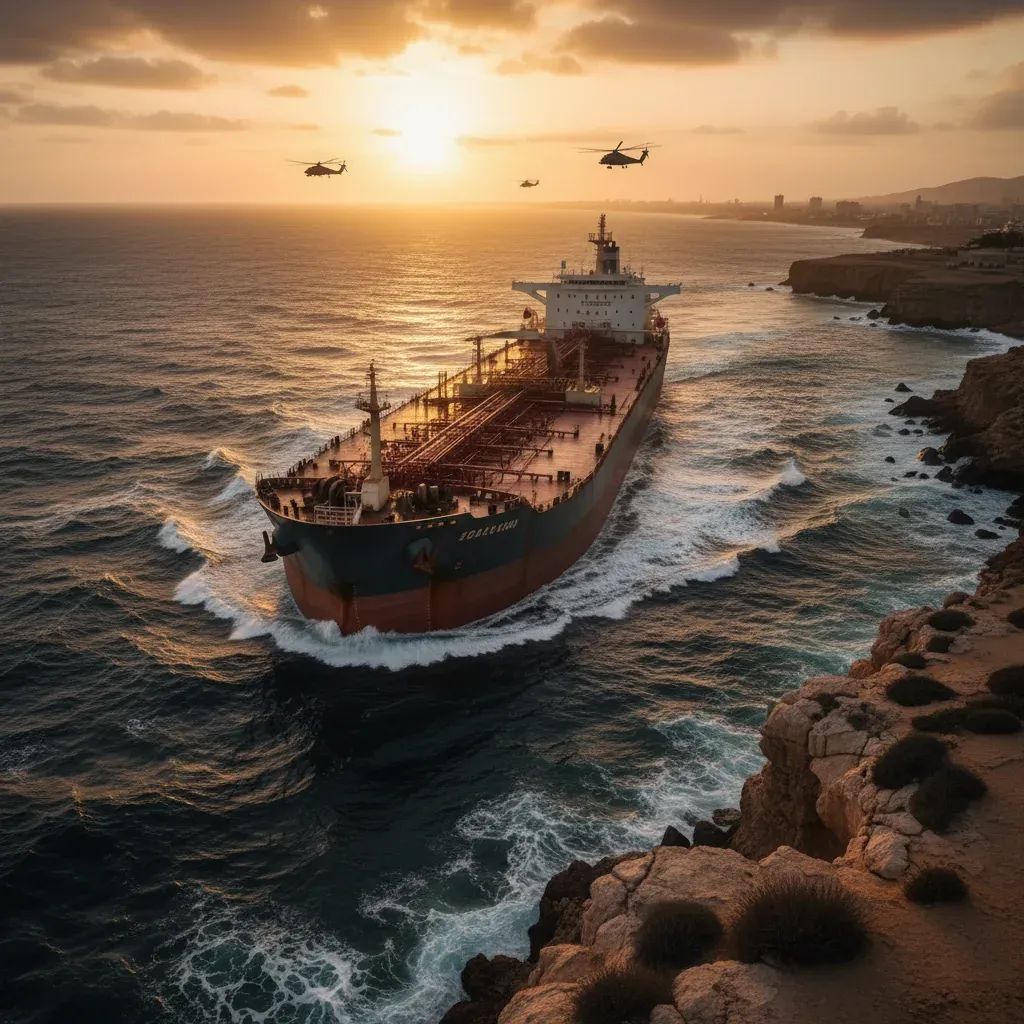
The Strait of Hormuz has functioned as a contested zone since late February, when regional military tensions escalated dramatically. The waterway, through which approximately one-third of global maritime trade transits, became subject to increased military activity and risk assessments that prompted shipping companies and insurers to reassess transit viability.
Merchant traffic flows have been significantly disrupted. Fewer vessels have transited the strait compared to historical patterns, and war-risk insurance premiums have increased substantially. Multiple shipping companies have announced they will reroute cargoes around the Cape of Good Hope—a significantly longer route that adds time and cost to voyages. For commercial operators, the economic calculation has shifted: the combination of insurance premiums, transit delays, and military risk has made alternative routing economically competitive despite the 5,000-nautical-mile detour.
Thailand's shipping interests have been directly affected. Thai-registered vessels operating in the region face heightened operational risk, making diplomatic protections increasingly valuable.
Oman's Role: Neutral Broker and Energy Partner
Recognizing that diplomatic status requires substantive energy arrangements, Sihasak prioritized negotiations with Oman's Energy Ministry. During meetings with Minister Salim bin Nasser bin Said Al Aufi, both governments explored concrete pathways including increased crude oil volumes, elevated liquefied natural gas shipments, and expanded fertilizer imports to support Thai agriculture.
Oman has responded with conditional interest. The sultanate can supply additional crude and LNG only if domestic production exceeds domestic consumption—a constraint reflecting Oman's own infrastructure needs. However, Thailand's existing energy foothold in Oman creates leverage. PTTEP (PTT Exploration and Production), Thailand's state-owned energy company, maintains active stakes in three Omani exploration blocks: Block 61 (natural gas), Block 6 (crude oil), and Block 53 (heavy crude). These equity positions create mutual incentives for expanded cooperation.
More immediately, an existing binding agreement between Oman LNG and PTT Global LNG commits Oman to supply 0.8 million tons of liquefied natural gas annually over nine years, commencing in 2026. This contract, finalized in January 2023, provides Thailand with a contractually enforceable alternative energy source independent of current Strait tensions.
Both governments also committed to exploring cooperation in clean energy investments, language suggesting potential partnership discussions around renewable energy projects and longer-term infrastructure development. However, no specific capital commitments or investment timelines were disclosed during the April visit.
The Data-Sharing Protocol: Risk Mitigation in Uncertain Waters
The centerpiece of Sihasak's security achievement involves Oman agreeing to transmit identifying data for Thai-registered vessels directly to Iranian authorities. This data-sharing protocol operates as a procedural safeguard to prevent Thai ships from being mistaken for vessels from other nations during military operations.
Operationally, the arrangement leverages Oman's status as a co-manager of Strait navigation. Unlike Iran or the United States, Oman maintains diplomatic relations across regional factions and has positioned itself as an active mediator. Oman and Iran have been developing a joint maritime monitoring protocol that could eventually formalize both coastal states' oversight of traffic transiting the waterway.
Sihasak emphasized his appreciation for Oman's constructive and neutral posture during his audience with Sultan Haitham, a diplomatic gesture underscoring Thai dependency on Muscat's continued cooperation. The deputy prime minister also formally requested Omani assistance in coordinating humanitarian and salvage operations for Thai maritime interests affected by the current regional tensions.
However, data-sharing reduces certain categories of risk without eliminating others. The protocol specifically addresses misidentification—the risk of Thai vessels being targeted due to confusion about their nationality or registry. It does not address the risk of deliberate targeting by military actors. The effectiveness of any identification protocol ultimately depends on whether military commanders choose to consult it before taking action—a decision that remains discretionary during active military operations.
Thailand's Two-Track Strategy: Diplomacy and Energy Diversification
Thailand's current posture operates across two intersecting tracks. The first involves maintaining the Oman-Iran diplomatic channel to secure vessel clearances, facilitate data-sharing, and negotiate safe corridors for Thai shipping. This track offers incremental protection and demonstrates Bangkok's diplomatic agency.
The second track involves pivoting toward alternative energy procurement. Thailand's Ministry of Foreign Affairs and PTT Exploration and Production are simultaneously engaging Oman, Qatar, and Australia on expanded LNG supplies, attempting to diversify sourcing away from supplies routed through the Strait. This represents a rational long-term energy security strategy.
Technical teams from both governments are expected to commence detailed negotiations on volumes, price formulas, delivery schedules, and contract terms during May and June. No emergency supply arrangements have been finalized, and both Bangkok and Muscat are deliberately underplaying expectations to avoid overcommitment.
The diplomatic achievements in Muscat provide marginal improvements to Thailand's position but do not resolve the underlying dynamics of regional military tension or the operational constraints facing shipping in the contested waterway. Thailand's medium-term energy security now depends on whether the Oman LNG agreement and potential additional arrangements can come online sufficiently to support domestic demand during any sustained disruption to conventional Strait-routed supplies.


